The Table
Gluten-Free Sourdough Nutrition: Fermentation, Fiber, Minerals, and Honest Limits
Gluten-free sourdough is bread made from gluten-free grains, fermented for flavor, and bound with psyllium, which adds fiber. Fermentation does not turn wheat into a celiac-safe food and this is not medical advice. Whole-grain blends such as sorghum and teff offer more minerals than starch-only loaves, and anyone with FODMAP or fiber concerns should judge their own tolerance.
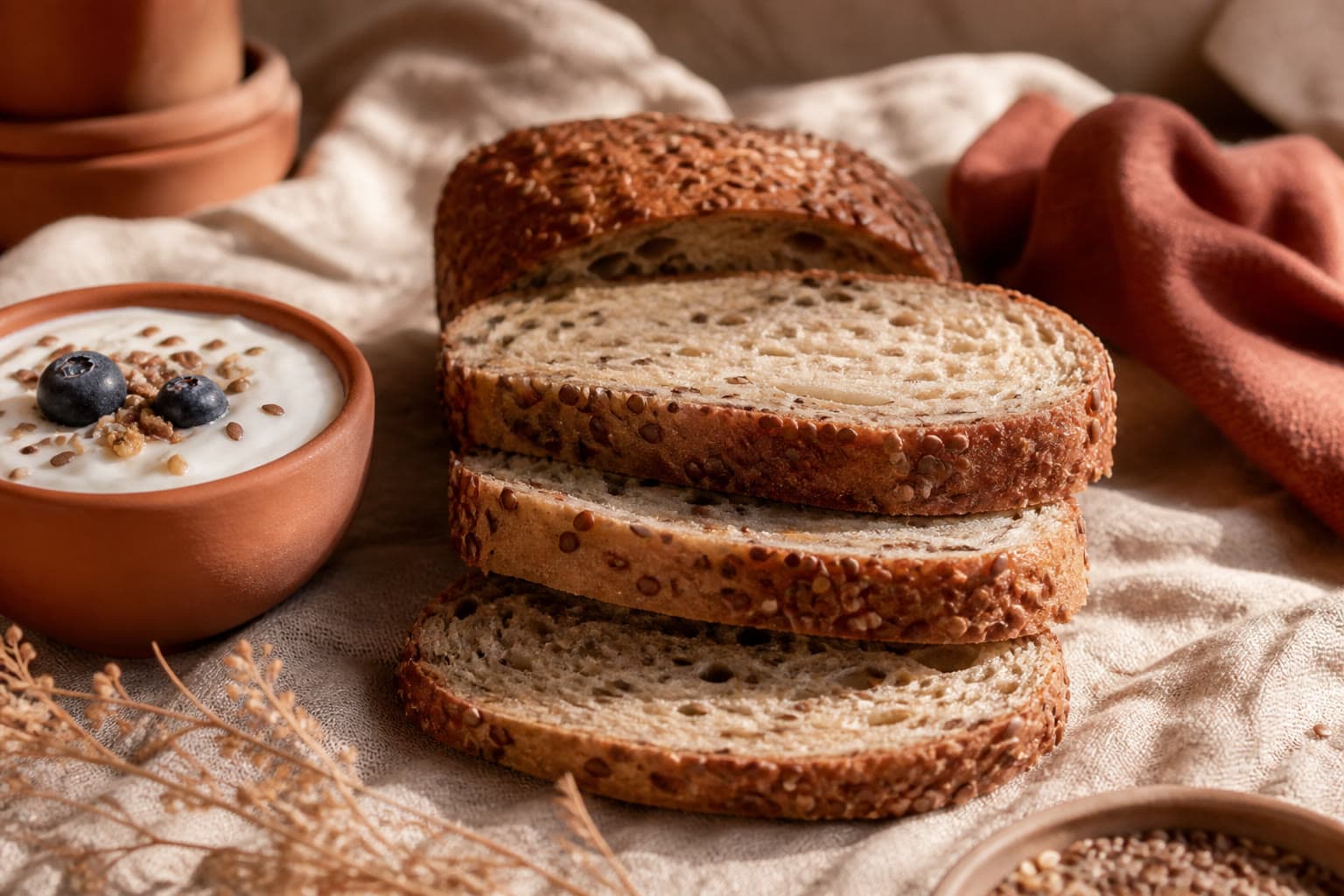
What this guide covers
What fermentation can and cannot do for gluten-free bread, why psyllium adds fiber, where FODMAPs still matter, and a clear statement that this is not medical advice.
Key takeaways
- This page is food education, not medical advice, diagnosis, or a treatment plan.
- Gluten-free sourdough is still bread: energy from starch, plus whatever grains and husk you put in.
- Fermentation can improve flavor and may influence mineral availability in whole grains; it does not make wheat safe for celiac disease.
- Psyllium at 4-7% of flour weight adds soluble fiber and changes how a slice feels; it is not a supplement dose disguised as toast.
- FODMAP content varies by flour; some people who do well without wheat still need to watch onion, garlic, and certain grains.
- Teff, sorghum, and buckwheat bring more mineral personality than refined starch loaves.
- Commercial gluten-free breads are often starchier, sweeter, and gum-heavier; homemade whole-grain sourdough is a different food.
- Salt is flavor and structure; it also adds sodium, so season with intention.
- Certified gluten-free oats are a nutrition and safety choice; some celiac eaters still skip oats.
- Eat bread as bread, with meals you already like. Do not treat a boule as medicine.
The direct answer (and the medical-claim boundary)
Gluten-free sourdough, as we bake it, is fermented bread made from gluten-free flours, water, salt, a gluten-free starter, and psyllium husk at 4-7% of flour weight. Nutritionally it is a starchy food with more whole-grain character than many packaged gluten-free loaves, plus soluble fiber from the husk. It is not a detox, a cure, a gluten-removal process for wheat, or a personalized medical diet.
Andrew and Claire will tell you what is in the bowl, how fermentation changes taste, and why a teff-buckwheat loaf feels different from a cornstarch sandwich. We will not tell you it healed anyone. If you need nutrition therapy, that is a qualified professional. If you need a loaf that tastes like bread, that is why we ferment.
Keep that boundary in your head while you read the rest. Curiosity is welcome. Prescriptions are not what this site is for.
What fermentation actually changes
Wild yeast and lactic-acid bacteria eat some of the flour's carbohydrates and produce acids, gases, and aroma compounds. That is why the bread tastes like sourdough instead of like a steamed rice cake. Acids also change how starches behave in the crumb and how the crust browns.
Fermentation can reduce some anti-nutrients in whole grains in laboratory and traditional food systems. It can change the mix of sugars left in the loaf. It does not 'pre-digest' bread into a vegetable. You still ate bread.
Time and temperature change the acid profile: a long warm ferment tastes sharper; a cold retard is often rounder. That is culinary. If a sharper loaf sits better in your stomach, that is your anecdote, worth noticing and not worth turning into a rule for strangers.
Mineral availability and whole-grain blends
Sorghum, teff, brown rice, millet, and buckwheat carry more minerals and phytochemicals than refined tapioca or cornstarch. Teff in particular is known as a small seed with a dense nutrient personality, which is one reason the dark loaf tastes like food. Phytates in whole grains can bind minerals such as iron and zinc; fermentation and soaking are among the traditional ways food cultures reduce phytate.
A home baker cannot quantify milligrams of available iron in Tuesday's boule. We can say: a whole-grain-majority blend at 60-80% of flour weight is a different nutritional object than a 70% starch loaf. Choose the dark loaf when you want that object. Choose sandwich bread when you want a school lunch that still tastes mild.
Do not use bread to treat a diagnosed deficiency. Use labs and a clinician. Use bread to make the rest of the meal feel like a meal.
FODMAPs: a caution, not a protocol
FODMAPs are fermentable short-chain carbohydrates that bother some people with IBS. Wheat is high in certain FODMAPs for some eaters; gluten and FODMAPs are not identical problems. A person with celiac disease needs gluten-free grains for an autoimmune reason. A person using a low-FODMAP diet may or may not do well with a particular gluten-free loaf depending on ingredients, portion, and their phase of the diet.
Garlic and onion in focaccia toppings are common FODMAP loads that have nothing to do with sorghum. Honey, inulin in some commercial blends, and large portions of certain grains can matter. We do not certify recipes as low-FODMAP. If you follow Monash-style guidance, check those sources and a dietitian.
Psyllium is a fiber, and fiber can be either helpful or explosive depending on the gut and the dose. Start with a normal slice, drink water, and do not eat half a 7% psyllium loaf as a dare.
Fiber from psyllium, in kitchen terms
Psyllium husk is mostly soluble fiber that gels. At baker's 4-7%, it is there to hold the loaf, and the fiber comes along for the ride. People who already take psyllium capsules should notice that the bread is another source, not pretend it is zero.
Soluble fiber gels in water in your bowl and, later, in your digestive tract. That can feel filling. It can also feel like too much if you jumped from starch-only packaged bread to a dark loaf with 6% husk overnight. Meet the bread in the middle: sandwich formula at 4-5%, smaller slices, meals with fat and protein.
We will not claim cholesterol, glucose, or regularity outcomes for a slice. Those claims belong to drugs, supplements, and medical literature, not to a food blog in Indianapolis.
Protein and the personality of sorghum, teff, and buckwheat
Gluten-free bread is not a protein food in the way eggs are, but whole-grain blends contribute more protein than starch-only loaves. Sorghum and teff help the number and the flavor. Buckwheat adds amino acid personality and a satiate-y crust. Almond flour would raise protein and fat but wreck the baker's percent if you dumped it in as 40% of the blend.
If you want more protein at breakfast, put eggs next to the English muffins. The muffin can be fermented and gluten-free. The plate does the rest.
Kids who reject dark loaves are allowed sandwich bread. Nutrition that nobody eats is a thought experiment.
Compared with commercial gluten-free bread
Many packaged gluten-free breads are built from starch, water, oil, sugar, yeast, and gums so they can ship soft. They fill a real need: school lunches, travel, the first month after a celiac diagnosis. We keep a backup loaf in the freezer when life is loud.
Our sourdough is heavier, more perishable, more whole-grain, and usually less sweet. It needs a 2-hour cool and a toaster on day two. It is not 'better' in a moral sense. It is a different product with more fermentation flavor and a psyllium gel instead of a factory gum system (unless you used a xanthan blend—see the flour guide).
Read packaged labels if you are comparing sodium, fiber, and added sugar. Then decide which loaf fits Tuesday. Both can live in a kitchen without a fight.
Salt, sodium, and why we do not bake unsalted bread
Salt at about 2% of flour weight seasons the crumb and tightens the gel slightly. Unsalted gluten-free bread tastes like wet cereal and proofs in a sloppy way. If you are on a sodium-restricted medical plan, that is a clinician-and-recipe-scaling conversation. We will not publish a 0% salt country loaf and call it excellent.
Add-ins (olives, cheese on focaccia, bagel toppings) are where sodium jumps. The plain house loaf is the predictable one.
Taste the bread before you butter it. You might need less salt on the tomato if the crumb is already right.
Who this bread is for
People who cannot eat wheat and want bread that tastes like a project worth doing. People baking for celiac guests who will follow the safety guide. People who like fermentation and sorghum. People in Indianapolis who want a weekend rhythm with a Dutch oven.
It is not for someone who needs a clinically low-fiber diet unless their clinician says a small slice is fine. It is not for someone who cannot tolerate psyllium. It is not for someone who wants wheat sourdough 'because fermentation.' We already had that argument in the safety guide.
Claire's line: we feed people we love. We do not experiment on people we love. Nutrition curiosity stays inside that fence.
How we talk about nutrition on this site
We name ingredients, baker's percents, and methods: 90-110% hydration, 4-7% psyllium, powder at ~85% of husk weight, cool 2 hours, dedicated gluten-free kitchen, certified gluten-free oats. We name fermentation as a flavor and food-science process. We do not name diseases we claim to treat.
If a sentence sounds like a supplement ad, we delete it. If a sentence helps you choose teff over cornstarch because you wanted a mineral-tasting loaf, we keep it.
Then we eat bread with soup, or with butter, or as a grilled cheese after the loaf has cooled. That is the nutritional plan we actually keep.
- Say what is in the loaf.
- Say what fermentation does to taste and to wheat (nothing that makes wheat celiac-safe).
- Say fiber is present because psyllium is present.
- Send medical questions to medical people.
FAQ
Is gluten-free sourdough healthier than regular gluten-free bread?
It can be less additive-heavy and more whole-grain if you blend it that way, and fermentation changes flavor. 'Healthier' depends on the loaf, the rest of the diet, and your medical needs. We do not sell a health halo.
Does sourdough fermentation make bread easier to digest?
Some people find fermented bread gentler; acids and time change the food. That is not a guarantee, not a celiac therapy, and not a reason to eat wheat sourdough if you have celiac disease.
How much fiber is in psyllium bread?
Psyllium is mostly fiber. At 4-7% of flour weight, a slice carries more soluble fiber than a starch-only loaf. Amounts vary with slice size. Treat it as food fiber, not a labeled supplement.
Is gluten-free sourdough low FODMAP?
Not automatically. Ingredients matter. Wheat is a FODMAP issue for some and a celiac issue for others; they are not the same. Gluten-free grains can still contain FODMAPs. Use official FODMAP guidance or a dietitian, not this paragraph, for a protocol.
Does fermentation increase mineral absorption?
Whole grains contain phytates that can bind minerals. Fermentation can reduce phytate in some systems, which may improve mineral availability. That is a general food-science note, not a promise that a home loaf treats a deficiency.
Is teff sourdough high in protein and iron?
Teff is a more nutrient-dense grain than refined starch, and it contributes protein and minerals to a dark loaf. It is not a steak. Portion still matters.
Can I eat gluten-free sourdough on a weight-loss diet?
Bread is calorie-dense compared with non-starchy vegetables. You can include it in a planned diet. We will not prescribe one.
Does gluten-free sourdough have less sugar than packaged GF bread?
Often, if you do not add much sugar. Many packaged loaves use sugar, syrups, and extra starch for softness. Read labels. Taste ours: they are fermented grain, not cake.
Is psyllium bread good for cholesterol or blood sugar?
Psyllium as a supplement is studied in clinical contexts. Bread that contains psyllium is still bread. We do not make disease-treatment claims. Ask a clinician about fiber supplements if that is the goal.
Who should be careful with this bread?
Anyone with celiac disease needs the safety practices in our celiac guide. Anyone who reacts to psyllium, specific grains, or high fiber should go slowly. People on medical nutrition plans should work with their care team.
Bake from this
Related recipes
Artisan Loaves
INTERMEDIATE
TEFF
DEC 18, 2025
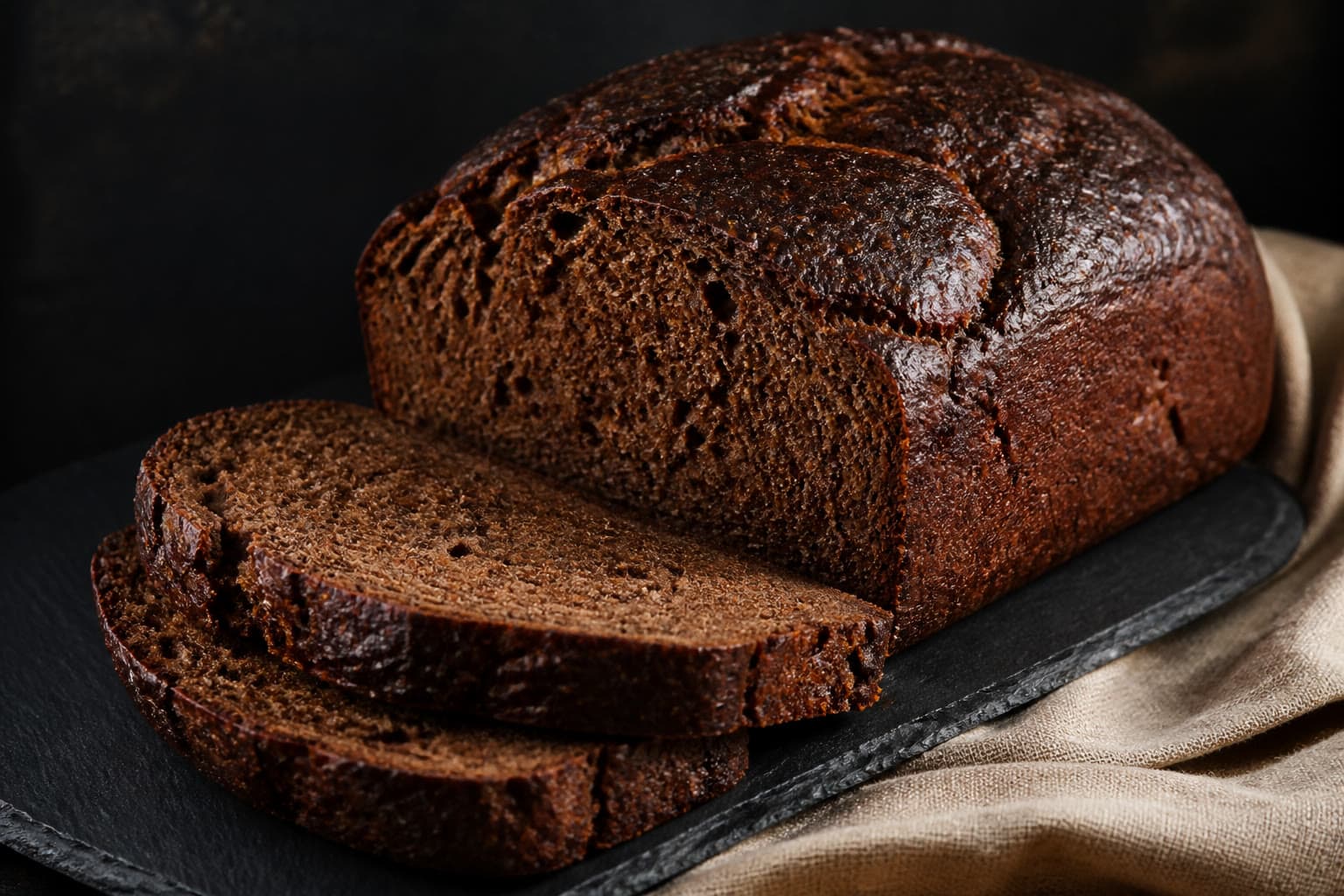
Teff Buckwheat Dark Loaf
A molasses-optional dark loaf with teff and buckwheat for rye-like depth — no rye, wheat, or barley in the formula.
Artisan Loaves
BEGINNER
COUNTRY LOAF
DEC 2, 2025
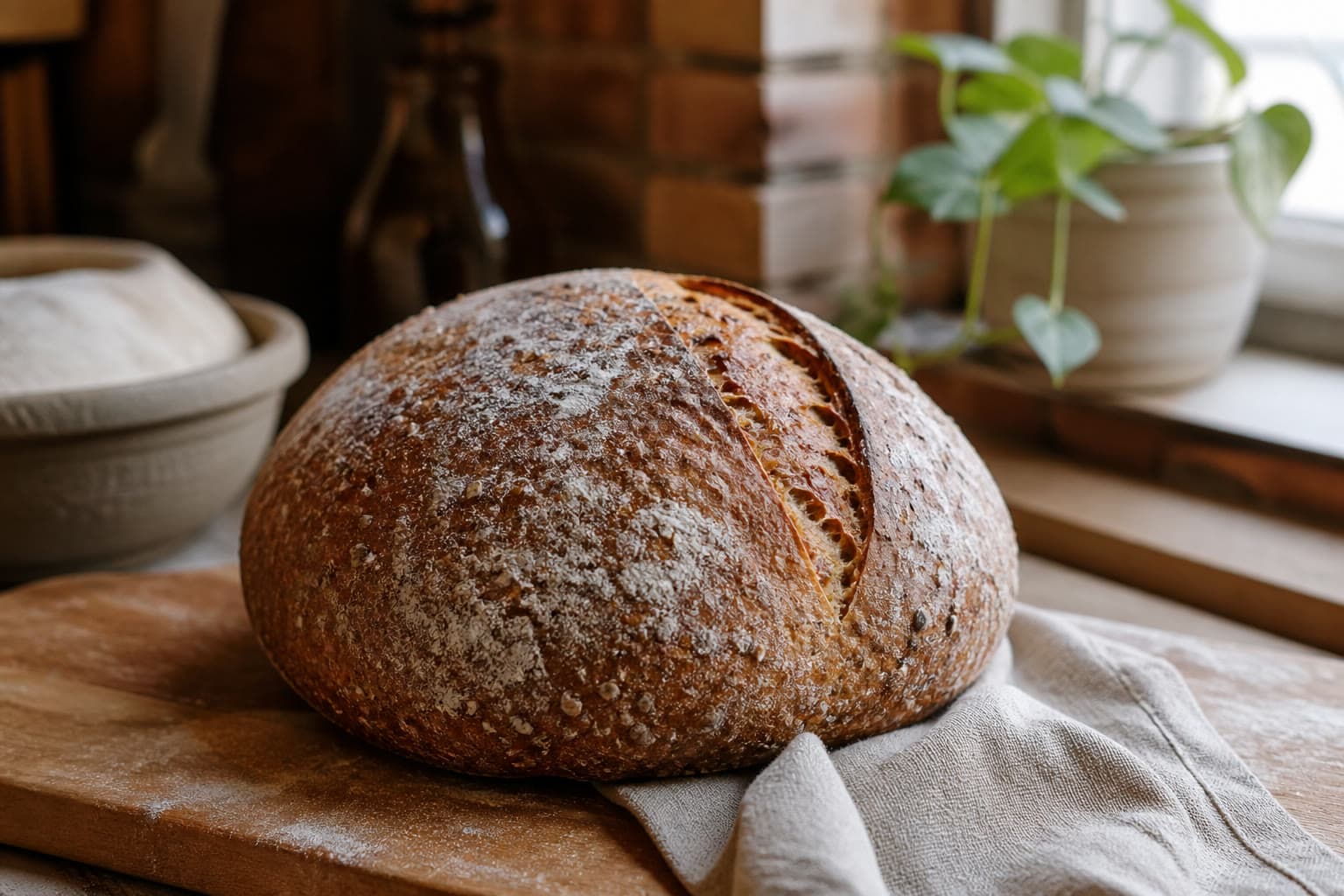
Brown Rice Sorghum Country Loaf
A rice-forward country loaf with sorghum sweetness, a little potato starch, and whole psyllium gelled 10:1 before mixing.
Sandwich Breads
BEGINNER
SANDWICH
MAR 1, 2026
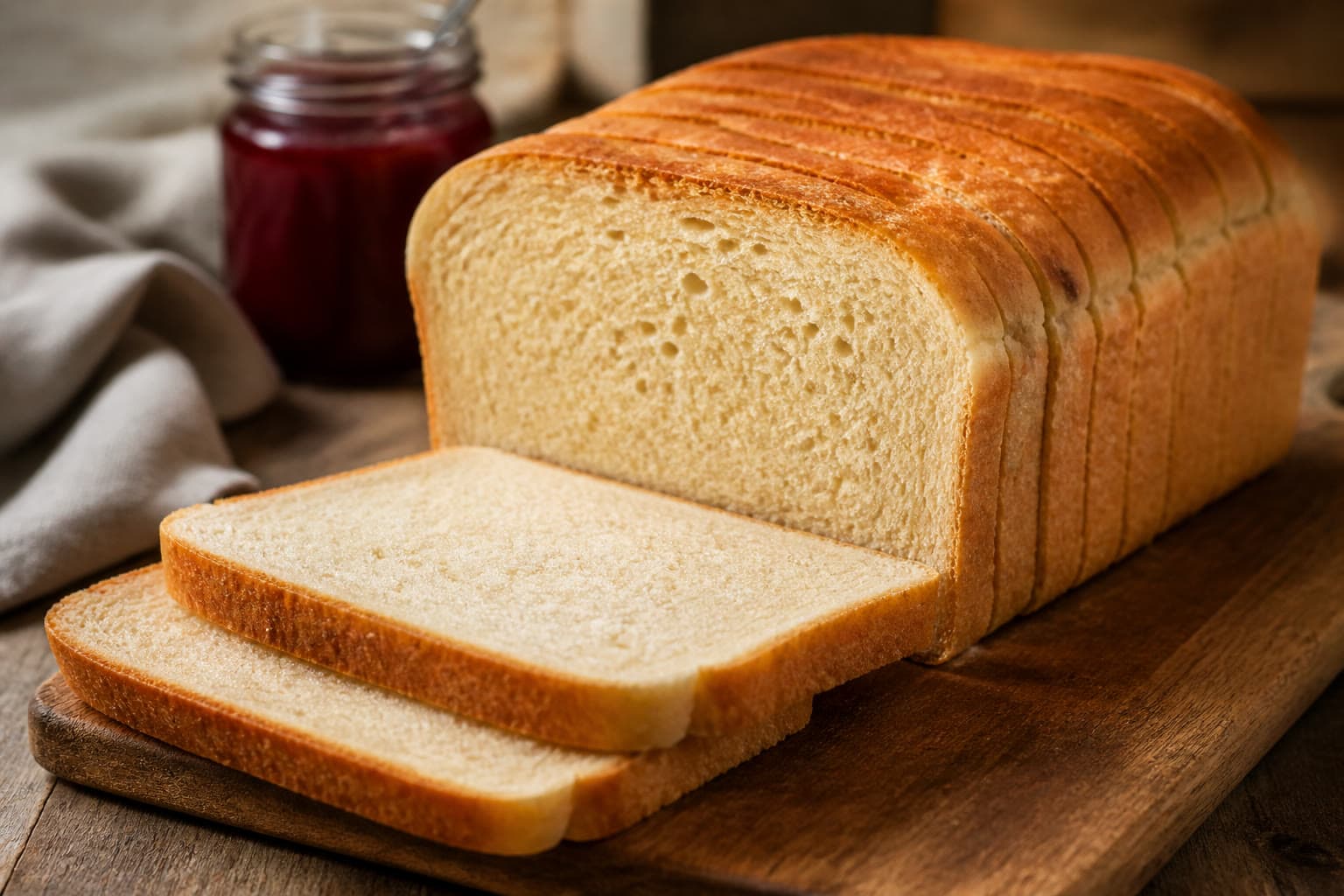
Gluten-Free Sourdough Sandwich Bread
A Pullman-style pan loaf with extra starch, milk, and 4.5% psyllium for square, toastable slices.
Artisan Loaves
BEGINNER
BEGINNER
NOV 14, 2025
Classic Gluten-Free Sourdough
The beginner country loaf linked from our starter guide: brown rice, sorghum, tapioca, and psyllium powder at 5%.