The Hub
Gluten-Free Sourdough: The Complete Home-Kitchen Guide
Gluten-free sourdough is naturally leavened bread made from gluten-free flours, a gluten-free starter, and a gel former such as psyllium husk. It is not fermented wheat. Mix at about 90-110% hydration with 4-7% psyllium, bake with steam, and cool at least 2 hours before slicing so the crumb can set.
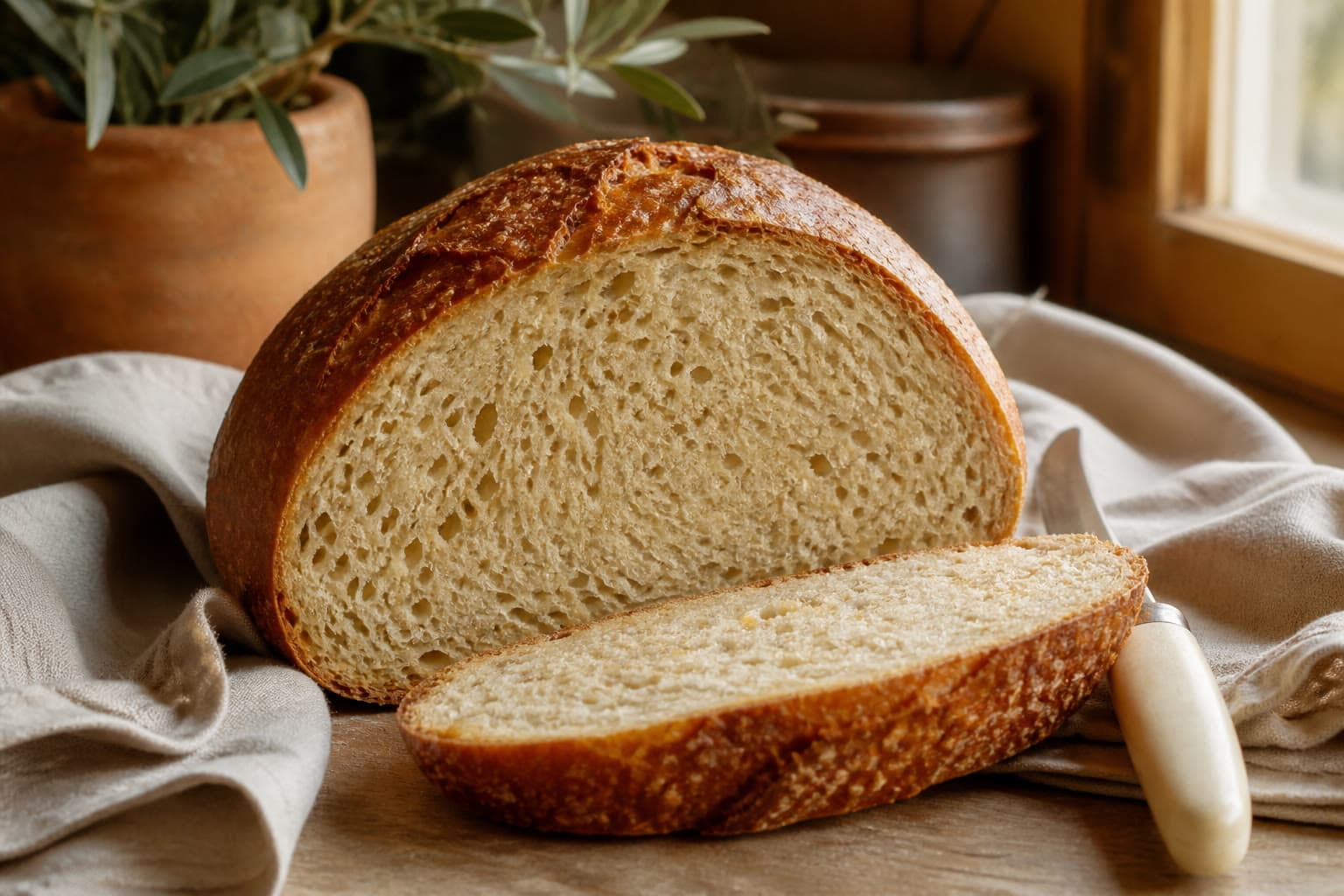
What this guide covers
What gluten-free sourdough actually is, how it differs from wheat, and the starter, blend, psyllium, bake, cool, and store sequence we use in Indianapolis.
Key takeaways
- Gluten-free sourdough is bread fermented with a wild yeast starter grown on gluten-free flours, never on wheat, rye, or barley.
- Structure comes from a flour blend plus 4-7% psyllium husk (baker's percent of total flour), not from gluten strands.
- Target dough hydration is usually 90-110% of flour weight, so the mix looks closer to thick batter than wheat dough.
- Psyllium powder weighs about 85% of an equivalent whole-husk dose; convert before you swap forms.
- An active gluten-free starter should reliably peak, with a yogurt-and-green-apple aroma, before you mix a loaf.
- Steam and a preheated Dutch oven build crust; gluten-free scoring is mostly decorative, not a spring valve.
- Cool the loaf at least 2 hours before slicing so the starch-psyllium gel can set and the crumb stops tasting gummy.
- For celiac households, use a dedicated gluten-free kitchen, certified gluten-free oats only, and never a shared wheat starter.
- Fermentation does not remove gluten from wheat. Gluten-free sourdough is not 'gluten-removed' wheat bread.
- Same-day, overnight, and cold-retard schedules all work; Indiana seasons change the peak window more than the formula does.
- Store cut loaves cut-side down, freeze extra slices, and refresh crust in a hot oven rather than the microwave.
What gluten-free sourdough is (the direct answer)
Gluten-free sourdough is bread leavened by a living culture of wild yeast and lactic-acid bacteria that has been grown only on gluten-free flours and water. The loaf gets its lift from gas those microbes produce, and it gets its shape from a hydrated gel of flour starch plus psyllium husk, not from wheat gluten. In our Indianapolis kitchen that means a 100% hydration starter (equal weights flour and water), a dough mixed at roughly 90-110% hydration, and psyllium at 4-7% of the flour weight.
It is not wheat bread that fermented until the gluten 'went away.' It is not a quick bread with a spoon of yogurt for tang. It is a naturally leavened dough built from inherently gluten-free grains such as sorghum, brown rice, millet, teff, and buckwheat, lightened with starches, and bound so it can be shaped, proofed, and baked like bread.
If you only remember three numbers from this hub, remember these: hydration 90-110%, psyllium 4-7% baker's percent, and a cool of at least 2 hours before the knife comes out. The rest of the guide is how Andrew and Claire actually use those numbers on a Tuesday in Indiana.
How it differs from wheat sourdough
Wheat sourdough is a protein story. Glutenin and gliadin hydrate, then align into a continuous network you can stretch into a windowpane. That network traps gas, lets you laminate with folds, and splits along a lame cut so the loaf springs in a controlled way. Gluten-free sourdough is a colloid story. Starches gelatinize; psyllium forms a mucilage; the dough holds gas the way a thick pudding holds bubbles, not the way a balloon holds air.
That single difference changes every habit wheat bakers bring to the bench. You will not knead strength into this dough. You will not get the same ear from an artistic score. You will mix something that looks too wet, let psyllium drink for 10-20 minutes, then scoop or scrape it into a banneton or pan. Oven spring still happens, but it is steam plus gel set plus residual yeast activity, not a gluten membrane inflating.
Flavor, though, is a shared language. Long fermentation still makes organic acids, still mellows whole-grain bitterness, still gives you that yogurt-meets-orchard tang. Sorghum and teff just speak it with a different accent than bread flour.
- No windowpane test: judge the dough by sheen, scoopability, and how it mounds after a rest.
- Folds are optional redistribution, not gluten development.
- Scoring is mostly decoration; a lame does not vent a gluten skin.
- Cooling is structural, not optional courtesy.
The gluten-free starter: build, feed, and peak
We keep a 100% hydration starter, which simply means 1:1 flour to water by weight. Brown rice flour is our default because it ferments readily and stays mild. Sorghum makes a fruitier jar. A 50/50 mix of the two is what lives on our counter most weeks. Feed equal weights of starter, flour, and water when you want a vigorous peak (a 1:1:1 refresh), or use a leaner 1:2:2 when the kitchen is hot and you need a longer runway.
Days 1-3 of a brand-new starter can look quiet, then suddenly hoard bubbles and smell like wet flour. That first surge is often bacteria getting organized, not a mature yeast population. Keep feeding. By the end of the first week you want a culture that rises and falls on a schedule you can predict. Ready-to-bake for us means: it has at least doubled, the surface is domed and aerated, it smells pleasantly sour rather than paint-thinner sharp, and a spoonful floats or at least looks mousse-light.
Chlorinated tap water can slow a new culture. Indianapolis municipal water is fine once a starter is established if you leave a jug out or use a simple carbon filter. Keep the jar loosely covered so gas can escape. Mold means compost the jar and start over; a dark hooch layer on a neglected fridge starter is usually hunger, not death—pour or stir, then give two or three room-temperature feedings before you bake.
Flour blend architecture
A gluten-free loaf is a committee. Whole-grain flours bring protein, flavor, minerals, and food for the starter. Starches bring lightness and a finer crumb. If you bake with only brown rice, you get a dense, slightly gritty bread. If you bake with only tapioca and potato starch, you get a pale, sticky crumb that stales into packing foam. We aim for roughly 55-70% whole-grain flours and 30-45% starch by flour weight, then adjust by loaf style.
Sorghum is our country-loaf backbone: mild, faintly sweet, good fermentation. Brown rice is reliable and inexpensive. Millet adds a sunny, cake-like tenderness. Teff and buckwheat are the dark-loaf pair, mineral and molasses-leaning. Tapioca starch stretches and shines the crumb. Potato starch keeps it moist. Cornstarch crisps and lightens, especially in sandwich bread and bagels.
Commercial 1:1 blends can work in a pinch, especially for focaccia or pancakes, but they are usually built for cookies and muffins. Many already contain xanthan. If you add a full psyllium dose on top of a xanthan blend, the gel can go tight and gummy. Read the bag. When we use a commercial blend we often drop psyllium toward the 4% end of the range and watch the dough, not the recipe line, for the final splash of water.
Psyllium: the gluten analogue in baker's percent
Psyllium husk is the reason this dough can be shaped instead of poured like a cake. The husk is mostly soluble fiber that swells into a mucilage. In baker's percent we use 4-7% of the total flour weight. Lean artisan boules sit near 5-6%. High-hydration focaccia can take 6-7% so it still stands. Soft sandwich bread often likes 4-5% plus a pan to support the sides.
Whole husk and powder are not interchangeable by volume or by a lazy 1:1 weight swap. Psyllium powder is denser and more finely ground; as a rule of thumb, powder is about 85% of the whole-husk weight for the same gelling power. If a formula calls for 20g whole husk, start near 17g powder and judge the gel. Too much powder turns the crumb rubbery. Too little and the loaf puddles.
We usually bloom psyllium in a portion of the dough water for 5-10 minutes until it looks like a loose, tawny gel, then mix it with starter, remaining water, and flours. Mix-in methods (dumping dry psyllium with the flour) also work if you rest the dough long enough for the husk to hydrate. What you cannot skip is time: impatient mixing leaves dry specks that later steal water from the crumb.
Mix, rest, and shape a batter-like dough
Scale everything. Gluten-free baking punishes scooped cups because starch packs differently than sorghum. We mix with a stiff spatula or a stand mixer paddle, not a dough hook. Combine starter, water, and psyllium gel, then add the dry blend and salt. Mix until no dry flour remains and the dough looks glossy and cohesive, like thick oatmeal that holds a ridge.
Rest 10-20 minutes. This autolyse-like pause is when psyllium and bran finish drinking. The dough that looked hopelessly slack will often become scoopable. If it still pours in a ribbon after the rest, add a teaspoon or two of whole-grain flour or a pinch more psyllium, not a handful. If it already tears and looks matte, mist or fold in water a teaspoon at a time toward the top of the 90-110% window.
Shape with wet or oiled hands. For a boule, scrape onto a wet counter, tuck the edges under, and plop it seam-side up into a lined banneton or a towel-lined bowl. For sandwich bread, scrape straight into a greased pan and smooth the top. You are organizing a gel, not building surface tension the wheat way. A smooth top still bakes more evenly, so spend thirty seconds on it.
Ferment, proof, and read the dough
Many of our formulas mix, shape, and proof in one rise because there is no gluten to punch down and rebuild. A bulk ferment in the bowl still helps flavor on warm days: 30-60 minutes before shaping can round the acidity. The main proof is done when the dough is aerated, slightly domed, and jiggly rather than when it has doubled like a wheat boule. Overproofed gluten-free dough collapses and bakes into a sad saucer.
Same-day loaves proof 60-120 minutes at 75-78F. Overnight proofs live in a cooler room or the refrigerator. A cold retard of 8-18 hours in the fridge is our favorite for morning bakes: flavor deepens, scheduling gets easy, and the gel firms enough to score a shallow pattern if you want one. Indiana January kitchens may need the oven-with-the-light-on trick. August kitchens may need a shorter proof and a cooler water temperature.
Trust smell and jiggle more than the clock. Underproofed dough feels tight and bakes dense. Ready dough springs back slowly from a wet fingertip. Spent dough weeps, smells harshly acidic, and does not recover. If you overshoot, bake it as focaccia in a pan rather than forcing a boule.
Bake with steam, heat, and an honest thermometer
Preheat a Dutch oven at 475-500F for at least 30-45 minutes. The vessel is a tiny steam chamber. Load the loaf on parchment, lid on, and bake 30-40 minutes covered, then 15-25 minutes uncovered until the crust is deep mahogany. Pale gluten-free crusts usually mean low heat, too much steam left at the end, or a starch-heavy blend that never browns well. Sorghum and teff brown more willingly than a rice-and-cornstarch mix.
Sandwich bread and bagels have their own heat stories, but the interior target is consistent: we look for about 205-210F in the center with an instant-read thermometer. Starch gelatinization and psyllium set need that heat. Pulling at 190F because the crust 'looks done' is how you get gummy slices tomorrow.
A baking steel or stone under a loaf pan helps the bottom crisp. A lame slash can look pretty and can keep a top from splitting in a random place, but it will not create a wheat-style ear. We score shallowly, if at all, and let the Dutch oven do the real work.
Cool at least two hours before slicing
This is the instruction everyone wants to skip and the one that decides whether the loaf tastes like bread or like warm pudding. While the crumb is hot, water is still migrating and the starch-psyllium gel is still setting. Cut too soon and you compress a half-set network; the slice looks shiny and smears on the knife.
We cool boules and pan loaves on a wire rack, sides unwrapped, for at least 2 hours, and we prefer 3 hours for large Dutch-oven loaves. Overnight cooling is fine. The crust will soften a little as moisture equalizes; that is normal. If you need the psychological win of tearing bread at the table, tear a heel after 45 minutes and save the rest of the loaf for proper slicing later.
Gummy crumb after a full cool is a different diagnosis: underbake, too much starch, too much water, or a psyllium gel that never had enough whole-grain structure. Do not confuse that with the temporary gumminess of a loaf you cut at minute twenty.
Store, freeze, and bring the crust back
Once the loaf is fully cool, we leave it cut-side down on a wooden board, cut surface against the wood, for the first day. The crust stays happier than it does in a plastic bag, which traps moisture and wrinkles the crust into leather. From day two, slice what you need and freeze the rest in a double bag with the air pressed out.
To refresh, toast slices or slide a portion into a 350-375F oven until the crust re-crackles. A microwave will heat the crumb and revive the gel into gumminess; use it only if you are making breadcrumbs. Gluten-free sourdough stales differently from wheat: it can feel dry at the edge and wet at the center if it was bagged warm. Always cool first.
Discard is not a storage method for bread, but it is how we keep the starter honest. Unused starter from a feeding becomes pancakes, crackers, or English muffins. A healthy jar on the counter is fed daily; a fridge jar is fed weekly and given two wake-up feedings before a showpiece loaf.
Celiac-safe practice, oats, and the wheat myth
Fermentation does not scrub gluten out of wheat. People with celiac disease need bread made from gluten-free ingredients, not long-fermented wheat. We treat that as a bright line in this kitchen and on this site. If you are baking for celiac family or guests, use a dedicated gluten-free kitchen or at least dedicated tools, wipe flour dust that travels farther than you think, and never share a starter that has ever eaten wheat, rye, or barley.
Oats are a special case. They are gluten-free as a plant, but they are routinely contaminated with wheat in fields and mills. We only use certified gluten-free oats, and we say so in recipes that include them. If a guest is highly sensitive, we offer an oat-free loaf such as the brown-rice sorghum country loaf or the teff-buckwheat dark loaf.
Label your jars. A 'sourdough starter' in a house that also bakes wheat is an accident waiting for a sleepy morning. Our full safety notes live in the celiac guide; this hub only needs you to leave with the right default: inherently gluten-free grains, dedicated handling, certified oats or none.
How we bake this in Indianapolis
Andrew feeds the starter while the coffee blooms. Claire reads the weather the way wheat bakers read the windowpane. Our house in winter sits near 68F; the starter wants a warmer corner, so it lives near the kettle, not on the north windowsill. Summer is the opposite problem: a 78F kitchen plus 100% hydration dough can overproof while you answer an email. We shorten the proof, chill the water, or move the banneton to the fridge after 40 minutes.
Humidity along the White River does not rewrite baker's percent, but it changes how flour in the bin already feels. Rainy weeks we hold a splash of water at the end of mixing and add it only if the dough looks matte after the rest. Dry January furnace air can take the extra splash. That is the whole mystery of 90-110%: it is a window, not a personality test.
If you are starting from zero, bake the classic house loaf first, then the sandwich pan loaf, then play with focaccia and pizza where the pan forgives. Keep notes. The science is real, and so is the Tuesday-night grill cheese made with bread you cooled long enough to slice clean.
Where to go next from this hub
Use this page as the map, not the only recipe. The flour-blend guide explains why sorghum and tapioca are not rivals. The psyllium guide covers gel versus mix-in, powder math, and purple dough. Troubleshooting is for the loaf that already happened. Fermentation schedules are for the loaf you have to fit around a workday. Equipment is for the Dutch oven question. Hydration-and-crumb is for the batter panic. Nutrition is for the honest, non-medical conversation about fermentation, fiber, and FODMAPs.
Then bake. A guide without a loaf is just a well-organized worry. Scale the flour, bloom the psyllium, trust the ugly dough, give it steam, and wait those 2 hours. We still wait. The wait is part of the bread.
FAQ
What is gluten-free sourdough bread?
It is bread raised by a wild yeast and lactic-acid culture grown on gluten-free flours. The dough is bound with psyllium (typically 4-7% of flour weight) and mixed wet, often 90-110% hydration, then baked and cooled at least 2 hours before slicing.
Is gluten-free sourdough actually gluten-free?
Only if every ingredient and every tool is gluten-free. A wheat starter, shared flour dust, or regular oats can add gluten. Fermenting wheat dough does not make it safe for celiac disease.
How is gluten-free sourdough different from wheat sourdough?
Wheat dough is a stretchy gluten network you fold and score. Gluten-free dough is a hydrated starch gel held by psyllium. It does not windowpane, benefits less from scoring, and needs a full cool so the interior can set.
Do I need xanthan gum if I use psyllium husk?
Usually no for artisan loaves. Psyllium supplies the long, elastic gel. Xanthan is a different hydrocolloid, useful in small amounts for sandwich bread or pizza, but it is not a one-for-one psyllium substitute.
How long does a gluten-free sourdough starter take?
Most brown-rice or sorghum starters show life in 2-4 days and bake reliably after 7-14 days of consistent feedings. Cool Indianapolis kitchens slow that window; 75F shortens it.
Why is gluten-free sourdough gummy in the middle?
The usual causes are slicing before a 2-hour cool, underbaking (internal temperature under about 205-210F), too much starch without enough whole-grain flour, or an overhydrated gel that never set.
Can people with celiac eat sourdough bread?
They can eat sourdough made entirely from gluten-free ingredients in a kitchen protected from wheat flour dust. Traditional wheat sourdough is not safe, even when fermented a long time.
What flour is best for gluten-free sourdough?
A blend. Sorghum and brown rice carry flavor and fermentation. Teff and buckwheat add color and mineral taste. Tapioca, potato starch, and cornstarch lighten crumb. No single flour replaces bread flour.
How do you store gluten-free sourdough?
Cool completely, then keep the loaf cut-side down on a board for a day, or bag it once fully dry-to-the-touch. Freeze slices by day two. Re-crisp in a 375F oven; skip the microwave, which revives gumminess.
Why does gluten-free dough look like batter?
Without gluten, water has to swell starches and psyllium until they form a scoopable gel. At 90-110% hydration that gel looks loose in the bowl and firms as it rests and bakes.
Bake from this
Related recipes
Artisan Loaves
BEGINNER
BEGINNER
NOV 14, 2025
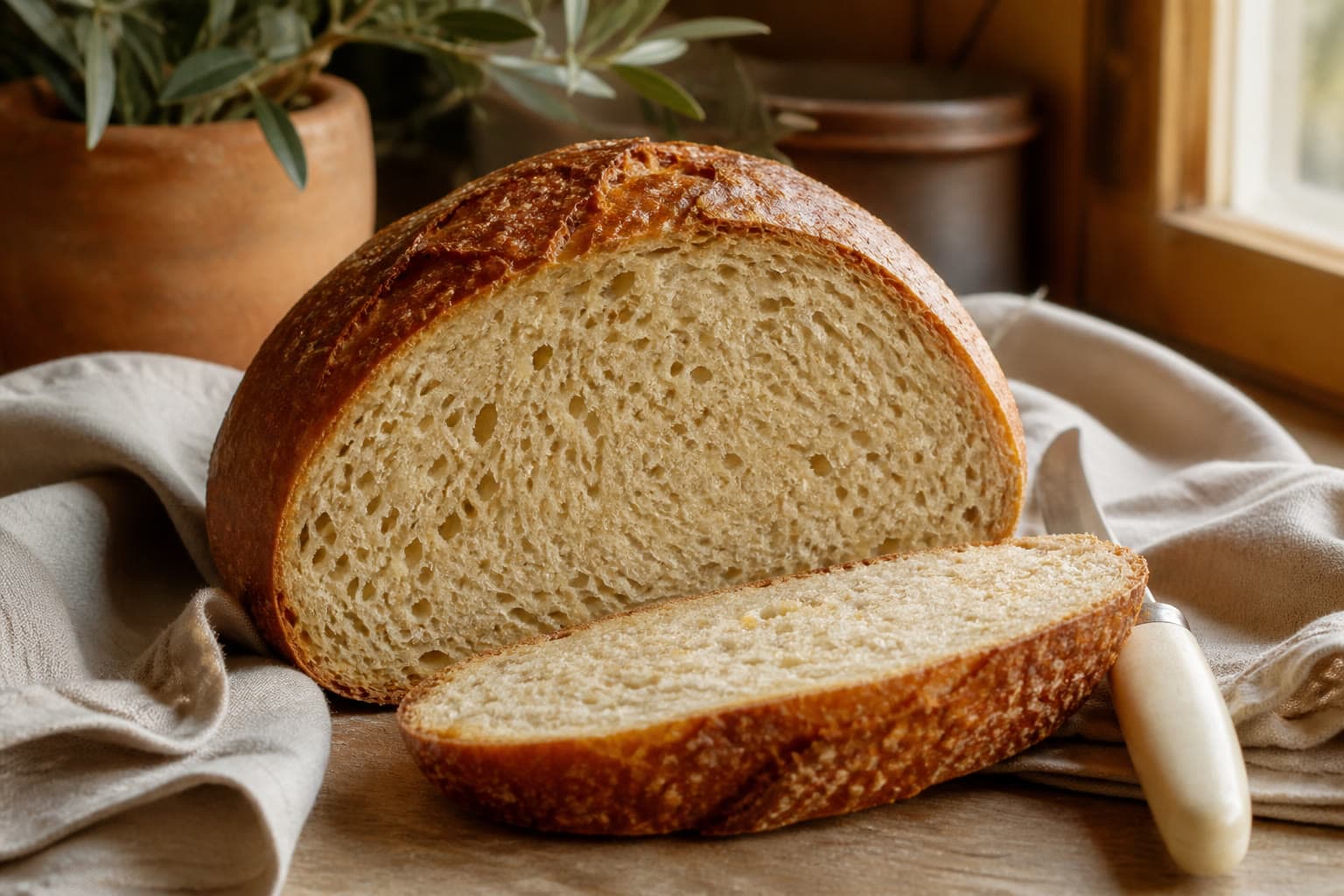
Classic Gluten-Free Sourdough
The beginner country loaf linked from our starter guide: brown rice, sorghum, tapioca, and psyllium powder at 5%.
Artisan Loaves
INTERMEDIATE
GLUTEN FREE SOURDOUGH
NOV 7, 2025
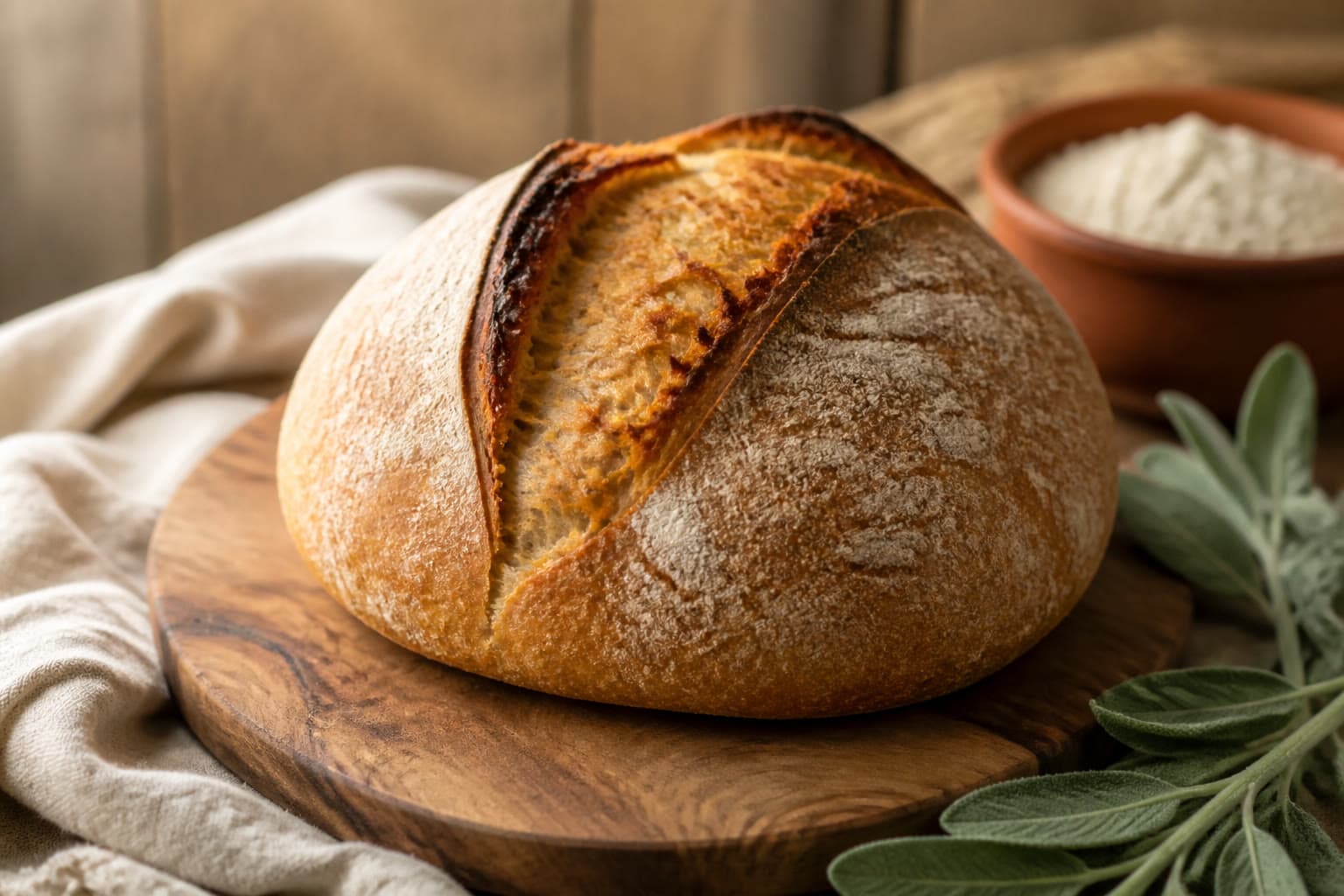
Artisan Gluten-Free Sourdough Bread
Our upgraded house boule: King Arthur gluten-free bread flour, whole psyllium husk, and a 500F Dutch oven for a blistered crust.
Sandwich Breads
BEGINNER
SANDWICH
MAR 1, 2026
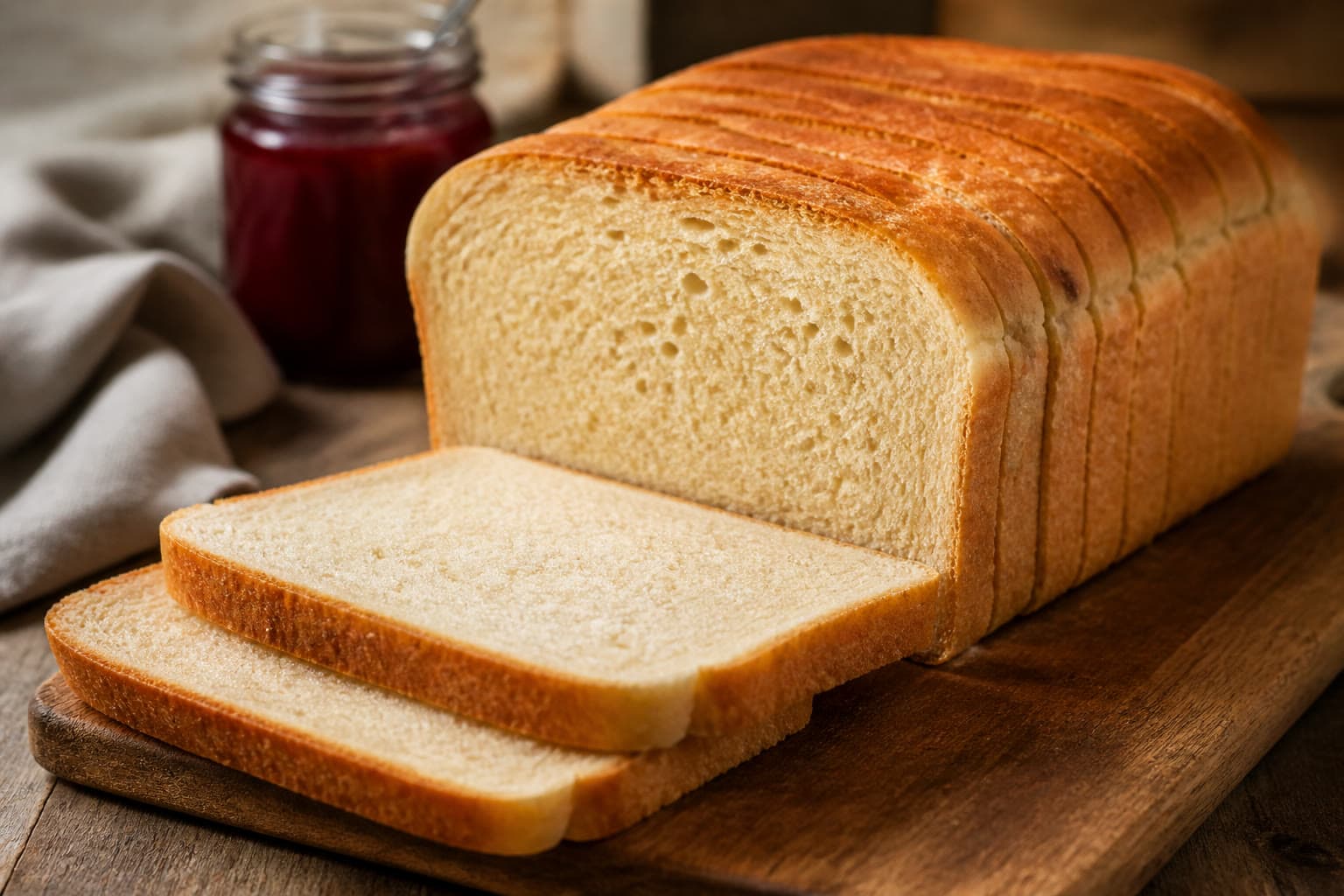
Gluten-Free Sourdough Sandwich Bread
A Pullman-style pan loaf with extra starch, milk, and 4.5% psyllium for square, toastable slices.
Artisan Loaves
BEGINNER
COUNTRY LOAF
DEC 2, 2025
Brown Rice Sorghum Country Loaf
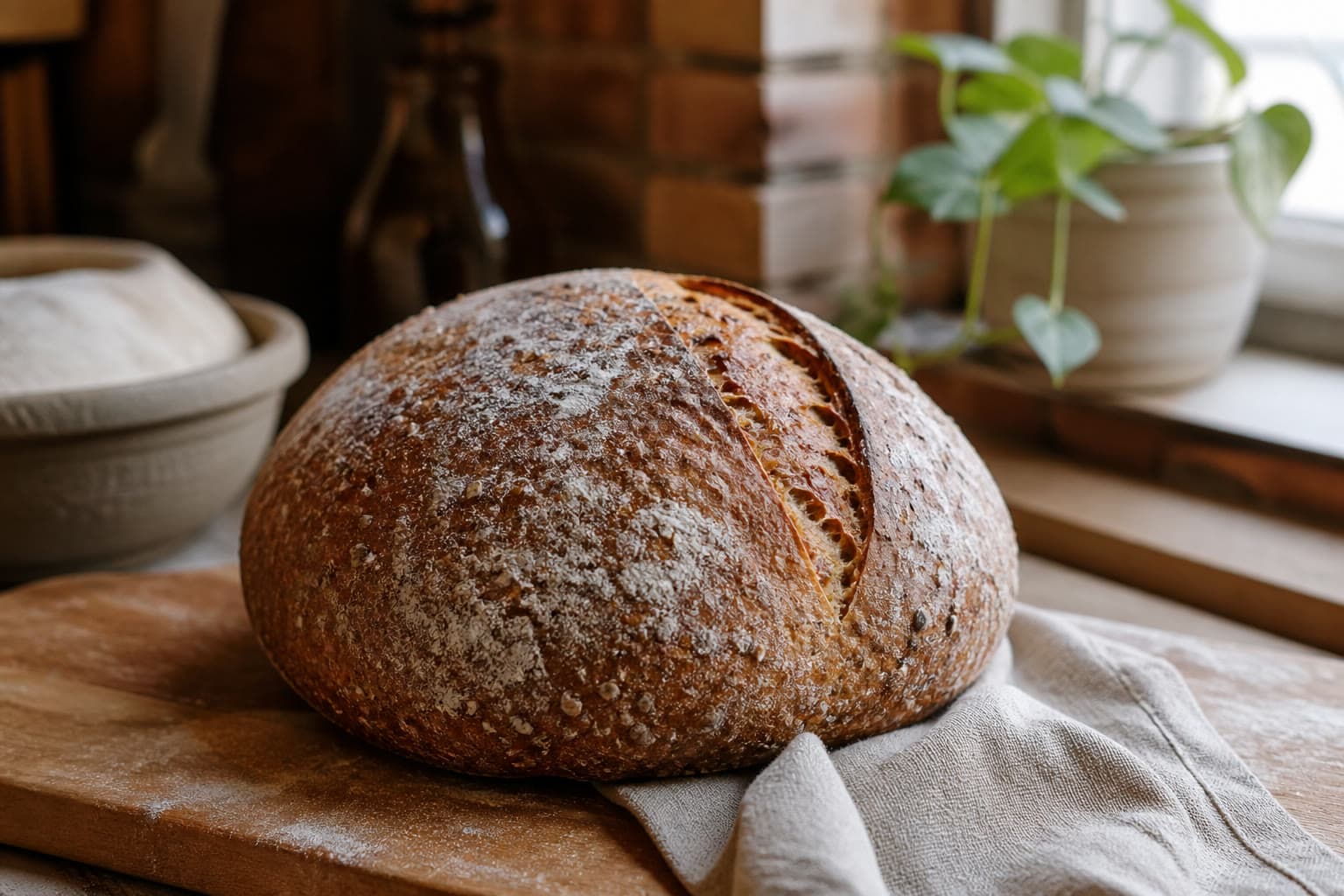
A rice-forward country loaf with sorghum sweetness, a little potato starch, and whole psyllium gelled 10:1 before mixing.