Artisan Loaves · beginner
Classic Gluten-Free Sourdough
Key takeaway
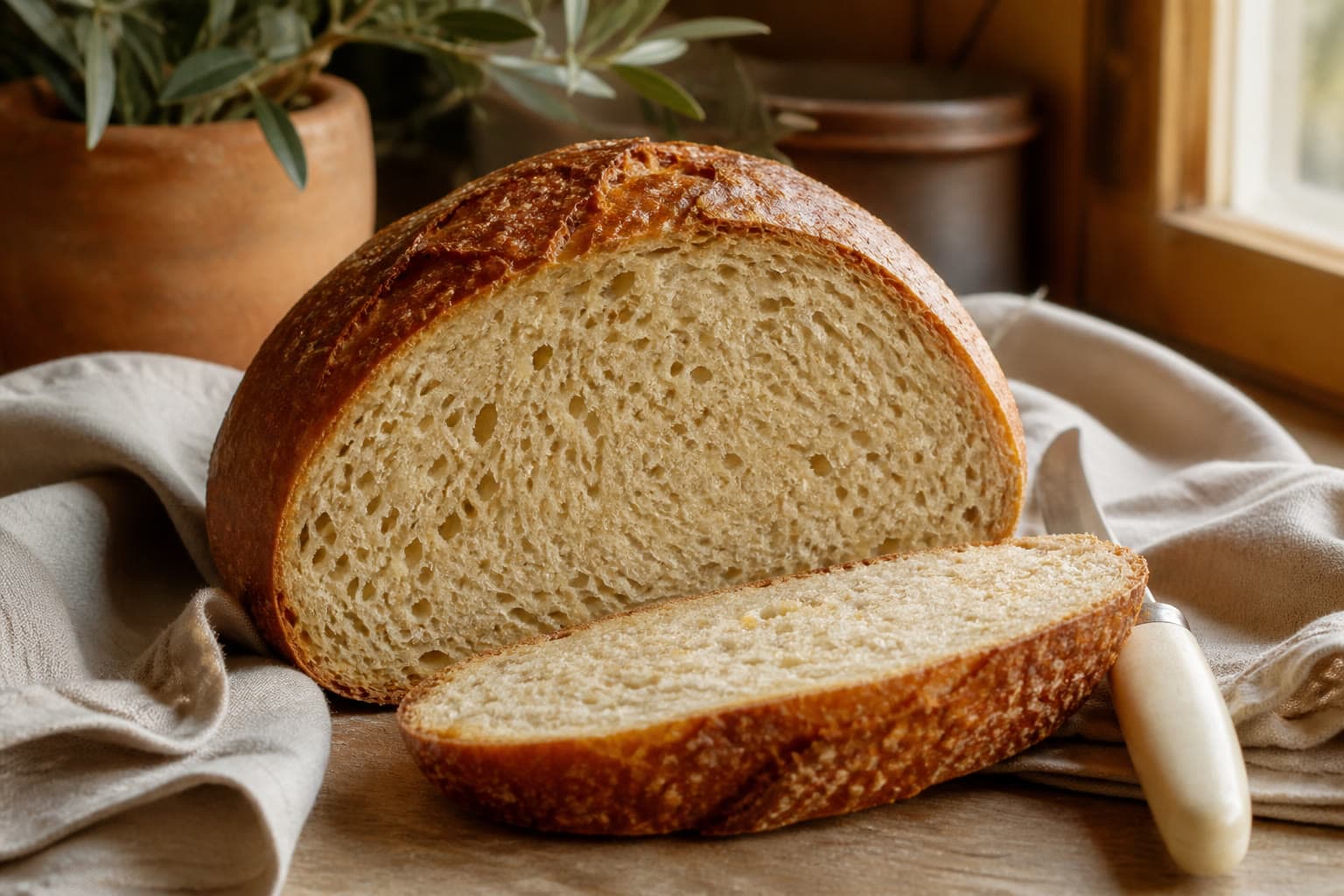
The classic Kittridge gluten-free country loaf is 500g brown rice–sorghum–tapioca flour, 5% psyllium powder, 95% hydration, and a two-hour cool after a 500F Dutch-oven bake.
The beginner country loaf linked from our starter guide: brown rice, sorghum, tapioca, and psyllium powder at 5%.
Prep
25m
Psyllium rest
12–15 minutes
Bake
55m
Servings
12
Difficulty
beginner
The short answer
If you just got a gluten-free starter peaking on the counter, this is the first loaf to bake. The blend is three pantry flours — brown rice for body, sorghum for a wheat-like sweetness, tapioca for chew — with psyllium powder at 5 percent of flour weight, inside the 4–6 percent powder range we use for lean breads. Hydration is about 95 percent, so the dough is thick and scoopable, not a pourable batter and not a wheat ball. Salt sits at 2 percent. We inoculate with 25 percent active sorghum or brown-rice starter at 100 percent hydration, which gives beginners a reliable rise without racing to overproof. Mix the powder through the dry flours so it cannot clump, then let the bowl rest while the gel forms. Proof until the loaf looks inflated and smells gently sour, bake in a 500F Dutch oven, and cool at least two hours. This is the loaf we send people to from the starter guide because the formula is honest, the cues are visible, and the crumb is even enough for toast, avocado, and a weekday sandwich if you slice it thin.
For the method behind gluten-free structure, read the gluten-free sourdough guide and keep a lively culture with the starter guide.
Why it works
- Brown rice supplies structure and mild flavor; sorghum rounds the taste; tapioca adds the chew that gluten-free crumb otherwise lacks.
- Psyllium powder at 5% hydrates quickly and is simple to mix, which is why we teach this loaf first.
- 95% hydration is wet enough for gelatinization but stiff enough for a beginner to mound in a banneton.
- 25% starter shortens the learning curve without pushing the dough into a sour, collapsing overproof.
Ingredients
- 200g (1 1/4 cups)brown rice flour
- 175g (1 1/2 cups minus 1 Tbsp)sorghum flour
- 125g (1 cup plus 1 Tbsp)tapioca starchalso labeled tapioca flour
- 25g (2 1/2 Tbsp)psyllium husk powder5% of flour weight; powder, not whole husk
- 10g (1 3/4 tsp)fine sea salt2% of flour weight
- 125g (about 1/2 cup)active gluten-free sourdough starter (100% hydration)25% of flour; sorghum or brown rice starter
- 475g (2 cups)lukewarm water (80F)95% hydration relative to 500g flour
- as neededrice flour, for dusting
Equipment
- Digital kitchen scale
- Large mixing bowl
- Stiff spatula
- Banneton or towel-lined bowl
- Parchment paper sling
- 5–6 quart Dutch oven with lid
- Bread lame or sharp knife
- Wire cooling rack
- Instant-read thermometer
Instructions
- 1
Confirm the starter is active: it should have doubled since feeding, look spongy, and smell pleasantly sour with a hint of cooked cereal. If it has fallen and smells harsh, feed it and wait for a peak before mixing dough.
check
- 2
Whisk brown rice flour, sorghum flour, tapioca starch, psyllium powder, and salt in a large bowl until the powder disappears into the flours. Psyllium powder clumps if it hits water in a pile, so this dry mix is not optional.
3 minutes
- 3
Stir starter into the 475g water until no ribbons of starter remain. Pour over the dry mix and stir hard for about a minute. You want a thick, even batter the color of wet sand, with no dry flour at the bottom and no gel lumps.
4 minutes
- 4
Cover 12–15 minutes. Press the surface: it should feel like wet clay that slowly springs, not soup. The powder hydrates faster than whole husk, so this rest is shorter than our artisan loaf. If it still looks glossy and loose, give it 5 more minutes.
12–15 minutes
- 5
Wet your hands and fold the dough over itself in the bowl until it mounds. It will feel sticky and cohesive, like thick hummus that holds ridges. Shape into a round and place in a rice-floured banneton or bowl, seam-side up.
5 minutes
- 6
Proof covered at 75–78F until the loaf has risen by about half, the surface looks softly domed, and a floured fingertip dent fills back slowly. Typical window: 3.5–4.5 hours. It should smell like buttermilk and sorghum, not vinegar.
3.5–4.5 hours
- 7
Heat a lidded Dutch oven at 500F for 45 minutes. The empty pot should radiate heat when you open the oven; if it does not, keep preheating.
45 minutes
- 8
Invert onto parchment. The loaf should jiggle slightly but hold its round. Score 1/2 inch deep. If the knife drags, dip it in water and cut with one confident stroke.
2 minutes
- 9
Bake covered 40 minutes, then lid-off 12–15 minutes until the crust is medium brown, the score is open, and the center reads 208–210F. It should smell toasty, not starchy-raw.
52–55 minutes
- 10
Cool on a rack at least 2 hours. Listen for the crust to crackle. Slice when the loaf feels merely warm, not hot, and the crumb looks matte and even rather than wet and shiny.
2 hours
Nutrition
Approximate values per serving. Always verify labels if you bake for celiac safety.
| Nutrient | Amount |
|---|---|
| Calories | 172 kcal |
| Protein | 3 g |
| Carbs | 38 g |
| Fat | 1 g |
| Fiber | 4 g |
| Sodium | 322 mg |
Substitutions
- Psyllium powder (25g)
- 29g whole psyllium husk (powder is ~85% of husk weight). Gel the husk with 290g of the formula water if you prefer a 10:1 gel, then mix the remaining 185g water with the starter.
- Sorghum flour (175g)
- Millet flour, same weight. Millet tastes a bit corn-like; fermentation still behaves similarly.
- Tapioca starch (125g)
- 100g tapioca plus 25g potato starch for a slightly more tender crumb. Avoid replacing all the tapioca with cornstarch; the loaf turns brittle.
- Sorghum starter
- Brown-rice starter at the same 125g. Keep it at 100% hydration.
Storage
Wrap the cooled loaf in a clean cotton towel for 2 days at room temperature. For longer keeping, slice and freeze. Toast brings back the crust.
Notes
- This is the loaf linked from our starter guide. Use starter that reliably doubles; a young, barely bubbling culture will bake into a brick.
- Psyllium powder at 5% (4–6% range) is stronger, gram for gram, than whole husk. Do not also add xanthan.
- 95% hydration should look thick, not pourable. If your brown rice flour is very thirsty, add water 10g at a time until the batter just loosens, staying near 95–100%.
- Weigh flours. Cup measures of rice flour vary enough to wreck hydration.
- Cool fully. Beginners slice early; that is why so many first loaves are called gummy.
FAQ
What is the best first gluten-free sourdough loaf after I build a starter?
This classic country loaf. The blend is three flours you can find in Indianapolis grocery stores, psyllium powder is mixed into the dry ingredients, and 25% starter gives a dependable rise while you learn the look of a finished proof.
Why does this recipe use psyllium powder instead of whole husk?
Powder is easier for beginners to disperse and, at 4–6% of flour weight, gives a slightly tighter, more sandwich-friendly crumb. Whole husk at 5–7% is excellent too; use about 29g husk in place of 25g powder.
My gluten-free sourdough looks like batter. Did I do it wrong?
At 95% hydration it should look like thick batter that firms during the 12–15 minute rest. After the rest it should mound. If it still pours after 20 minutes, your flour was under-measured; whisk in 1–2 tablespoons sorghum flour.
Can I bake this recipe without a Dutch oven?
Yes, on a hot baking stone with a pan of boiling water for steam, 500F, then finish without steam. The crust will be a little thinner. A Dutch oven is still the most forgiving method.
How do I know this beginner loaf is proofed enough?
It should gain about 50% volume, feel airy at the edges, and smell mildly tangy. A wet finger dent should fill back slowly, not snap shut (underproofed) or stay as a crater (overproofed).
Bake next
Related recipes
Artisan Loaves
INTERMEDIATE
GLUTEN FREE SOURDOUGH
NOV 7, 2025
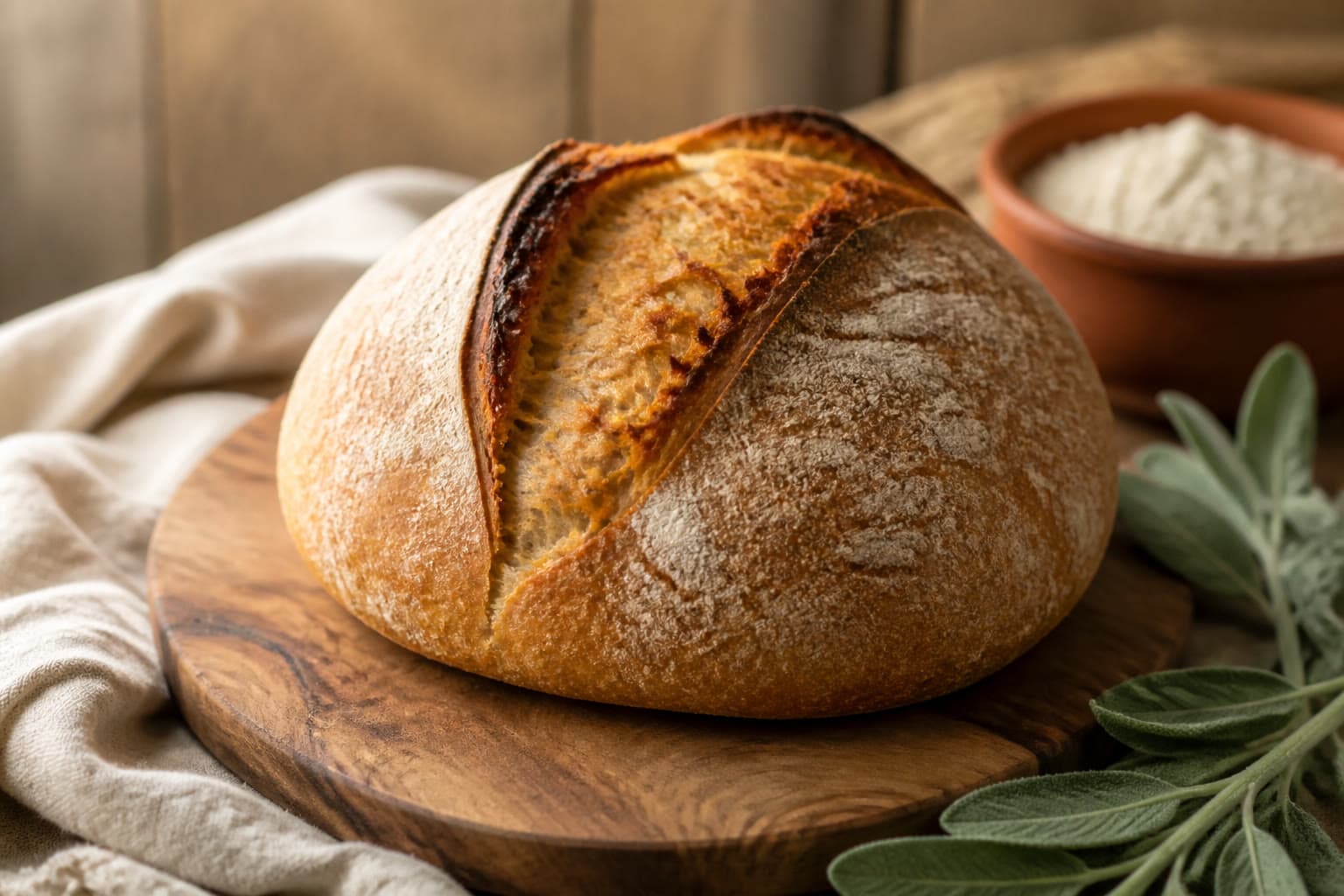
Artisan Gluten-Free Sourdough Bread
Our upgraded house boule: King Arthur gluten-free bread flour, whole psyllium husk, and a 500F Dutch oven for a blistered crust.
Artisan Loaves
BEGINNER
COUNTRY LOAF
DEC 2, 2025
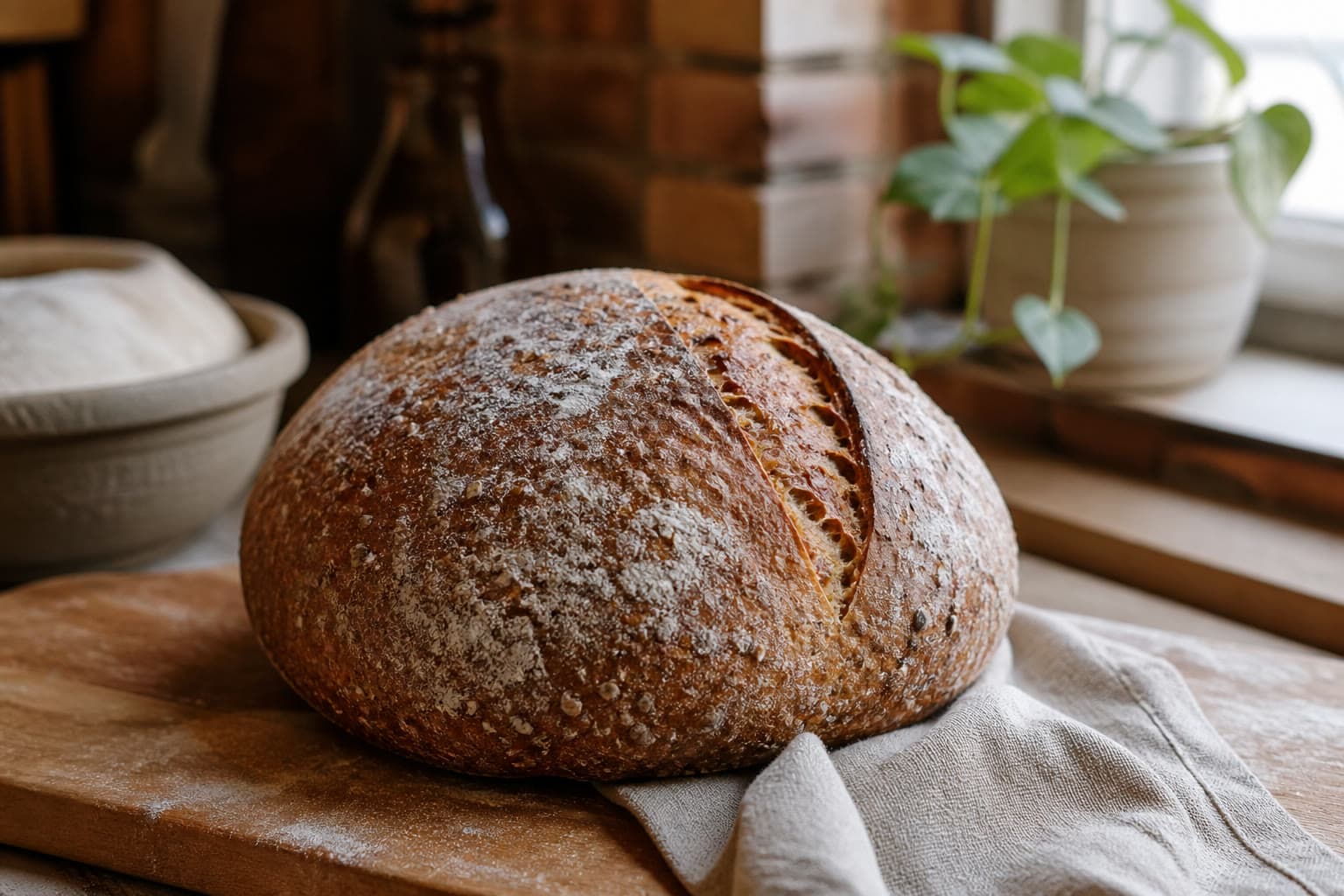
Brown Rice Sorghum Country Loaf
A rice-forward country loaf with sorghum sweetness, a little potato starch, and whole psyllium gelled 10:1 before mixing.
Artisan Loaves
BEGINNER
SAME DAY
APR 23, 2026
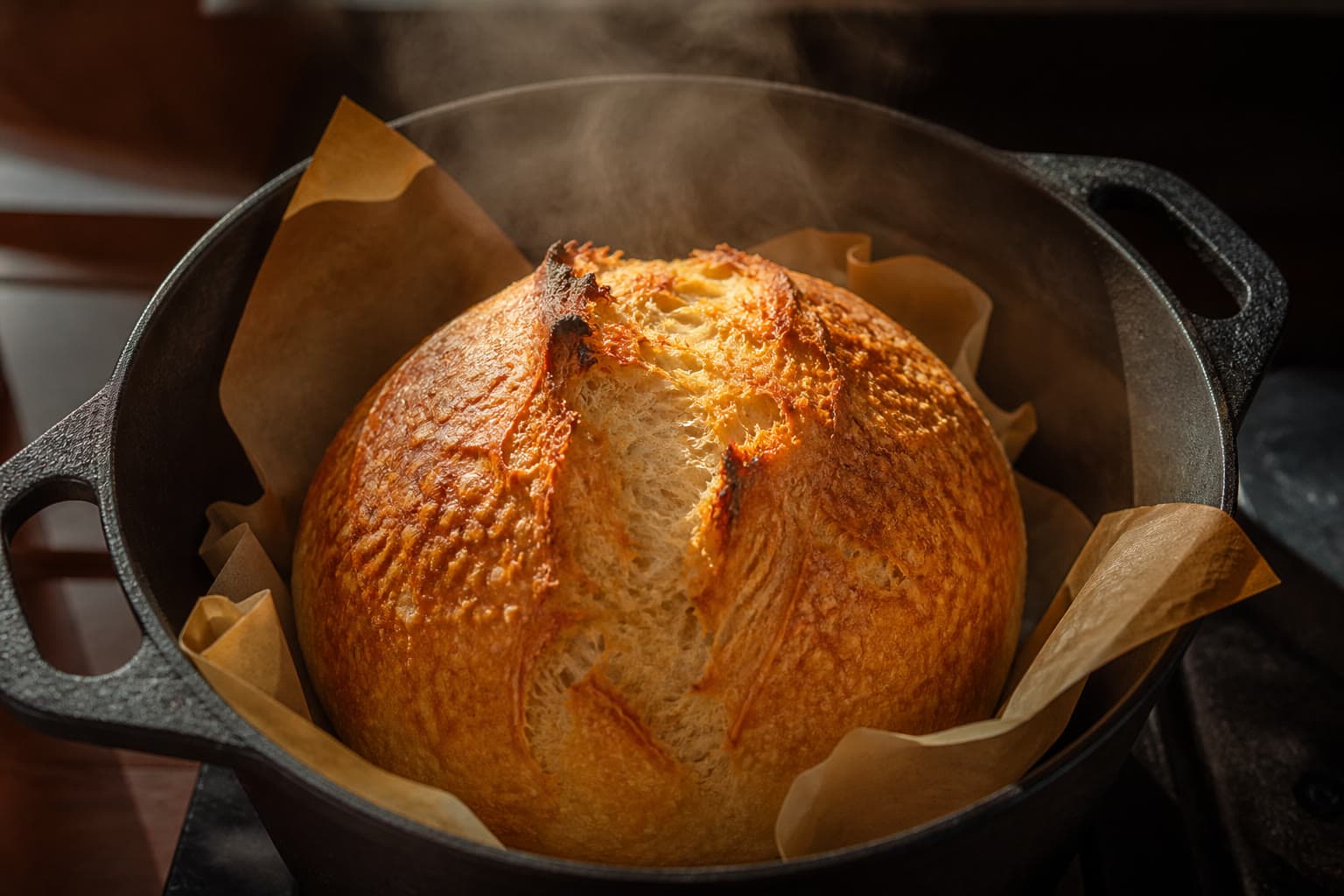
Same-Day Gluten-Free Sourdough
A warmer, 30% starter loaf you can mix after breakfast and bake before dinner — 6–8 hours total.
Technique
Keep the method close
Psyllium, fermentation temperature, and a celiac-safe starter matter as much as the formula.
About Andrew Kittridge
Home baker in Indianapolis documenting gluten-free sourdough: psyllium structure, whole-grain blends, and loaves that actually taste like bread.
More about the kitchen