The Blend
Gluten-Free Flour Blends for Sourdough: Protein, Starch, and Baker's Percent
A gluten-free sourdough blend is a mix of whole-grain flours and starches measured as 100% baker's percent. Sorghum and brown rice usually carry the loaf, teff and buckwheat add depth, and tapioca, potato starch, and cornstarch lighten crumb. Water at 90-110% and psyllium at 4-7% sit on top of that flour total.
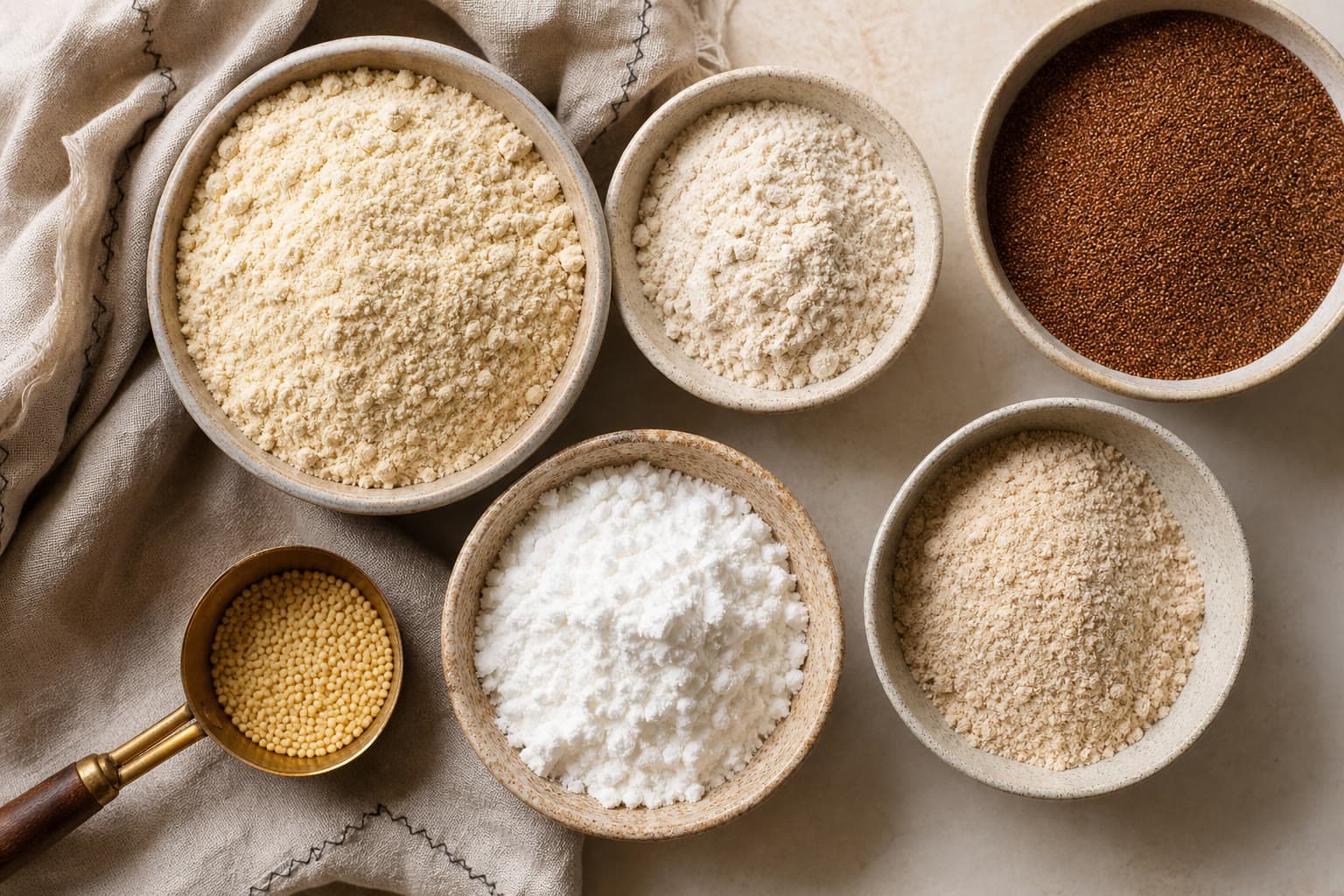
What this guide covers
How sorghum, brown rice, millet, teff, buckwheat, tapioca, potato starch, and cornstarch divide the work in a gluten-free sourdough loaf, plus commercial versus DIY baker's percent.
Key takeaways
- Treat the blend as 100% flour weight, then add water (90-110%) and psyllium (4-7%) on top of that flour total.
- Whole-grain flours supply flavor, fermentation food, and some protein; starches supply lightness and a finer crumb.
- A useful artisan starting split is about 60% whole-grain flours and 40% starches, then tune by loaf style.
- Sorghum is a mild, fermentable backbone; brown rice is reliable; millet tenderizes; teff and buckwheat darken and mineralize.
- Tapioca stretches and shines, potato starch moistens, and cornstarch lightens and crisps.
- Commercial 1:1 blends are built for cakes and cookies first; check for xanthan before stacking a full psyllium dose.
- DIY blends let you keep every grain certified gluten-free and scaled to the loaf you actually want.
- Dark loaves can run 70%+ whole grain if hydration and psyllium stay in range and you accept a tighter crumb.
- Sandwich bread likes extra starch and a pan; pizza and focaccia like tapioca for chew and blister.
- Weigh every flour. Volume cups of starch and sorghum do not agree with each other.
- If a loaf is sandy, increase starch or mill finer. If it is gummy and pale, increase whole grain or bake hotter and longer.
The direct answer: what a bread blend has to do
A gluten-free sourdough blend has three jobs: feed the culture, gelatinize into a pleasant crumb, and get along with psyllium. No single gluten-free flour does all three at bakery quality. Wheat bread flour is a fortunate accident of protein quality plus starch. Our DIY blends reconstruct that accident on purpose, using baker's percent so the formula survives a change of bag or brand.
Call the sum of every gluten-free flour and starch 100%. Water is typically 90-110% of that number. Psyllium is 4-7%. Salt is about 1.8-2.2%. Starter is often 15-25% as preferment (which itself is half flour, half water if you keep 100% hydration). Once you think that way, swapping millet for some sorghum is a conversation, not a panic.
In Indianapolis we buy grains from mills that publish gluten-test lots when we are baking for celiac friends. Flavor is why we blend. Safety is why we label the bins.
Protein versus starch: dividing the labor
Gluten-free 'protein flours' are still not gluten. Sorghum, brown rice, millet, teff, and buckwheat contain proteins, but those proteins do not form the elastic network wheat is famous for. They do brown, they do taste like food, they do buffer fermentation, and they do give the loaf a crust that smells like a bakery instead of a starch factory.
Starches are the lift and the softness. Tapioca (cassava) is stretchy when gelatinized and helps chew. Potato starch holds moisture and keeps the crumb from turning into sawdust on day two. Cornstarch sets firm and helps a sandwich slice and a bagel skin. Too much starch and you get pale, gummy, quick-staling bread that weeps after a 2-hour cool. Too little and you get a nutritious brick.
A practical artisan window is 55-70% whole-grain flours and 30-45% starches. Sandwich bread can invert toward more starch. A teff-buckwheat dark loaf can live at 70-80% whole grain if you keep hydration toward 100-110% and accept a closer crumb. Pizza crust loves tapioca. Focaccia loves a little extra potato starch for a moist interior under olive oil.
| Loaf style | Whole-grain flours | Starches | Notes |
|---|---|---|---|
| Country boule | 60-65% | 35-40% | Sorghum + brown rice backbone |
| Sandwich pan | 50-55% | 45-50% | Extra cornstarch or potato starch |
| Dark loaf | 70-80% | 20-30% | Teff + buckwheat, higher hydration |
| Focaccia / pizza | 50-60% | 40-50% | Tapioca for chew and blister |
| Bagels | 55-60% | 40-45% | A little extra psyllium to hold shape |
Sorghum: the quiet backbone
Sorghum is the flour we would take to a desert island. It is mild, faintly sweet, and friendly to wild yeast. It browns better than rice. It does not shout the way buckwheat does. In a country loaf it can be 30-45% of the blend without making the bread taste like a single-note cereal.
Technically, sorghum's protein does not help you knead, but its starch gelatinizes into a crumb that slices without much grit if the flour is finely milled. Coarse sorghum feels sandy. If your bag looks like polenta, mill it finer or blend with more starch and give a longer rest.
Claire prefers sorghum-forward loaves for grilled cheese. Andrew pushes the percentage up in winter when we want a paler, wheat-adjacent flavor for neighbors who are new to gluten-free bread. Neither of us uses sorghum as 100% of the flour; the loaf needs starch partners.
Brown rice: reliable fermentation and a familiar mildness
Brown rice flour is how most gluten-free starters are born, including ours. It is inexpensive, widely available in certified lots, and it ferments in a way that is easy to read: bubbles, a yogurt tang, a predictable rise. White rice flour ferments too, but it is closer to a starch and makes a less interesting crumb if it dominates.
The downside is texture. Even 'fine' brown rice can read as grit if it is a huge share of the loaf and you slice too soon. We cap it around 20-35% of the bread blend and keep more of it in the starter jar than in the dough. A 10-20 minute rest after mixing lets particles hydrate and the grit recedes.
If a loaf tastes dusty or 'rice-cake-ish,' that is often brown rice plus cornstarch without enough sorghum, millet, or fat. Pair rice with sorghum. Let tapioca polish the crumb. Do not ask brown rice to be bread flour by itself.
Millet: sunshine and tenderness
Millet flour tastes like warm cereal and corn bread's polite cousin. A 10-20% inclusion tenderizes sandwich bread and English muffins. It helps bagels brown. It is one of the reasons a gluten-free breakfast spread in our kitchen does not taste like a consolation prize.
Millet can go bitter if it is old or stored warm. Keep it in the fridge or freezer, same as teff and buckwheat. It also drinks a bit; if you raise millet, you may sit toward the upper half of the 90-110% hydration window.
We do not feed starters on millet alone. It can work, but rice and sorghum are easier to keep consistent. Millet belongs in the loaf, not as the personality of the jar.
Teff: cocoa, molasses, and a fine particle size
Teff is tiny as a seed and fine as a flour, which is a gift. It does not grit. Ivory teff is milder; brown teff is the color and flavor people mean when they say 'that dark gluten-free loaf.' Used at 10-25%, it makes the crumb look intentionally chocolate-adjacent without cocoa.
Teff brings minerals and a satisfying aroma when fermented. It can tighten a dough, so we often bump hydration a few points when teff climbs. In the teff-buckwheat dark loaf it shares the stage rather than starring alone, because 80% teff can taste tannic to people who wanted sandwich bread.
If you are feeding a starter teff, expect a faster, more aromatic jar. Fun for a week. For daily maintenance we still prefer rice and sorghum and fold teff into the dough.
Buckwheat: earth, structure, and an honest crust
Buckwheat is not a wheat. It is a seed, inherently gluten-free, and it behaves like a whole-grain flour with opinions. Light buckwheat is milder; dark buckwheat includes more seed coat and tastes like a walk through wet autumn leaves in a good way. Ten to twenty percent is plenty for most guests. Our dark loaf pushes higher because that is the point of that bread.
Buckwheat helps the crust darken and the crumb hold together. It can also make a loaf taste 'healthy' in the pejorative sense if you skip starch and fat. Balance it with tapioca and a little potato starch. Honey or molasses in tiny amounts can round it, but fermentation already does a lot of that work.
People with celiac still need certified or carefully sourced buckwheat. The plant is safe; the mill might not be. Same rule as every other bin in a dedicated gluten-free kitchen.
Tapioca starch: stretch, shine, and blister
Tapioca starch (sometimes labeled cassava starch) is why gluten-free pizza can stretch toward a fold and why focaccia can feel bready instead of cakey. When it gelatinizes it is glossy and slightly elastic. In a blend we often use 10-20%. Pizza crust and bagels can take more.
Too much tapioca makes gummy, shiny crumb that never quite dries after the 2-hour cool. If your knife smears even the next day, look at tapioca and hydration together, then at bake temperature. Tapioca is a powerful partner, not a harmless filler.
Tapioca is not the same as cassava flour. Cassava flour includes more fiber and behaves closer to a whole-root flour. Do not swap them 1:1 in a baker's percent formula.
Potato starch: moisture insurance
Potato starch keeps gluten-free crumb from tasting like it was left on a radiator. It gelatinizes into a tender, moist network that plays well with psyllium. We use 8-15% in many loaves. Sandwich bread can take a bit more.
It is not potato flour. Potato flour is cooked, dehydrated potato and tastes like mashed potatoes. Potato starch is the washed starch, white and nearly flavorless. The bags get confused in grocery aisles. Taste a pinch if you are unsure.
Potato starch can make a loaf pale if it crowds out sorghum and teff. Pair it; do not let it run the committee. It also clumps in humid Indiana summers, so we whisk it with the other dries.
Cornstarch: lightness, crisp, and a firmer set
Cornstarch is the sharp crease in a sandwich slice and the dry snap on a bagel. It sets more firmly than potato starch. A 5-15% inclusion keeps artisan loaves from feeling wet at the center without turning them into shortbread.
Corn is a common allergen and a common GMO conversation in our house; buy the bag you are comfortable with. Flavor is neutral. Browning is modest, so a cornstarch-heavy loaf needs heat, whole-grain partners, or a longer uncovered bake to color.
If you cannot use corn, potato starch plus a little extra tapioca is the usual Kittridge Kitchen swap, with a watchful eye on gumminess.
Commercial blends versus DIY
A bag labeled gluten-free bread flour or 1:1 baking flour is a compromise designed to replace wheat cups in existing recipes. Some are excellent for cookies. A few, including certain bread-specific blends, can make a respectable Dutch-oven loaf, which is how our artisan recipe using a King Arthur-style blend behaves. They still deserve skepticism: many include xanthan, milk powder, or bean flours you did not ask for.
DIY costs a Saturday of labeling jars and then saves every Saturday after. You control sorghum-to-starch ratio, you can keep certified gluten-free lots, and you can match the blend to pizza night versus sandwich week. The cost per loaf is often lower once you buy starches in two-pound bags.
If you use commercial blend plus our methods, start at the low end of psyllium (about 4%) and the middle of hydration, then take notes. Double structure (xanthan plus 7% psyllium) is the fast road to a rubber bounce.
Baker's percent examples we actually mix
These are teaching formulas, not the only way. Scale to 500g or 600g total flour. Add salt at 2%. Add psyllium at 5.5% whole husk, or about 4.7% if you are using powder (remember powder is ~85% of the whole-husk weight). Add water at 100% and hold 5% back until after the rest if the weather is humid.
Starter at 20% of flour weight (100g on a 500g flour loaf) contributes about 50g flour and 50g water already. Some bakers include that flour in the 100%; we note it and keep the added blend at the listed 500g so home mixing stays simple. Either system works if you stay consistent.
- Country loaf water: 100% (500g), psyllium whole husk 5.5% (27.5g).
- Sandwich loaf water: 95% (475g), psyllium 4.5% (22.5g), bake in a pan.
- Dark loaf water: 108% (540g), psyllium 6% (30g), expect a tighter, moister crumb.
| Flour or starch | Country loaf | Sandwich loaf | Dark loaf |
|---|---|---|---|
| Sorghum | 35% (175g) | 25% (125g) | 15% (75g) |
| Brown rice | 25% (125g) | 20% (100g) | 10% (50g) |
| Millet | 5% (25g) | 10% (50g) | — |
| Teff | — | 5% (25g) | 30% (150g) |
| Buckwheat | — | — | 25% (125g) |
| Tapioca starch | 20% (100g) | 15% (75g) | 12% (60g) |
| Potato starch | 10% (50g) | 15% (75g) | 8% (40g) |
| Cornstarch | 5% (25g) | 10% (50g) | — |
FAQ
What is the best gluten-free flour blend for sourdough bread?
A blend with a whole-grain majority (sorghum and/or brown rice, sometimes millet, teff, or buckwheat) plus tapioca and potato starch. Aim near 60/40 whole grain to starch for boules, then keep water at 90-110% and psyllium at 4-7%.
Can I use a 1:1 gluten-free flour for sourdough?
Sometimes, especially for focaccia, pizza, and discard pancakes. For artisan loaves, 1:1 blends are often starch-heavy and already contain xanthan, so drop psyllium toward 4% and expect a different crumb than a bread-specific DIY blend.
What is the difference between protein flours and starches in gluten-free baking?
Sorghum, brown rice, millet, teff, and buckwheat contribute flavor, fiber, and some protein, and they feed the starter. Tapioca, potato starch, and cornstarch are almost pure starch: they lighten, gel, and staling-behave differently, but they do not ferment with the same character.
Is sorghum flour gluten-free?
Sorghum is an inherently gluten-free cereal. Buy from a mill that tests for gluten if you are baking for celiac disease, because shared equipment can contaminate any grain.
Why does my gluten-free bread taste gritty?
Coarse brown rice or millet, too little starch, or a short rest before baking. Use a finer rice flour, increase tapioca or potato starch slightly, and give the mixed dough 10-20 minutes so particles can hydrate.
Can I substitute almond flour in gluten-free sourdough?
Not as a large share of the 100% flour. Almond flour is high in fat and low in starch, so it shortens the crumb. A small percentage can enrich a sandwich loaf; it cannot replace sorghum or rice as the backbone.
Do I need xanthan gum in a gluten-free bread flour blend?
Not if you are using 4-7% psyllium husk for structure. Xanthan in the blend plus a full psyllium dose often makes rubbery bread. Choose one primary hydrocolloid and keep the other tiny or absent.
What flour should I feed a gluten-free sourdough starter?
Brown rice, sorghum, or a mix of the two at 100% hydration. You can bake with a more complex blend than you feed. Keep the jar simple so the culture stays predictable.
How do baker's percentages work with gluten-free blends?
Add the weights of all flours and starches and call that 100%. Water, starter flour, salt, and psyllium are expressed as percentages of that flour total. A 500g flour loaf at 100% hydration gets 500g water, not 500g water plus mystery cups.
Is teff flour better than buckwheat for dark gluten-free bread?
They do different jobs. Teff is cocoa-and-molasses mild; buckwheat is earthier and more assertive. We like them together in a dark loaf rather than as rivals.
Bake from this
Related recipes
Artisan Loaves
BEGINNER
COUNTRY LOAF
DEC 2, 2025
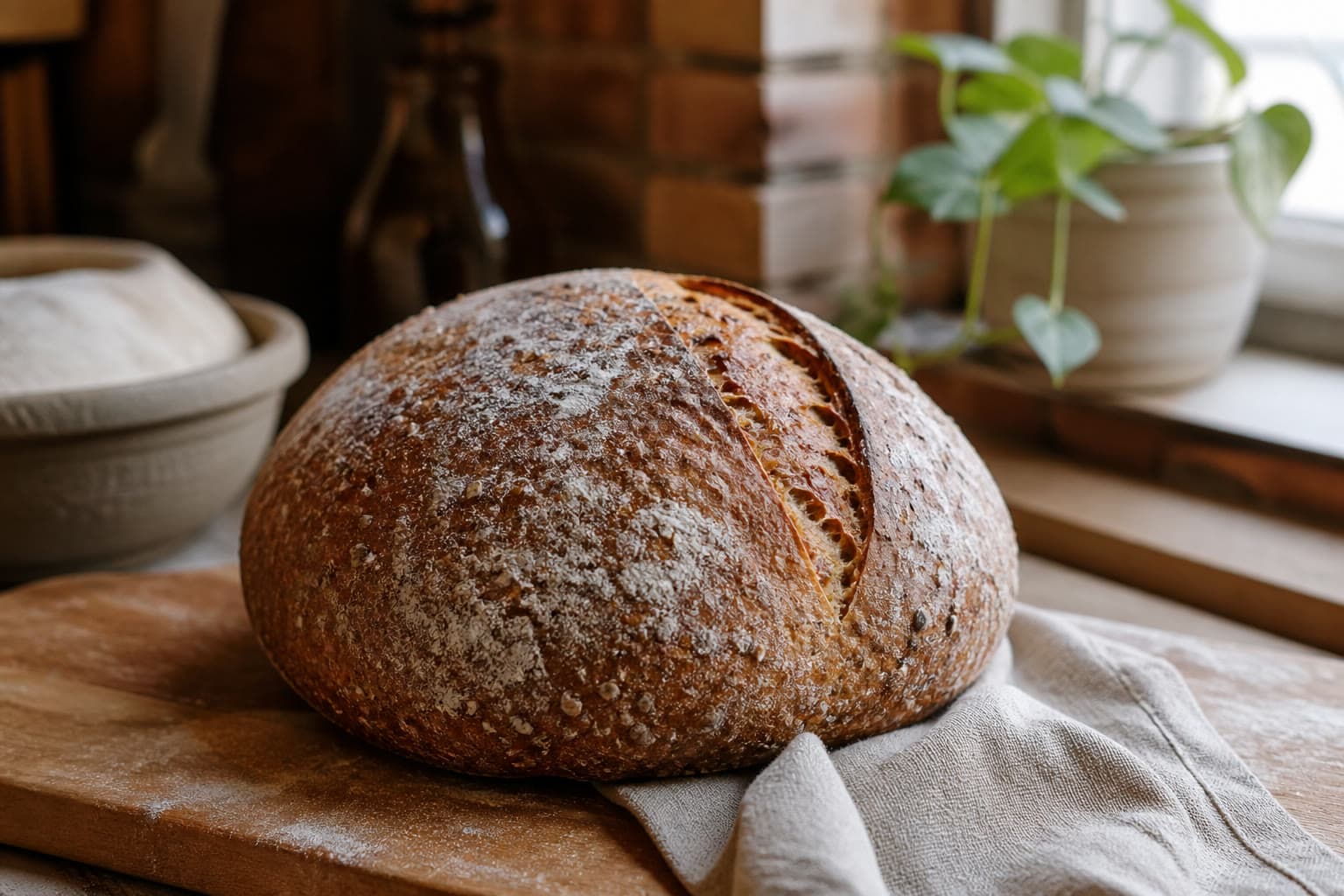
Brown Rice Sorghum Country Loaf
A rice-forward country loaf with sorghum sweetness, a little potato starch, and whole psyllium gelled 10:1 before mixing.
Artisan Loaves
INTERMEDIATE
TEFF
DEC 18, 2025
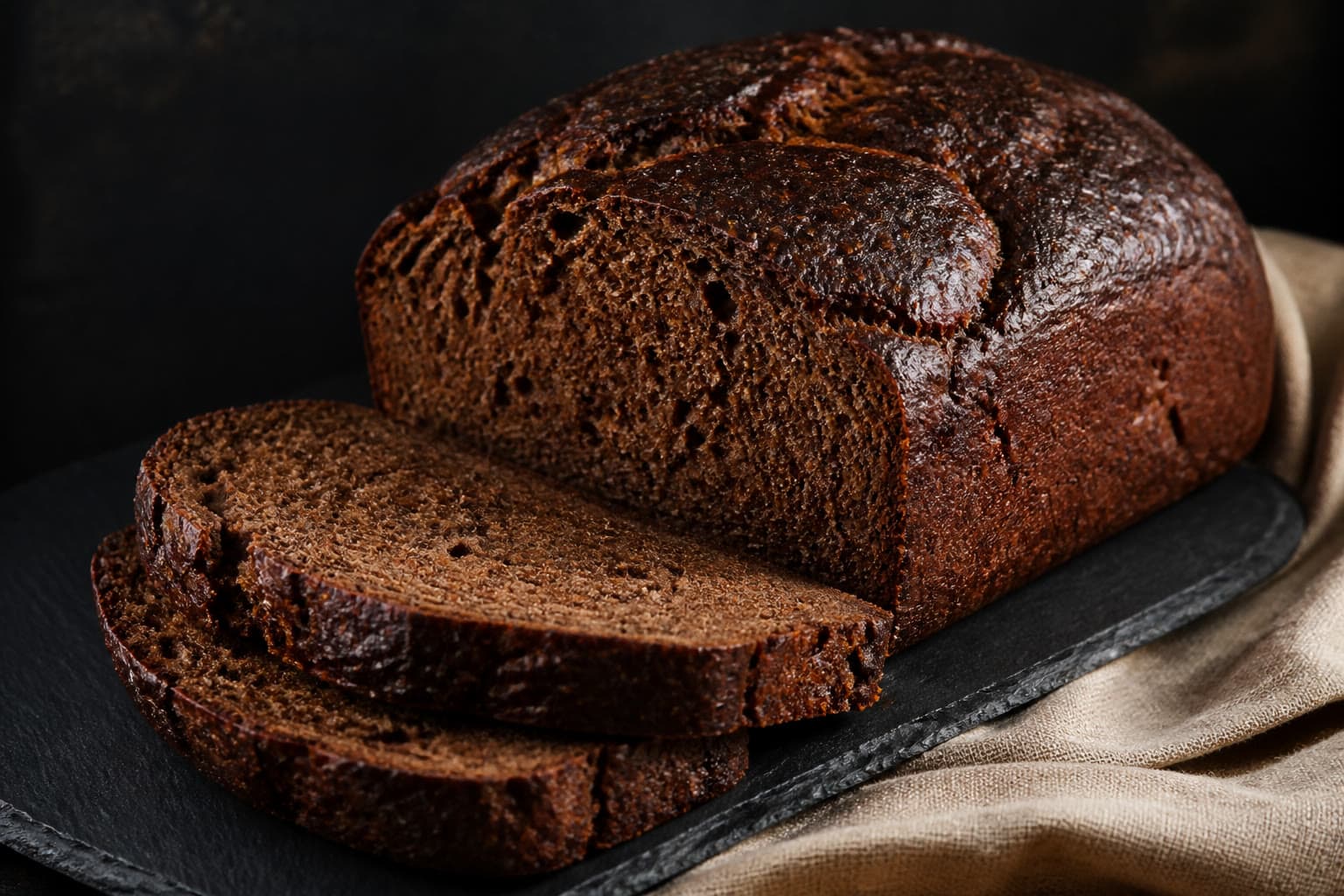
Teff Buckwheat Dark Loaf
A molasses-optional dark loaf with teff and buckwheat for rye-like depth — no rye, wheat, or barley in the formula.
Artisan Loaves
INTERMEDIATE
GLUTEN FREE SOURDOUGH
NOV 7, 2025
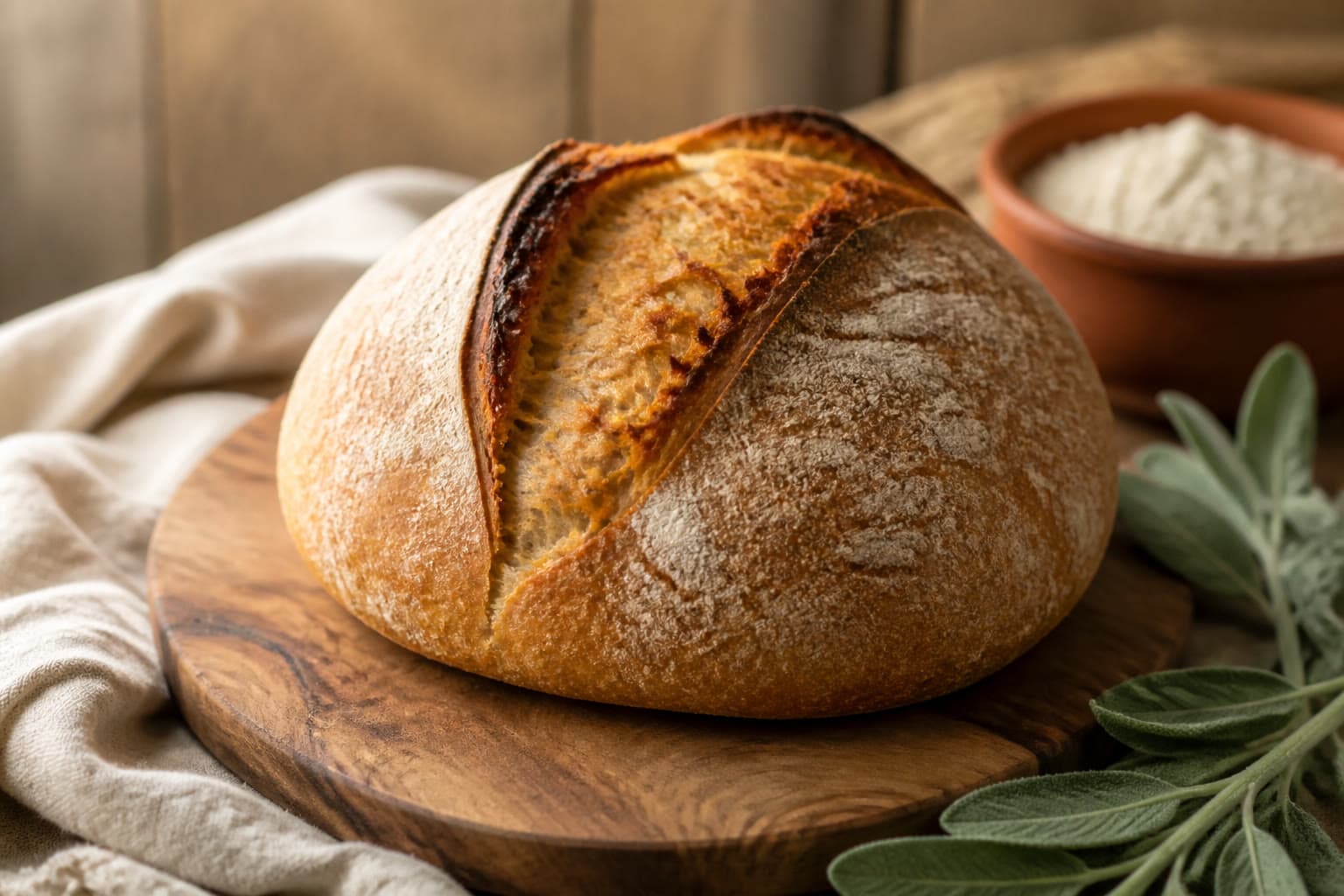
Artisan Gluten-Free Sourdough Bread
Our upgraded house boule: King Arthur gluten-free bread flour, whole psyllium husk, and a 500F Dutch oven for a blistered crust.
Artisan Loaves
BEGINNER
BEGINNER
NOV 14, 2025
Classic Gluten-Free Sourdough
The beginner country loaf linked from our starter guide: brown rice, sorghum, tapioca, and psyllium powder at 5%.