The Window
Hydration and Crumb in Gluten-Free Sourdough: Why the Dough Looks Like Batter
Gluten-free sourdough is mixed wet, usually at 90-110% hydration, so it looks like thick batter until psyllium gels. Rest 10-20 minutes, then adjust. Pair water with 4-7% psyllium. Too much water spreads; too little bakes dense. Judge crumb after a 2-hour cool, not while the loaf is hot.
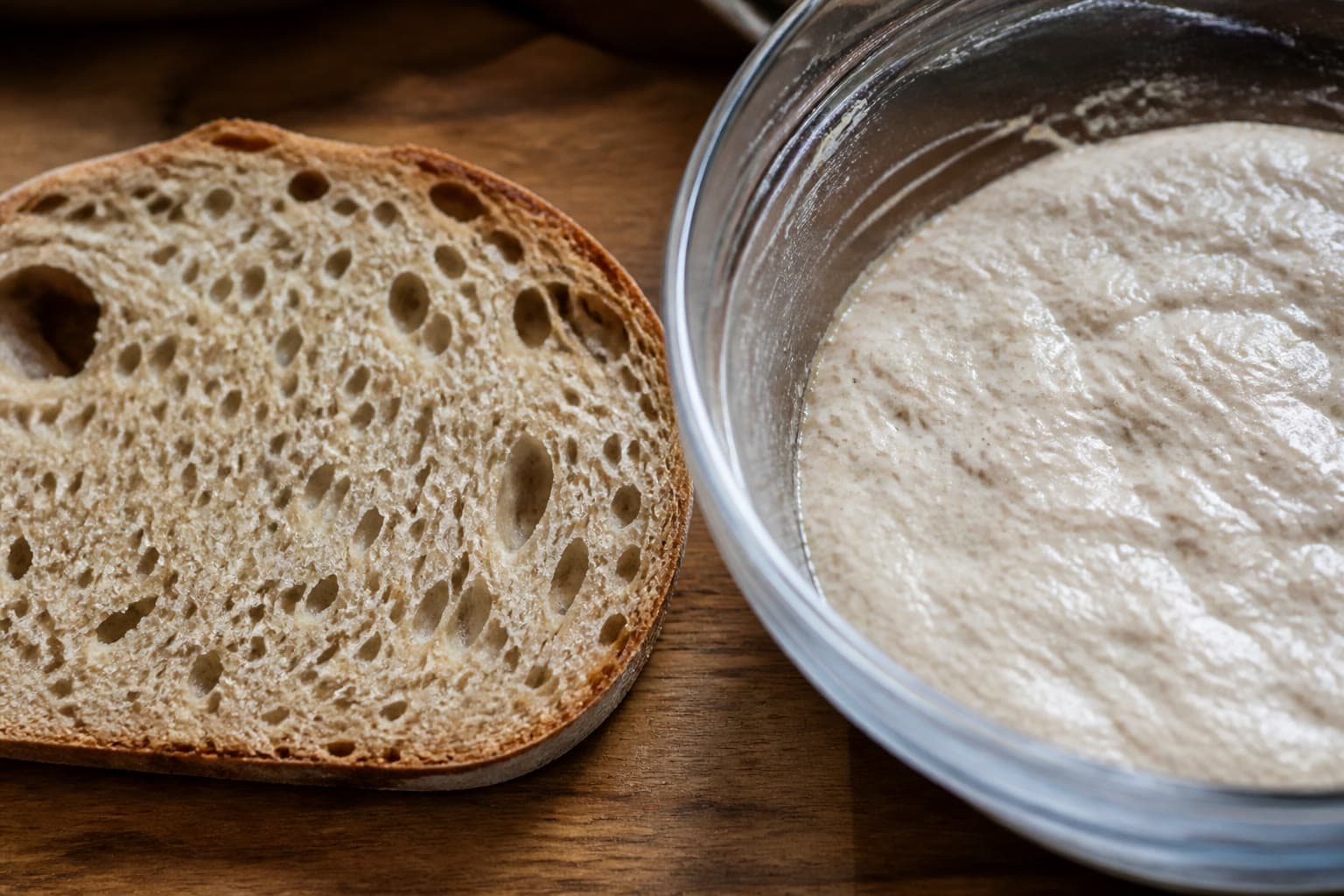
What this guide covers
Gluten-free dough at 90-110% hydration is supposed to look wet. Here is how to calculate baker's percent, adjust for flour and psyllium, and read the crumb you wanted.
Key takeaways
- Hydration is water as a percent of total flour and starch weight; 90-110% is the usual gluten-free sourdough window.
- The mix should look like thick batter or oatmeal, then firm during a 10-20 minute rest as psyllium drinks.
- Judge hydration after the rest, not at the second you stop mixing.
- More whole-grain flour usually wants the upper half of the window; more starch can sit lower.
- More psyllium drinks more water; keep the 4-7% husk range paired with the hydration range.
- Starter at 100% hydration already contains water; decide whether you include it in the formula and stay consistent.
- Open crumb in gluten-free bread is aerated gel, not wheat alveoli; do not chase huge holes with endless water.
- Spreading means too much water or too little husk, not a need to 'develop gluten.'
- Indiana humidity and dry furnace air change how flour in the bin already feels; hold back a splash.
- Cool 2 hours before you judge crumb; a wet knife on a hot loaf is not a hydration lesson.
The direct answer: wet is the method, not a mistake
Gluten-free sourdough hydration is the weight of water divided by the weight of flours and starches, times 100. We work between 90% and 110% for most breads. That dough will look too wet if your hands were trained on 70% wheat boules. It will look right if you wait 10-20 minutes for 4-7% psyllium to gel and then see a glossy mound you can scoop.
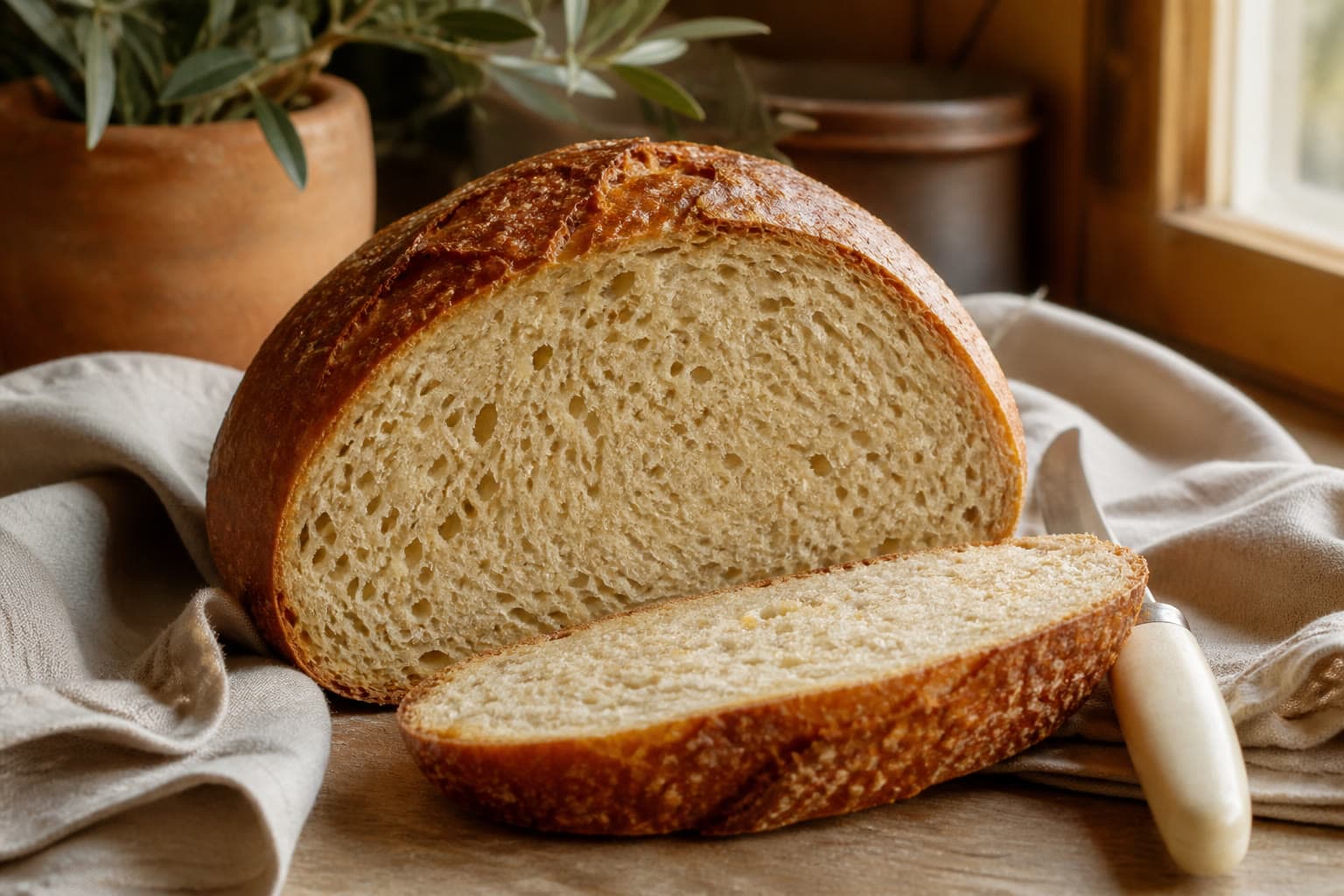
Crumb is the baked record of that gel plus gas plus heat. A tight sandwich crumb is not a failure. A holey focaccia is not the only adult crumb. Match hydration to the pan, the blend, and the husk, then cool 2 hours before you assign a grade.
Andrew still flinches at the first mix of a 108% dark loaf. Claire still says 'wait.' The rest is the recipe.
Why it looks like batter
Gluten is a visor that makes dough look drier than it is: protein holds water in a stretchy net. Take the net away and the same water looks like gravy until something else thickens it. Psyllium is that something, but it is not instantaneous. Starches also take a minute to wet through, especially brown rice grit.
If you add cup after cup of extra flour to make it look like wheat dough, you will bake a dense, dusty loaf and still not have gluten. If you trust the window, you will handle the dough with wet hands and parchment instead of a dusting of panic.
Focaccia is allowed to be a batter in a pan. Boules must be a scoopable batter. Pizza is a spreadable batter that sets on heat. The names change; the colloid does not.
Target windows by loaf
90-95%: pan sandwich bread, some bagels, doughs that need to be rolled or picked up. 96-104%: country boules, classic house loaf, English muffin batter that still holds in rings. 105-110%: teff-buckwheat dark loaves, focaccia, some pizza. Above 110% you are in pourable pancake territory unless psyllium is at the top of 7% and a pan is involved.
These are not laws. A starch-heavy commercial blend at 95% can still slump. A thirsty buckwheat blend at 100% can look stiff. The window is where we start. The rest is where we decide.
Oil, honey, and eggs count as formula water in a serious bakery sense. In this home kitchen we treat water as the hydration number and mention oil separately. Focaccia oil is topping as much as dough. Do not double-count a puddle of olive oil as if it were 20% extra water unless the crumb tells you to.
| Style | Water | Psyllium whole husk | Dough look after rest |
|---|---|---|---|
| Sandwich pan | 90-98% / 450-490g | 4-5% / 20-25g | Scoopable, not pourable |
| Country boule | 98-104% / 490-520g | 5-6% / 25-30g | Glossy mound |
| Dark loaf | 104-110% / 520-550g | 5.5-6.5% / 27-33g | Wet mound, needs banneton |
| Focaccia | 105-110% / 525-550g | 5.5-7% / 27-35g | Spreadable in an oiled pan |
| Pizza | 100-108% / 500-540g | 5-6.5% / 25-33g | Soft ball, parchment launch |
How to calculate without a spreadsheet personality
Add every gram of flour and starch. That sum is 100%. Water grams ÷ flour grams × 100 = hydration. Salt and psyllium are their own percents of the same flour grams. Example: 500g flour, 500g water, 27.5g whole husk, 10g salt is 100% hydration, 5.5% psyllium, 2% salt.
Starter: 100g of 100% hydration starter is 50g flour + 50g water. If you want to be strict, your total flour is 550g and total water is 550g, still 100%, with a 20% preferment. If you ignore starter solids and still add 500g water to 500g blend plus 100g starter, you actually mixed a wetter dough. Pick a method. We often ignore starter solids on weeknights and then wonder why summer dough is slack—so in summer we count.
Powder psyllium: 85% of the husk grams. Do not put powder into the flour 100%. It is a hydrocolloid on top, like salt.
Adjusting for flour type
Sorghum and millet are moderate drinkers. Brown rice is thirsty if coarse. Teff is fine and can tighten. Buckwheat drinks and also makes the dough feel earthy-stiff. Tapioca and potato starch make dough look wetter because they do not absorb like bran. Cornstarch sets later in the heat more than in the bowl.
When you swap 50g sorghum for 50g tapioca, expect a slacker bowl. When you swap 50g starch for 50g buckwheat, expect to need a splash more water toward 110%. Change one swap per bake if you are learning.
Commercial 1:1 blends are often starch-forward. Start near 90-95% and 4% psyllium so you do not make pudding.
Adjusting for psyllium
Husk is a sponge. Raise psyllium toward 7% and you almost always raise water, or the crumb goes rubber-tight. Lower psyllium toward 4% and you almost always lower water or use a pan, or the loaf spreads. The two dials turn together. See the psyllium guide for gel versus mix-in and the 85% powder rule.
If you converted powder incorrectly (used 30g powder because the recipe said 30g husk), you effectively overdosed the gel. The dough will look drier than the hydration number. Next time, 30g husk ≈ 25.5g powder, and the water will make sense again.
Blooming husk in the water before adding flour is the most honest preview of hydration you will get. If the gel is already cement, you undershot water.
Crumb types we actually like
Sandwich crumb: small, even, sliceable, a little moist, no smear after a 2-hour cool. Country crumb: more irregular holes, still supported, crust that shatters. Dark loaf crumb: closer, moister, almost rye-adjacent. Focaccia crumb: glossy wells under oil. Pizza crumb: thin, set, chewy from tapioca, not bready-tall unless you want a pan pizza.
Gummy shine after a full cool is not a crumb type we like. It is underbake or unset gel. Tunneling (one huge hole under the crust) is often overproof or a dry skin trapping gas. Sandy crumb is rice grit and not enough rest or starch.
Photograph crumb in daylight the next day. Nighttime phones make every loaf look wet. We have argued with photos of our own bread and then eaten a perfect slice.
High versus low hydration, honestly
High hydration is fashionable. It is also how you get focaccia when you wanted a boule. If your banneton is a puddle, you are not more advanced. You are wet. Drop 5%, or add husk, or change vessels.
Low hydration is unfashionable and makes excellent toast if the bake is complete. A 90% sandwich loaf that cools 2 hours will beat a 115% 'artisan' frisbee for a grilled cheese.
Choose the hydration that matches the meal. That is the whole craft.
Visual and tactile cues
At mix: glossy, no dry flour, ridges that slowly melt. After rest: scoop stands up with a soft peak. In the banneton: dome, not a pancake. After proof: jiggle, not soup. After bake: mahogany crust, 205-210F inside. After cool: clean slice, moist but not shiny-smear.
Your hands will learn faster than a blog. Wet them. The dough should not glue you into immobility; if it does, wetter hands, not more bench flour dumped in.
If you need a number, that is what 90-110% is for. If you need a feeling, that is what the rest is for.
- Matte + tearing: add water a teaspoon at a time.
- Ribbon-pour after rest: less water or more husk next bake; pan this one.
- Mound + gloss + jiggle at proof: bake it.
Indiana humidity, furnace air, and the last splash
Hold back 20-30g of water on a 500g flour dough when a thunderstorm is sitting on Indianapolis or when the bin of sorghum feels clumpy. Mix, rest, then add the splash only if the dough is matte. In January, when the furnace has been on for a week and static lives in every blanket, you will probably add it, and maybe another teaspoon.
This is not mysticism. Flour equilibrium moisture changes. Bakeries with humidity control still adjust. You have a window instead of a control panel.
Write 'held 20g, added 10g' in the notebook. That sentence is worth more than a new flour brand.
FAQ
Why does gluten-free sourdough dough look like batter?
Without gluten, water has to swell starches and 4-7% psyllium into a gel. At 90-110% hydration that gel looks loose in the bowl and scoops after a rest. It is supposed to look wetter than wheat dough.
What hydration should gluten-free bread be?
Most of our loaves live between 90% and 110% of flour weight. Sandwich bread often sits near 90-100%. Dark whole-grain loaves and focaccia often sit near 100-110%.
How do I calculate hydration with sourdough starter?
A 100% hydration starter is half water. 100g starter adds 50g water and 50g flour. Either include that flour in your 100% or keep added flour separate, but count the water so you do not accidentally mix a 130% soup.
How do I thicken gluten-free dough that is too runny?
Wait 15 minutes first. If it still pours, you can add a teaspoon of whole-grain flour or a pinch of psyllium, not a handful. Next bake, drop water a few percent or raise husk toward 6-7%.
How do I add water if the dough looks dry?
After the rest, fold in water a teaspoon at a time until it glosses and mounds. Matte, tearing dough is underhydrated for that blend and husk dose.
Does higher hydration mean more open crumb?
Up to a point, yes, if the gel can hold the gas. Past that point you get spreading, tunnels, or gumminess. Fermentation and bake heat open crumb as much as water does.
Should gluten-free pizza dough be wetter than bread dough?
It is often as wet or wetter, with tapioca for stretch, but it is shaped in a pan or on parchment. Free-standing boules cannot borrow pizza's hydration without extra psyllium or they puddle.
Why did my crumb turn gummy when I added more water?
The starch-psyllium network could not set. Bake hotter/longer to 205-210F, cool 2 hours, and if it is still gummy, return toward 100% hydration or add a bit more whole grain.
Do I autolyse gluten-free dough?
The 10-20 minute rest after mixing is our autolyse analogue. Flours and husk hydrate. You can rest flours and water before salt and starter, but with psyllium gel we usually mix all and then wait.
How does humidity affect gluten-free dough?
Flour already holds some water. Stormy Indianapolis weeks can make a 100% dough look like 105%. Hold back 5% of the water, rest, then add it only if the dough is matte.
Bake from this
Related recipes
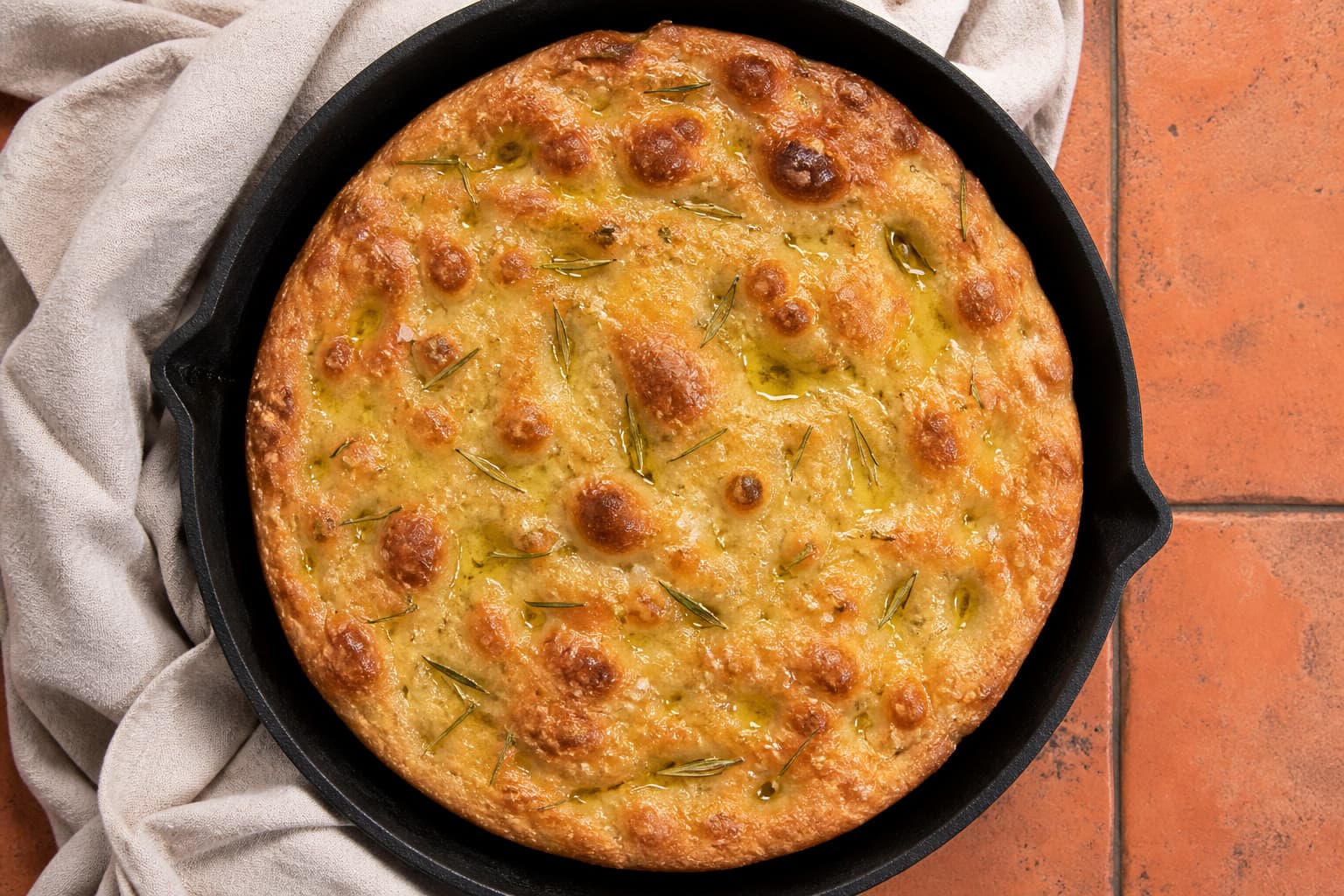
Flatbreads
BEGINNER
FOCACCIA
MAR 1, 2026
Gluten-Free Sourdough Focaccia
A pan of 105% hydration dough, dimpled in olive oil, with a crisp bottom and a plush, salty top.
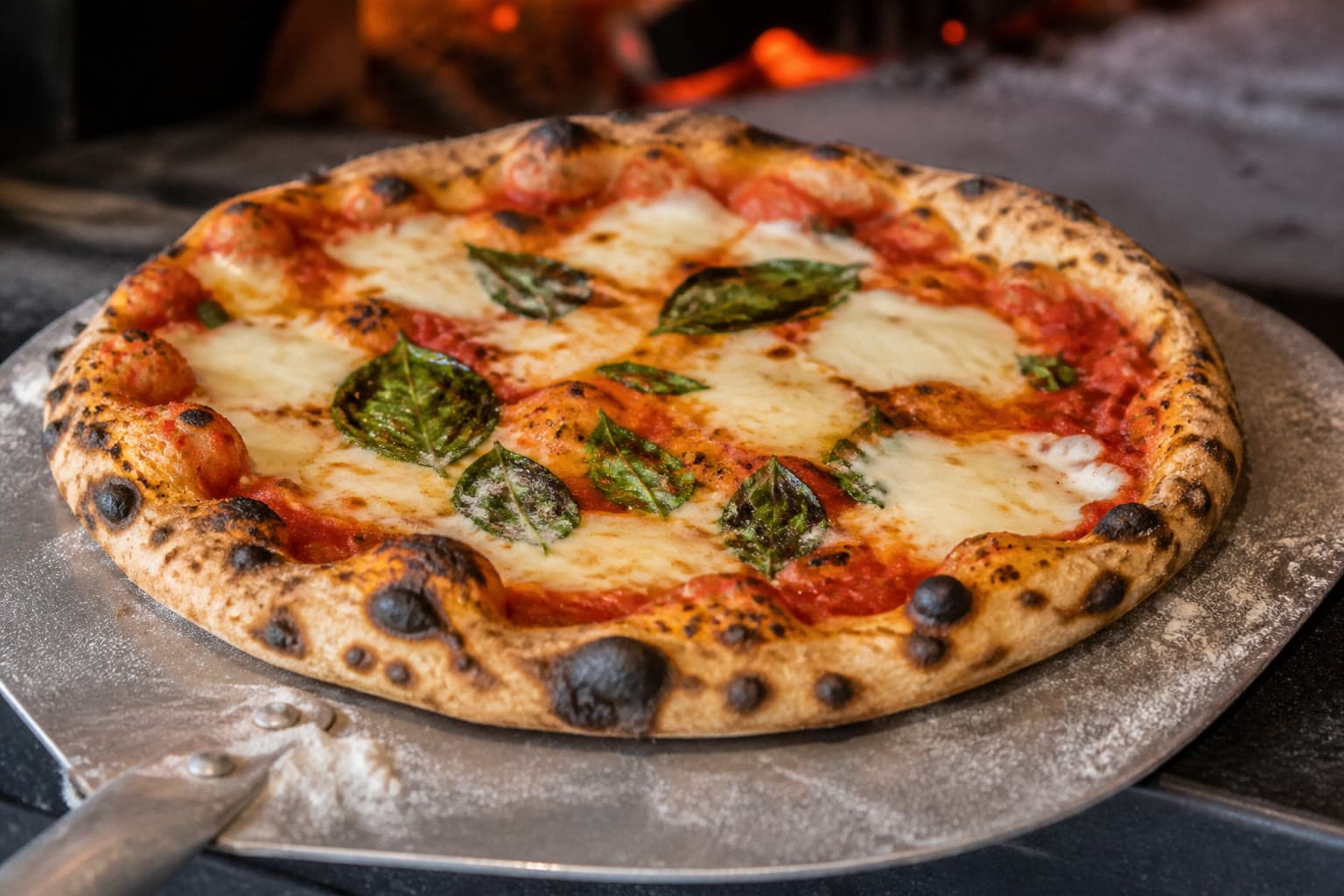
Pizza
INTERMEDIATE
PIZZA
MAR 1, 2026
Gluten-Free Sourdough Pizza Crust
A steel-baked sourdough pizza dough with 4% psyllium, olive oil, and a parbake option so the center does not stay pale and gummy.
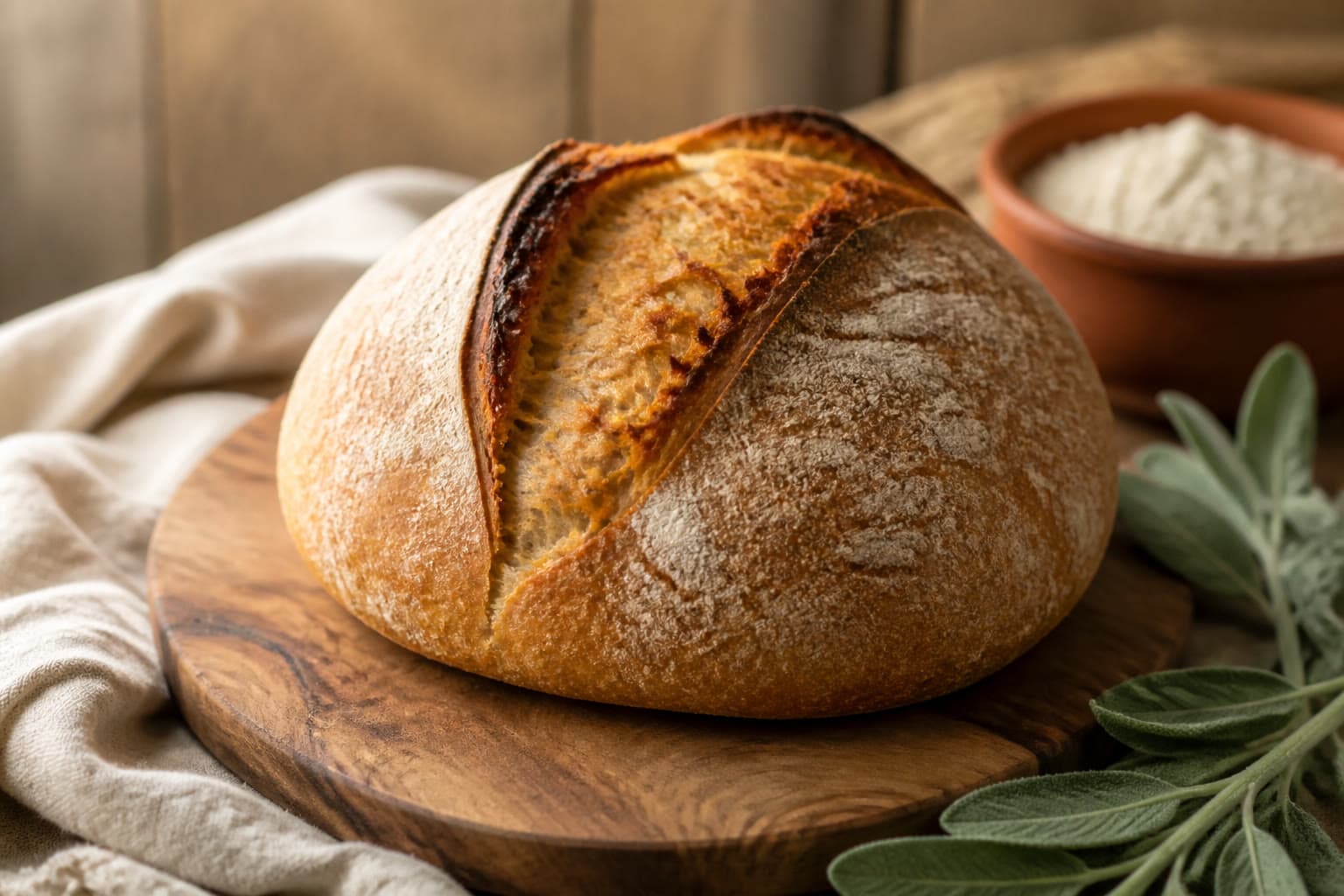
Artisan Loaves
INTERMEDIATE
GLUTEN FREE SOURDOUGH
NOV 7, 2025
Artisan Gluten-Free Sourdough Bread
Our upgraded house boule: King Arthur gluten-free bread flour, whole psyllium husk, and a 500F Dutch oven for a blistered crust.
Artisan Loaves
BEGINNER
BEGINNER
NOV 14, 2025
Classic Gluten-Free Sourdough
The beginner country loaf linked from our starter guide: brown rice, sorghum, tapioca, and psyllium powder at 5%.