Artisan Loaves · intermediate
Teff Buckwheat Dark Loaf
Key takeaway
Teff and buckwheat make a rye-like gluten-free sourdough when you use 105% hydration, 6% whole psyllium husk, and no rye at all.
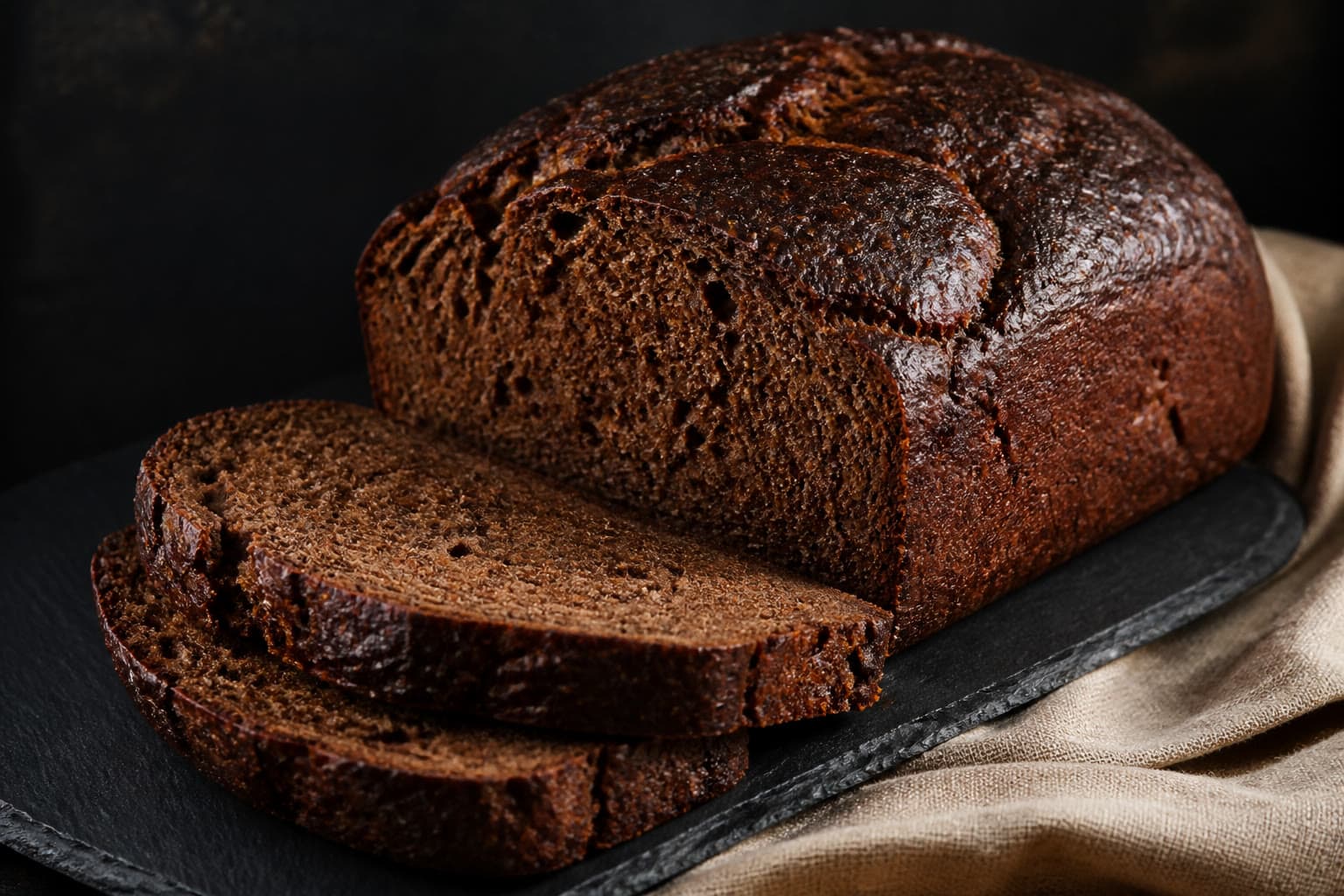
A molasses-optional dark loaf with teff and buckwheat for rye-like depth — no rye, wheat, or barley in the formula.
Prep
30m
Hydration rest
20 minutes
Bake
58m
Servings
12
Difficulty
intermediate
The short answer
When we want the mood of a deli rye without rye, we reach for teff and buckwheat. Teff brings cocoa-and-malt notes; buckwheat (a seed, not wheat) adds earth and a faint bitterness that reads as pumpernickel once it ferments. Sorghum and tapioca keep the crumb from turning into a dense brownie. Hydration is 105 percent because these dark flours drink. Whole psyllium husk at 6 percent is mixed into the dry flours. Salt is 2 percent. A 25 percent sorghum starter stands up to the minerals in teff. Unsulphured molasses is optional — a tablespoon for color and aroma, not for sweetness as dessert. The dough will look like wet clay and smell like a health-food shop in the best way: grassy, cocoa, a little sour. Bake it hot in a Dutch oven until the crust is mahogany, then cool at least two hours. Sliced thin with mustard and pickles, it is the loaf that makes people ask whether there is rye in the kitchen. There is not. Keep the proof modest; whole-grain gluten-free dough rarely doubles, and waiting for a wheat-style rise overproofs the loaf.
For the method behind gluten-free structure, read the gluten-free sourdough guide and keep a lively culture with the starter guide.
Why it works
- Teff’s mineral sweetness and buckwheat’s earth mimic the flavor stack people remember from rye, without gluten grains.
- 105% water compensates for bran-like absorption in dark flours so gelatinization can finish in the oven.
- 25% starter supplies enough acid and gas to lift a heavy blend.
- A long, hot covered bake cooks the center of a dense crumb; lid-off color is mostly cosmetic on this loaf.
Ingredients
- 175g (1 cup plus 2 Tbsp)whole-grain teff flour
- 125g (1 cup plus 1 Tbsp)buckwheat flourcertified gluten-free; buckwheat is not wheat, but mills may share equipment
- 100g (3/4 cup plus 2 Tbsp)sorghum flour
- 100g (3/4 cup plus 2 Tbsp)tapioca starch
- 30g (6 Tbsp)whole psyllium husk6% of flour weight
- 10g (1 3/4 tsp)fine sea salt2% of flour weight
- 125g (about 1/2 cup)active sorghum sourdough starter (100% hydration)25% of flour
- 525g (2 cups plus 3 Tbsp)lukewarm water (80F)105% hydration
- 15g (1 Tbsp)unsulphured molassesoptional, for color and aroma, not required
Equipment
- Digital kitchen scale
- Large mixing bowl
- Stiff spatula
- Banneton or towel-lined bowl
- Parchment paper sling
- 5–6 quart Dutch oven with lid
- Bread lame or sharp knife
- Wire cooling rack
- Instant-read thermometer
Instructions
- 1
Smell the buckwheat flour: it should be earthy and clean, not rancid or paint-like. Dark flours go off. Whisk teff, buckwheat, sorghum, tapioca, whole psyllium husk, and salt until the husk is coated in flour.
4 minutes
- 2
Stir starter into the 525g water. If using molasses, whisk it into this liquid until the water looks like weak tea. Pour over the dry mix and beat until you have a dark, shiny batter with no dry pockets. It will smell grassy and faintly cocoa.
5 minutes
- 3
Rest 20 minutes. Dark flours hydrate slowly. The batter should thicken into a clay-like dough that leaves a chocolate-brown film on the spatula. If it still pours, wait 5 minutes more rather than adding flour.
20 minutes
- 4
With wet hands, fold until the surface looks smoother and less shaggy. It will feel denser than a white rice loaf and slightly sandy from teff. Shape a round; it will not get drum-tight, and that is fine.
5 minutes
- 5
Proof in a well-floured banneton at 75–78F. The loaf will not double. Look for a 40–50 percent rise, a softly domed top, and a smell like cocoa, yogurt, and wet earth. Typical time 4–5 hours.
4–5 hours
- 6
Preheat Dutch oven at 500F for 45 minutes. Invert the loaf onto parchment. The surface may look matte and speckled; dust lightly so the lame does not drag.
45 minutes
- 7
Score a simple slash 1/2 inch deep. Dark dough conceals the cut, so go slower than you think. You should see a slightly wetter interior along the cut.
2 minutes
- 8
Bake covered 42 minutes. Uncover: the loaf should already be brown. Continue lid-off 14–16 minutes until mahogany, almost black at the score, center 208–210F. It should smell like toasted buckwheat tea, not bitter smoke. If the crust blackens before the center is done, tent loosely with foil.
56–58 minutes
- 9
Cool on a rack at least 2.5 hours. Dark, wet crumb needs the extra minutes. The loaf will feel heavy for its size; that is grain, not underbaking, if the thermometer was honest.
2.5 hours
- 10
Slice thin with a serrated knife. The crumb should be cocoa-brown, moist, and even, with a faint sour finish. If it smears, wait another 30 minutes.
5 minutes
Nutrition
Approximate values per serving. Always verify labels if you bake for celiac safety.
| Nutrient | Amount |
|---|---|
| Calories | 168 kcal |
| Protein | 5 g |
| Carbs | 34 g |
| Fat | 2 g |
| Fiber | 5 g |
| Sodium | 325 mg |
Substitutions
- Buckwheat flour (125g)
- 75g buckwheat plus 50g extra teff for a milder, less earthy loaf. Do not substitute rye flour.
- Molasses (15g, optional)
- 10g maple syrup, or omit. Maple shifts the aroma toward breakfast rather than deli.
- Whole psyllium husk (30g)
- 26g psyllium powder mixed into the dry flours.
Storage
Wrap in a towel for 3 days; this loaf keeps moist longer than pale rice breads. Freeze slices up to 2 months. The flavor deepens on day two.
Notes
- Buckwheat is gluten-free but is often processed near wheat. Buy certified gluten-free buckwheat flour for celiac baking.
- Molasses is optional. Skip it for a drier, more mineral flavor; do not replace it with honey if you need the loaf vegan.
- 105% hydration is intentional. Stiffening this dough makes a brick.
- The loaf will not double. Judge proof by a 40–50% rise and aroma, not wheat expectations.
- Cool longer than a pale loaf. Dark crumb hides underbaking; use a thermometer.
FAQ
Does this dark gluten-free loaf contain rye?
No. Rye contains gluten. The rye-like flavor comes from fermented teff and buckwheat, with optional molasses for aroma. There is no rye, wheat, or barley in the formula.
Is buckwheat safe for celiac disease?
Buckwheat is not wheat; it is a seed. Use flour labeled certified gluten-free because shared mills are common. If your reaction history is severe, stick to certified products only.
Why is the hydration higher than the classic loaf?
Teff and buckwheat absorb more water than white rice and tapioca. 105% of flour weight keeps the crumb moist instead of sandy. It will still mound after the 20-minute rest.
Can I skip molasses in teff buckwheat sourdough?
Yes. Molasses is optional color and aroma. The loaf still bakes and ferments the same way. Do not add extra water to replace it; 15g is not a hydration ingredient.
Why didn’t my dark loaf double in the banneton?
Whole-grain gluten-free doughs rarely double. A 40–50% rise, a soft dome, and a yogurt-cocoa smell are the cues. Waiting for a double often overproofs and flattens the bake.
Bake next
Related recipes
Artisan Loaves
INTERMEDIATE
SEEDED BREAD
JAN 22, 2026
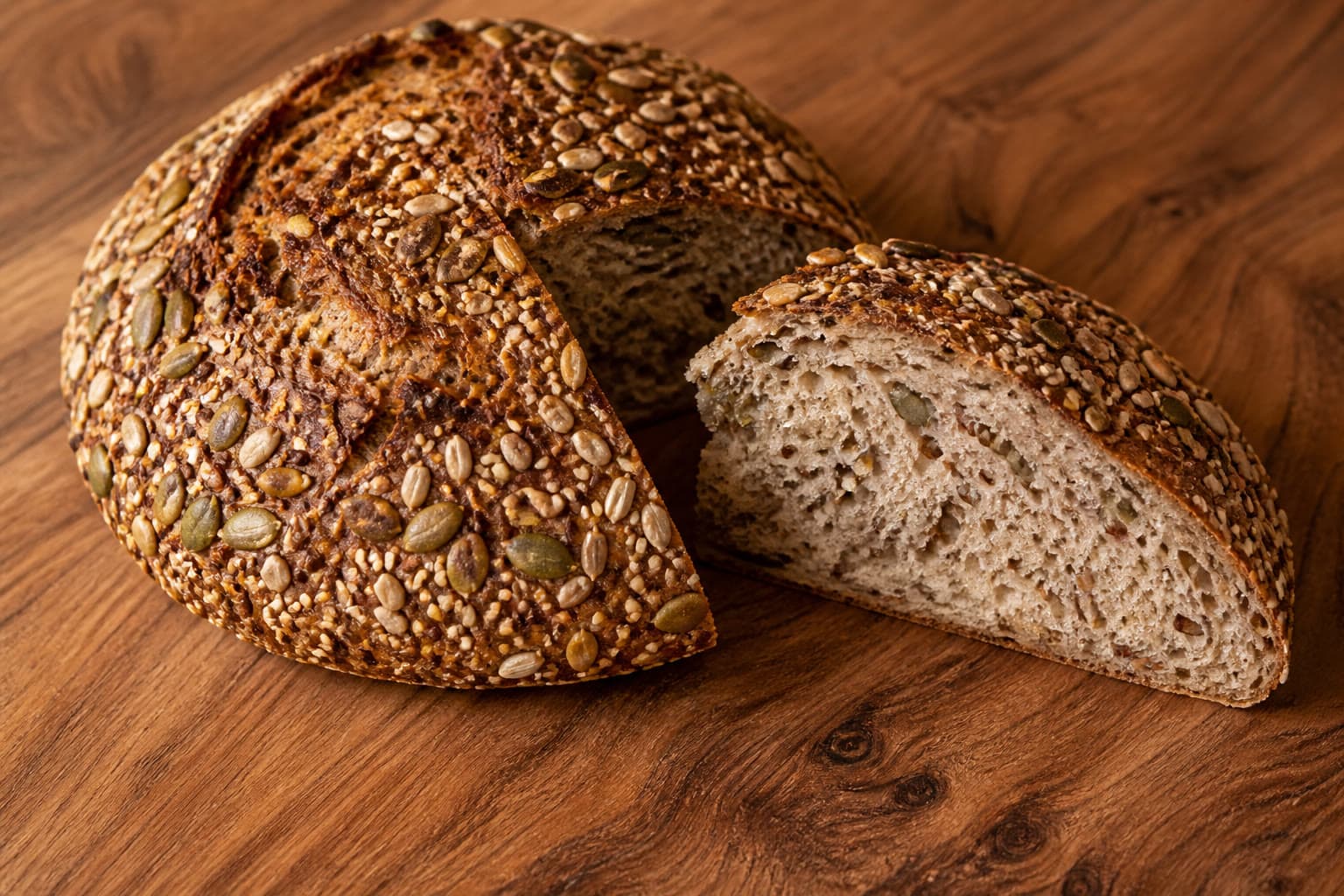
Seeded Ancient-Grain Boule
Sorghum, millet, teff, and brown rice packed with pumpkin, sunflower, flax, and sesame seeds.
Artisan Loaves
INTERMEDIATE
WALNUT RAISIN
FEB 19, 2026
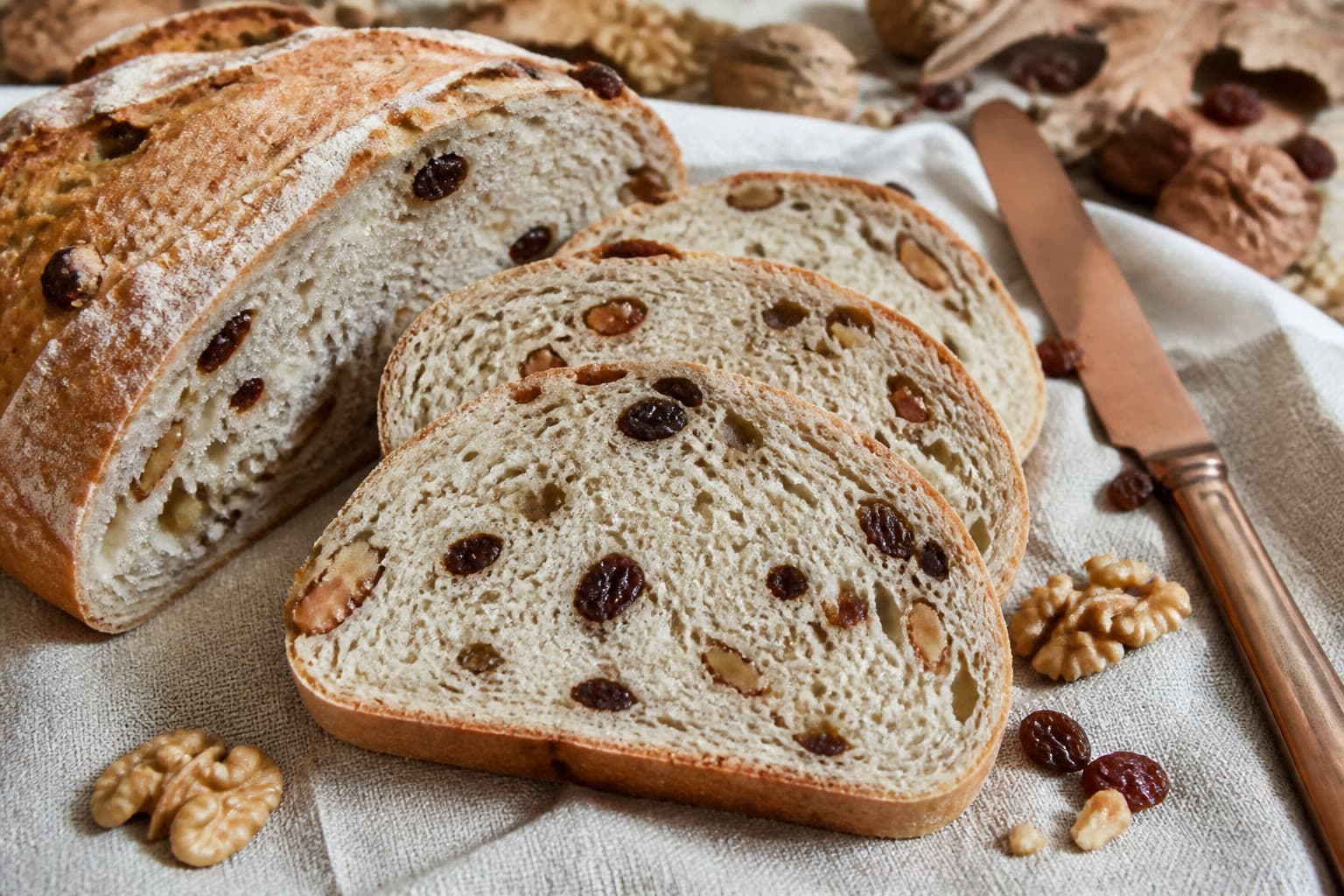
Walnut Raisin Loaf
A lightly cinnamon-scented country loaf with toasted walnuts and raisins soaked so they do not steal dough water.
Artisan Loaves
BEGINNER
BEGINNER
NOV 14, 2025
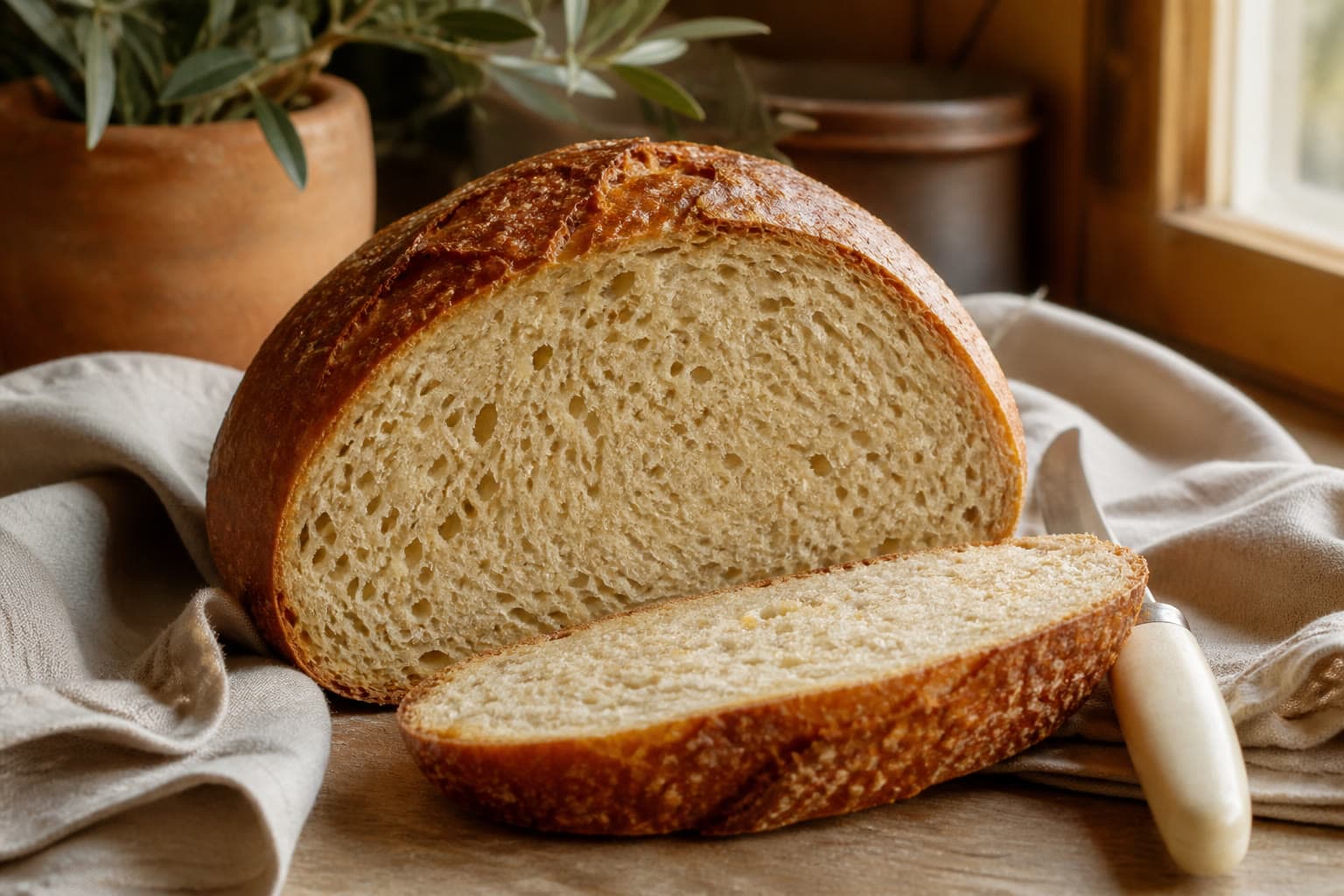
Classic Gluten-Free Sourdough
The beginner country loaf linked from our starter guide: brown rice, sorghum, tapioca, and psyllium powder at 5%.
Technique
Keep the method close
Psyllium, fermentation temperature, and a celiac-safe starter matter as much as the formula.
About Andrew Kittridge
Home baker in Indianapolis documenting gluten-free sourdough: psyllium structure, whole-grain blends, and loaves that actually taste like bread.
More about the kitchen