Technique
Dutch Oven Steam for Gluten-Free Bread
Why a preheated Dutch oven is the simplest steam chamber for gluten-free sourdough, when to uncover, and how to get crust without a bakery deck oven.
Why steam matters more when there is no gluten
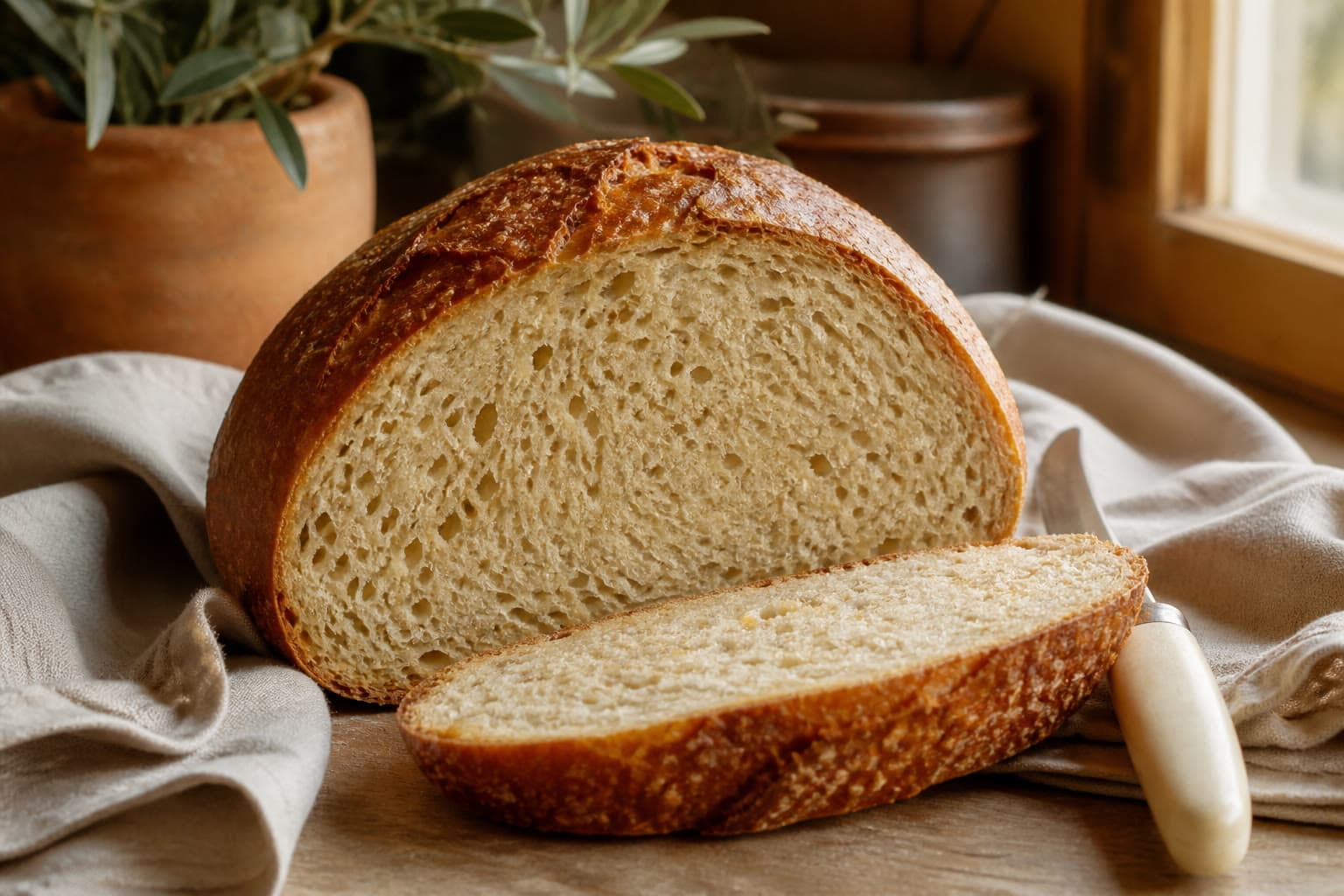
Steam keeps the loaf surface plastic in the first minutes of the bake so the gel can expand before it sets into crust. In wheat bread, a gluten skin stretches and then gelatinizes. In gluten-free bread, you have starch and psyllium. If that surface dries instantly in a naked 500F oven, you get a thick, pale shell and a tight interior. A covered Dutch oven is a tiny, forgiving steam deck: the dough's own moisture, trapped.
This is not optional theater we copied from wheat YouTube. It is how we get the crust on artisan gluten-free sourdough and on the classic boule. Scoring will not replace steam. Scoring barely replaces a random crack.
Preheat until the pot is actually hot
Load a lidded Dutch oven or combo cooker into a 475-500F oven for 30-45 minutes. A cold pot is a moisture sponge and a pale-bottom machine. Cast iron and enameled iron both work. If the enamel makes you nervous at 500F, check your manufacturer's limit and bake at the top of the allowed range rather than inventing a new physics.
We use parchment as a sling. Gluten-free dough is slack; you are not sliding a taut wheat boule off a peel with bravado. The parchment also keeps psyllium gel from welding to iron.
- Typical hearth schedule: 30-40 minutes covered, 15-25 minutes uncovered.
- Internal target still 205-210F. Pretty crust can hide a gummy center.
- Deep color wants the lid off. Do not baby the finish.
Covered, then dry: two jobs, two climates
Covered time is oven spring and shine. Uncovered time is evaporation and Maillard. If you leave the lid on the whole bake, the crust stays soft and pale and the interior may stay wet. If you never cover, the crust sets early and the loaf does not expand. The two-stage bake is the whole trick.
High-hydration doughs, like a ciabatta experiment, may need a slightly longer covered phase so they do not dry into plywood. Starch-pale blends may need a longer uncovered phase to color. Sorghum and teff help you here; they brown like they mean it. An olive rosemary country loaf will tell you the truth because the oil and olives also affect browning.
Do you need ice cubes, sprays, or lava rocks?
Usually no, if the pot is preheated and the dough is 90-110% hydration. Extra water in a screaming-hot enameled pot can damage enamel and is how people get steam burns. If you bake on a stone with a roasting-pan lid, a small splash of water into a preheated pan can help, but that is a different setup with different risks.
We would rather you own the lid timing than build a bakery steam rig in a rental kitchen. The hub guide assumes a Dutch oven because that is what we actually use on weeknights in Indianapolis.
Scoring gluten-free dough under steam
A shallow pattern can look lovely and can keep a random split from wandering into the side. It will not produce a wheat ear. Cut with a wet lame or scissors, shallow, after a cold retard when the gel is firm enough to hold a line. Scoring a warm, overproofed batter just deflates it.
If the loaf always splits at the parchment fold, that is a loading issue, not a spiritual issue. Tuck parchment smoothly. If it always explodes on one side, your oven has a hot spot; rotate during the uncovered phase.
Sandwich pans, pizza, and focaccia are different steam stories
A loaf pan does not trap steam the same way. We still like a covered start: tent foil for the first part of a sandwich bake, or place a second pan as a lid, then uncover to color. Pizza wants a dry, ripping-hot stone or steel; leftover Dutch-oven humidity is not your friend on a crisp bottom. Focaccia wants a generous oil film and a hot oven; steam is already in the dimples.
Do not force every gluten-free dough through the boule ritual. Match the chamber to the bread. The binder still matters: a pizza without enough gel will tear on the peel no matter how much steam you throw at it. See psyllium versus xanthan.
Safety, smoke, and small kitchens
Preheat on a rack with clearance. Use oven mitts that actually cover your wrists. Have a place to set a 500F lid that is not a plastic cutting board. Turn on the fan. Sorghum can throw a sweet toast smell that is not burning; burning parchment is a different smell. If the kitchen is filling with smoke, your oven is dirty or the parchment is kissing an element.
Apartment ovens run wild. An oven thermometer is part of steam practice. If the box is 50F low, you will never finish the gel, and you will write a sad comment about gumminess that is actually a calibration problem. Read how to read crumb after you trust the thermostat.
Cooling is part of the bake
When the loaf comes out, it is still cooking in the residual heat. Steam is moving from the center outward. If you wrap it, you trap that moisture in the crust. If you cut it, you collapse a gel that has not set. Cool on a rack at least two hours. This is the sentence we put on every formula because it is the one everyone skips.
Crust will soften by morning. That is starch and humidity, not failure. Re-crisp slices in a hot oven. The Dutch oven did its job at 8 p.m. The toaster does the rest at 8 a.m.
A working schedule you can steal
Preheat pot 45 minutes at 500F. Load loaf. 500F covered 20 minutes, then 450F covered 15 minutes if the crust is coloring too fast, then uncovered 15-25 minutes until mahogany and 205-210F internal. Adjust for your pot mass. A thin pot needs less preheat and more attention. A heavy pot is a blessing.
Write what you did. Steam is not a personality. It is a pair of times and a pair of temperatures. Once those are stable, you can fuss with hydration instead of buying a third Dutch oven.
FAQ
Frequently asked questions
Do I need a Dutch oven for gluten-free sourdough?
You need trapped steam and high heat. A preheated Dutch oven is the simplest way. A covered roasting pan or combo cooker can substitute. A naked sheet pan usually sets the crust too soon.
How long should I bake gluten-free bread with the lid on?
We typically bake 30-40 minutes covered, then 15-25 minutes uncovered, still aiming for 205-210F in the center.
Should I put ice in the Dutch oven?
Not in our method. Preheated iron plus a wet dough already makes steam. Extra ice can shock enamel and is rarely necessary at 90-110% hydration.
Why is my gluten-free crust pale and thick?
The lid stayed on too long, the oven ran cool, or the blend is starch-pale. Uncover to finish, verify oven temperature, and include browning flours like sorghum or teff.
Does scoring help gluten-free oven spring?
Only a little. Steam and gel strength do the lifting. A shallow score can direct a split. It will not create a wheat-style ear.
Can I steam gluten-free sandwich bread the same way?
Use a pan. A foil tent or a second pan for the first part of the bake helps, then uncover to color. A Dutch oven boule schedule is the wrong shape for a Pullman loaf.