The Jar
Gluten-Free Sourdough Discard: What It Is, the Hydration Math, and How to Use It Safely
Sourdough discard is unfed starter removed before a feeding. If you keep a 100% hydration gluten-free starter, 100 grams of discard is about 50 grams of flour and 50 grams of water. Use it in cooked recipes such as pancakes and muffins, not as the sole leavening for a showpiece loaf, and throw it out if it grows mold or smells rotten.
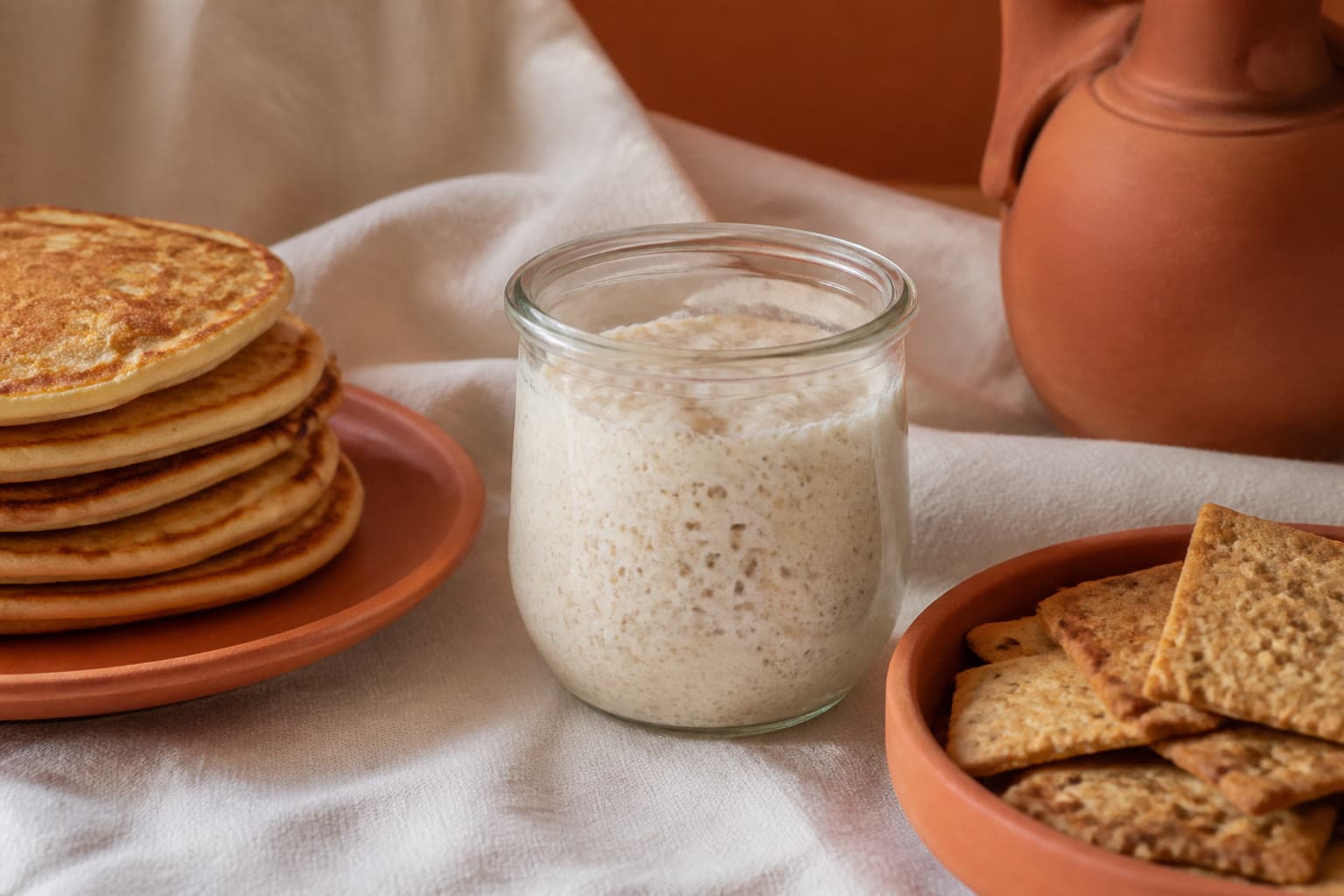
What this guide covers
Discard is unfed starter you pull before a feeding. At 100% hydration, 100g discard is 50g flour plus 50g water. Here is when to bake with it, when to skip it, and how we keep it food-safe.
Key takeaways
- Discard is starter you remove before feeding so the jar does not grow forever; it is not trash by default.
- At 100% hydration, 100g discard equals about 50g flour and 50g water. Scale recipes with that substitution.
- Peak starter leavens bread. Discard adds flavor and some lift but is not a 1:1 swap for an active culture in a Dutch-oven loaf.
- Unfed fridge discard is for cooked recipes: pancakes, crackers, muffins, quick flatbreads.
- Smell and look at discard: pleasantly sour is fine; mold, pink streaks, or rotten odor means compost.
- Do not leave discard at room temperature for days as a 'collection jar' in a warm kitchen.
- For celiac baking, discard inherits the starter's safety: gluten-free flours only, dedicated jar, no wheat history.
- Reduce waste by feeding a smaller jar if you do not bake often, rather than drowning in discard.
- Hydration math matters in pancakes: extra water in discard thins batter; extra flour thickens it.
- Cook discard batters thoroughly. This is still a raw fermented flour paste until heat does its job.
The direct answer: discard is unfed starter, not failure
Every time you feed a sourdough starter, you either let the jar double in size forever or you remove some of the culture to make room. That removed portion is discard. In a gluten-free kitchen it is still brown-rice or sorghum paste, still 100% hydration if that is how you keep the jar, still full of organic acids and sleepy yeast. It is not a moral failing. It is a scheduling tool.
We cook with it. Pancakes on Saturday. English muffin experiments. Crackers when the fridge collection threatens to become a science project. We do not, as a habit, mix a Dutch-oven country loaf with a cup of hungry fridge discard and hope. That loaf wants peak starter.
If you bake once a week, keep a tiny jar so discard stays tiny. Waste is a jar-size problem more often than a recipe problem.
What discard is, and what it is not
Discard is starter that has not just been fed. It may have been fed yesterday and sat on the counter. It may have lived in the fridge for five days. Microbiologically it is a mixed culture of yeasts and lactic-acid bacteria in a flour-water paste. Activity drops as food runs out. Acidity usually climbs.
It is not whey. It is not compost until you decide it is. It is not 'the bad part' of sourdough. In bakeries, the removed portion is often just called starter and goes into dough the same day because their jars are always at peak. Home bakers use 'discard' to mean the unfed surplus.
It is not gluten-free unless the starter was gluten-free. A wheat discard pancake is a wheat pancake. For celiac households the jar's entire history matters.
Hydration math you can do while the skillet heats
A 100% hydration starter is equal weights flour and water. So 100g starter contains 50g flour and 50g water. 60g starter contains 30g and 30g. 240g starter contains 120g and 120g. If you add 100g discard to pancake batter, you already added those 50g of flour-equivalent and 50g of liquid. Subtract them from the recipe or the batter goes thin and tastes extra tangy.
If you keep a 80% hydration starter (stiffer), each 100g holds more flour and less water: roughly 56g flour and 44g water. If you keep a 125% slurry, each 100g holds about 44g flour and 56g water. We recommend 100% for gluten-free jars because the math stays friendly and brown rice likes to drink.
Psyllium in bread formulas is calculated on flour, not on discard weight. When discard's flour is part of a loaf, you can include that 50g in the 100% flour total or keep the added blend at 100% and treat discard as extra—just pick a system. For pancakes, ignore baker's percent and use the 50/50 subtraction. For a hybrid focaccia that uses discard plus a little peak starter, do the subtraction so hydration stays in the 90-110% band.
| Discard | Flour in it | Water in it | Pancake note |
|---|---|---|---|
| 50g | 25g | 25g | Small batch, two plates |
| 100g | 50g | 50g | Standard weekend bowl |
| 150g | 75g | 75g | Guests or a hungry teenager |
| 200g | 100g | 100g | Thin the remaining liquids accordingly |
When discard is the right tool
Use it when the recipe has another leavening plan: baking powder, baking soda, eggs, or a hot skillet. Pancakes, waffles, crackers, quick muffins, and some flatbreads love the tang and the bit of organic acid that tenderizes. English muffins on this site can use a mixed strategy: some ripe starter for bubbles, some discard for flavor, rings for shape.
Use it when you would otherwise pour flour water down the drain. Cooking 100g of discard is a better habit than a lecture about waste. Freeze portions if Saturday is already full of errands in Indianapolis traffic.
Focaccia can absorb a slug of discard if the rest of the dough is built on peak starter and the pan supports the spread. Bagels are less forgiving; they want strength and a rollable gel. We do not hide 200g of exhausted discard in bagel dough and then blame psyllium.
- Yes: pancakes, crackers, muffins, quick breads, cooked coatings.
- Careful: focaccia and pizza with extra peak starter and a pan.
- No: using only hungry discard as the yeast for a free-standing boule.
When not to use it
Do not use moldy discard. Do not use discard that smells like rotten meat, vomit, or a forgotten gym bag. Healthy discard smells sour, yogurty, faintly alcoholic, or like wet flour. Hooch (a dark liquid layer) is hunger. Mold is fuzzy and often green, black, or pink. Pink or orange streaks in the paste are a bad sign. Compost those jars. Do not 'bake the mold away' for anyone, especially not for celiac guests who already need you to be careful.
Do not use wheat discard in a gluten-free recipe. Do not use a starter that ever ate rye or barley if you are baking for celiac disease. The safety guide is blunt about this for a reason.
Do not use a gallon of discard because you kept feeding a huge jar 'just in case.' Downsize the jar.
Food safety in a home fridge
Flour is a raw agricultural product. Fermentation changes flavor and acidity; it is not a magic kill step for everything that can live on flour. We refrigerate discard, keep it covered, use clean spoons, and cook it. We do not ferment discard on the counter for a week as a 'flavor experiment' in August. Indiana summers are warm enough to grow the wrong party.
Acidic starters are less friendly to some microbes, which is why sourdough has a reputation for keeping. That reputation is not a license to ignore visible mold. It is also not a license to leave a jar in a hot car.
Kids and immunocompromised guests get fully cooked pancakes, not 'just a taste of the batter.' Same rule as cookie dough, with extra tartness.
Flavor: mild rice versus twangy neglected jar
Fresh discard from a recently fed brown-rice starter is mild. Sorghum discard is fruitier. Teff discard is louder. A week-old fridge jar is sharper and can deflate baking soda batters in a dramatic foam, then bake flat if you wait too long to get the pan hot. Mix, cook.
If pancakes taste like vinegar, blend in fresher discard or neutralize with a small amount of baking soda if the recipe is built for acid. If they taste like nothing, your discard was young and shy; that is fine, add a spoon of yogurt or let the next jar mature.
Sweet applications (banana bread, chocolate cake) can hide a lot of twang. Savory crackers should taste like the grain. Match the discard's personality to the job.
Where discard goes in this kitchen
Weekend pancakes are the flagship, using the hydration math so the batter is scoopable, not soup. English muffins take a stiffer batter and rings. Focaccia can take a portion when we are already mixing a loaf. We have stirred discard into socca-like skillets and into cracker dough with olive oil and salt.
Bagels and showpiece boules remain peak-starter projects. Discard can flavor a bagel dough in small amounts if you adjust water, but the structure still comes from 4-7% psyllium and a proper bake, not from the surplus jar.
Write the grams on a piece of tape on the discard container. Future you, half-awake, will thank present you.
Reducing waste without becoming a pancake restaurant
Maintain 20-40g of starter when you are not baking. Feed 1:2:2 (starter:flour:water) to stretch time. Refrigerate. On bake week, build up with two feedings to the volume the loaf needs. This produces tablespoons of discard, not cups.
If you like the discard recipes, keep a dedicated 'discard pint' in the fridge and empty it weekly into pancakes. That is a choice, not a byproduct. Label the date.
Sharing starter with a neighbor is a gift. Sharing a moldy jar is not. Give them a recently fed, gluten-free, wheat-never culture in a clean jar with feeding notes.
Storing discard without losing the plot
Fridge, covered, 7-day use-it-up target. Freeze in silicone muffin cups at 50g, pop into a bag. Thaw overnight in the fridge. Stir down hooch. If the paste looks gray and liquid after a month of neglect, compost it. Starting a new feeding from a clean jar of flour and water is cheaper than a food-borne story.
Do not store discard in the same spoon crock as wheat dough scrapers in a mixed kitchen. Cross-contact is a safety guide issue; it is also a discard issue because this is the jar people dip into thoughtlessly.
Name the jar. 'GF discard 8/12' beats 'mystery slurry.' Andrew learned this the loud way.
FAQ
What is sourdough discard?
It is the portion of starter you take out before adding fresh flour and water. It is still fermented flour paste. You can cook with it or compost it. It is not automatically inactive forever; it is just not recently fed.
How much flour is in 100g of sourdough discard?
If the starter is 100% hydration, 100g discard is about 50g flour and 50g water. If you maintain a thicker starter, there is more flour per gram of discard.
Can I use discard instead of active starter in bread?
Not if you want reliable oven spring. Discard is usually hungry and acidic. Use peak starter for loaves. Use discard in pancakes, crackers, or as a flavor add-in alongside commercial yeast if a recipe is built for that.
How long can I keep gluten-free sourdough discard in the fridge?
We aim to use it within 7 days. Stir, smell, and look. Hooch on top is hunger; pour or mix and cook soon. Mold or off colors mean throw it away. Do not taste moldy starter.
Is it safe to eat raw sourdough discard?
We do not. It is raw flour plus a mixed microbial culture. Bake or cook it. Flour can carry pathogens that flour heat treatments are meant to address in finished food.
Why are my discard pancakes sour or dense?
Very old, acidic discard tastes sharp and can weaken chemical leaveners. Use fresher discard, add a pinch of baking soda to batter if the recipe allows, and do not overmix gluten-free batter.
Can I freeze sourdough discard?
Yes. Freeze in 50g or 100g portions. Thaw in the fridge and use in cooked recipes. Frozen discard is not our first choice for feeding a starter back to life.
Does gluten-free discard work the same as wheat discard?
The math is the same at 100% hydration. The flavor is different: rice and sorghum discard is milder than rye. Binding still depends on the recipe's eggs, psyllium, or xanthan, not on gluten.
How do I stop wasting so much discard?
Keep a smaller starter (20-40g when you feed). Refrigerate if you bake weekly. Use a 1:1:1 feeding only when you need volume for a loaf. Pancakes should be a joy, not a guilt pipeline.
Can discard make you sick?
Sane, refrigerated, mold-free discard cooked in pancakes is ordinary food. Moldy, meat-smelling, or mystery-colored jars are not. When in doubt, compost and feed a clean jar.
Bake from this
Related recipes
Discard
BEGINNER
PANCAKES
MAR 1, 2026
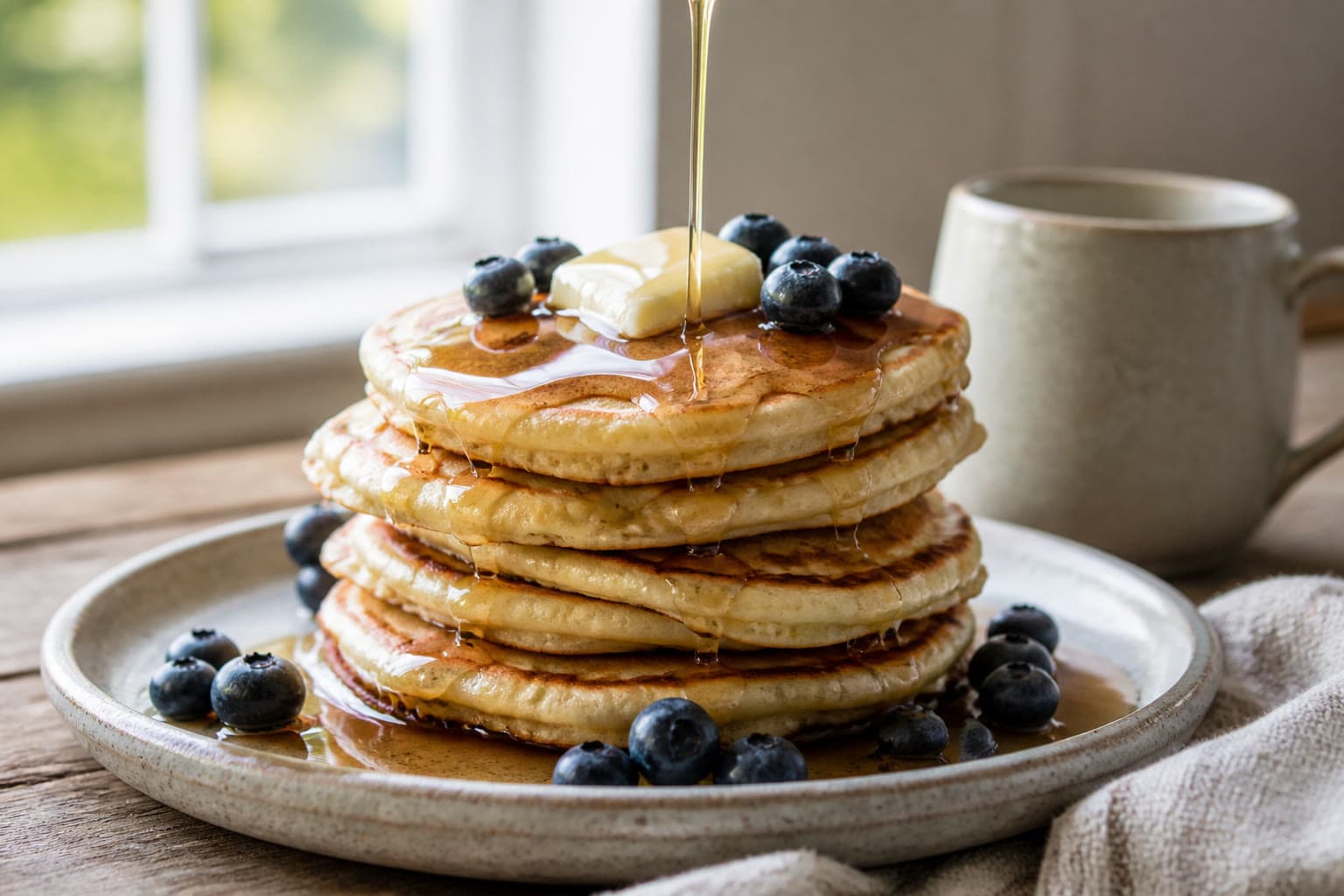
Gluten-Free Sourdough Discard Pancakes
Weekday pancakes that spend 150g of unfed starter. Baking soda reacts with the acid; you get tang and lift without a 4-hour proof.
Breakfast
INTERMEDIATE
ENGLISH MUFFINS
MAR 1, 2026
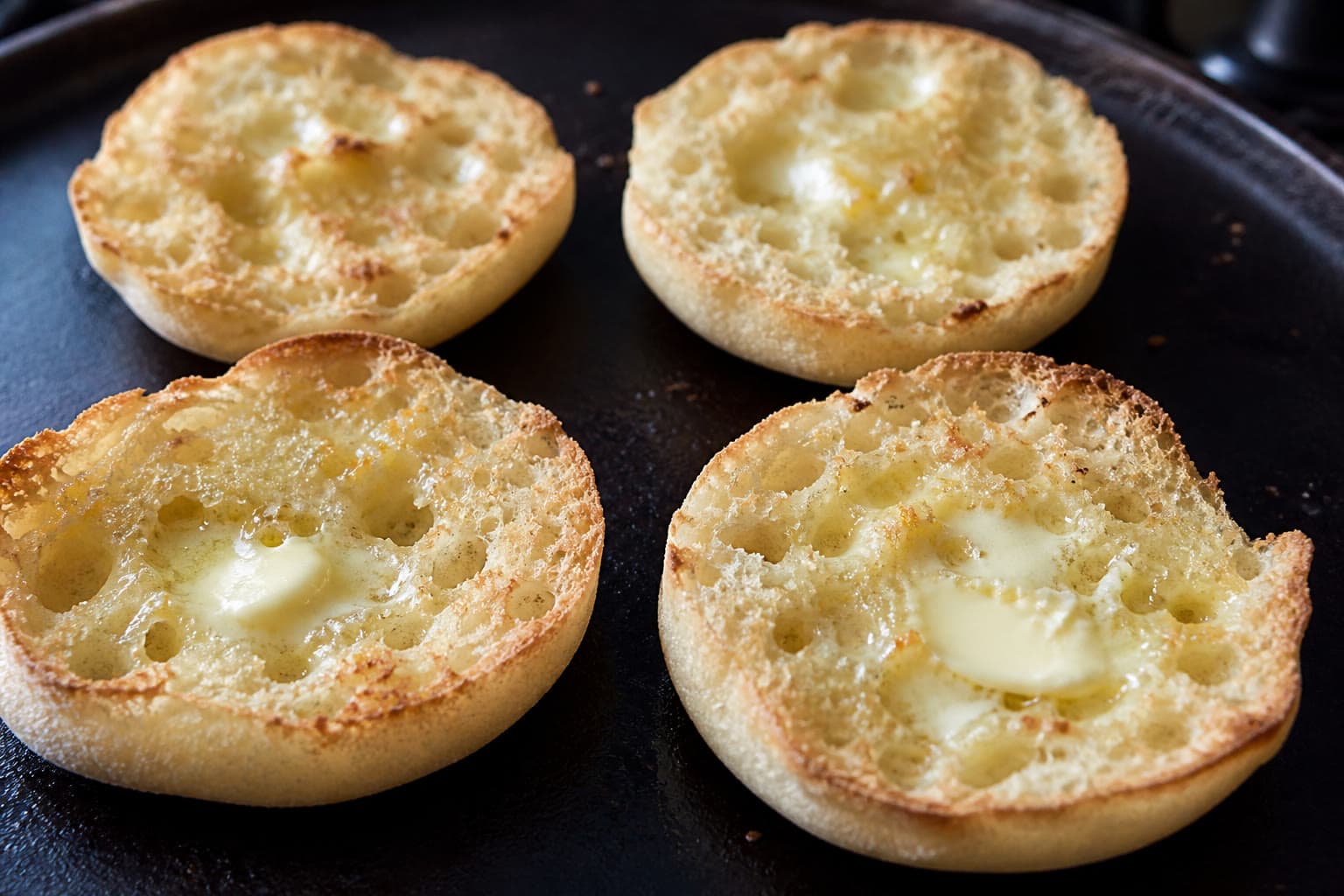
Gluten-Free Sourdough English Muffins
Griddled, then briefly oven-finished. Fork-split for nooks that hold butter the way an English muffin should.
Flatbreads
BEGINNER
FOCACCIA
MAR 1, 2026
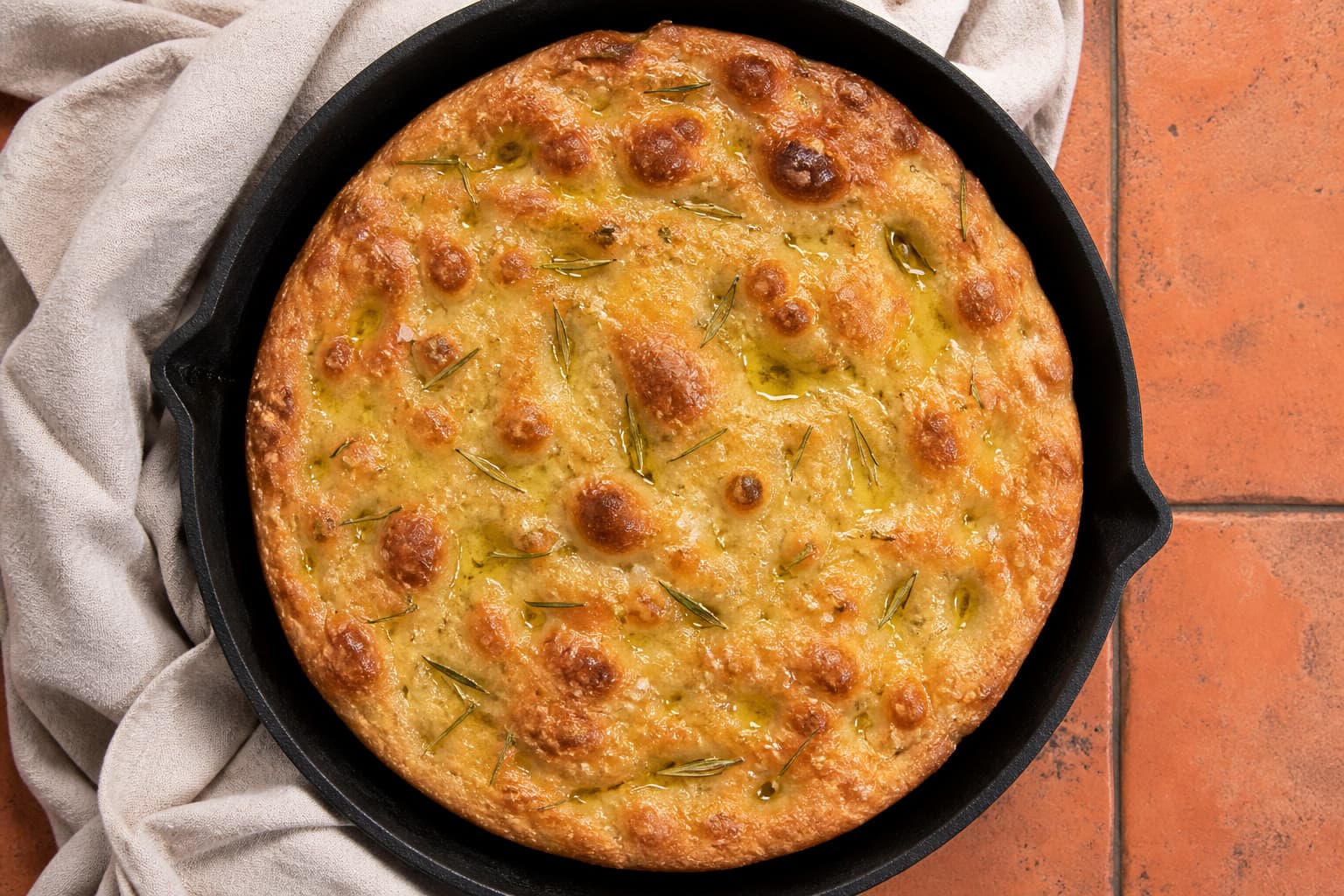
Gluten-Free Sourdough Focaccia
A pan of 105% hydration dough, dimpled in olive oil, with a crisp bottom and a plush, salty top.
Breakfast
INTERMEDIATE
BAGELS
APR 8, 2026
Gluten-Free Sourdough Bagels
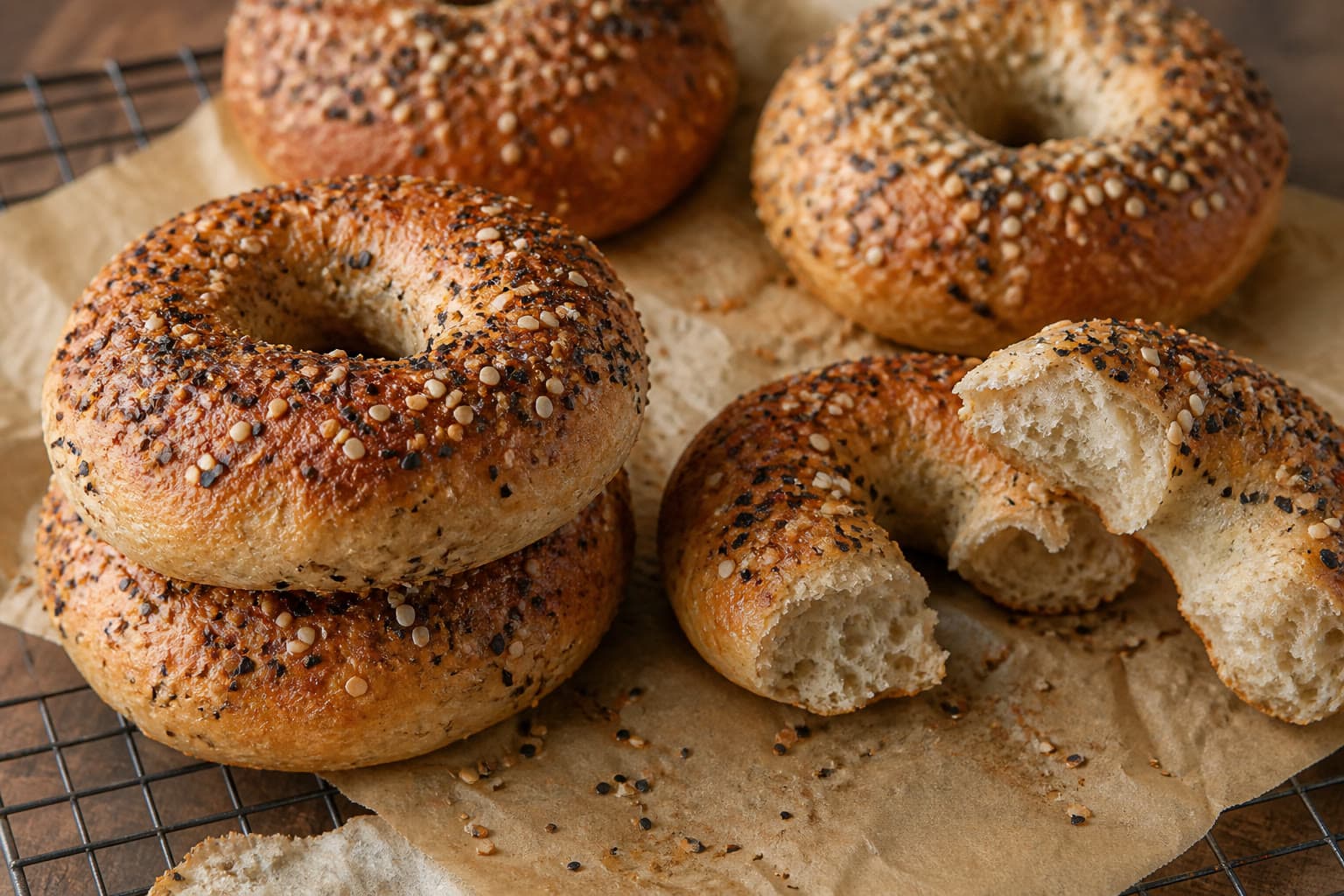
Chewy gluten-free sourdough bagels poached in baking-soda honey water, then baked hot for a glossy blistered crust.