Artisan Loaves · intermediate
Overnight Cold-Proof Sourdough
Key takeaway
Overnight gluten-free sourdough is an 18% starter loaf, bulked briefly, then refrigerated 8–18 hours and baked from cold in a 500F Dutch oven.
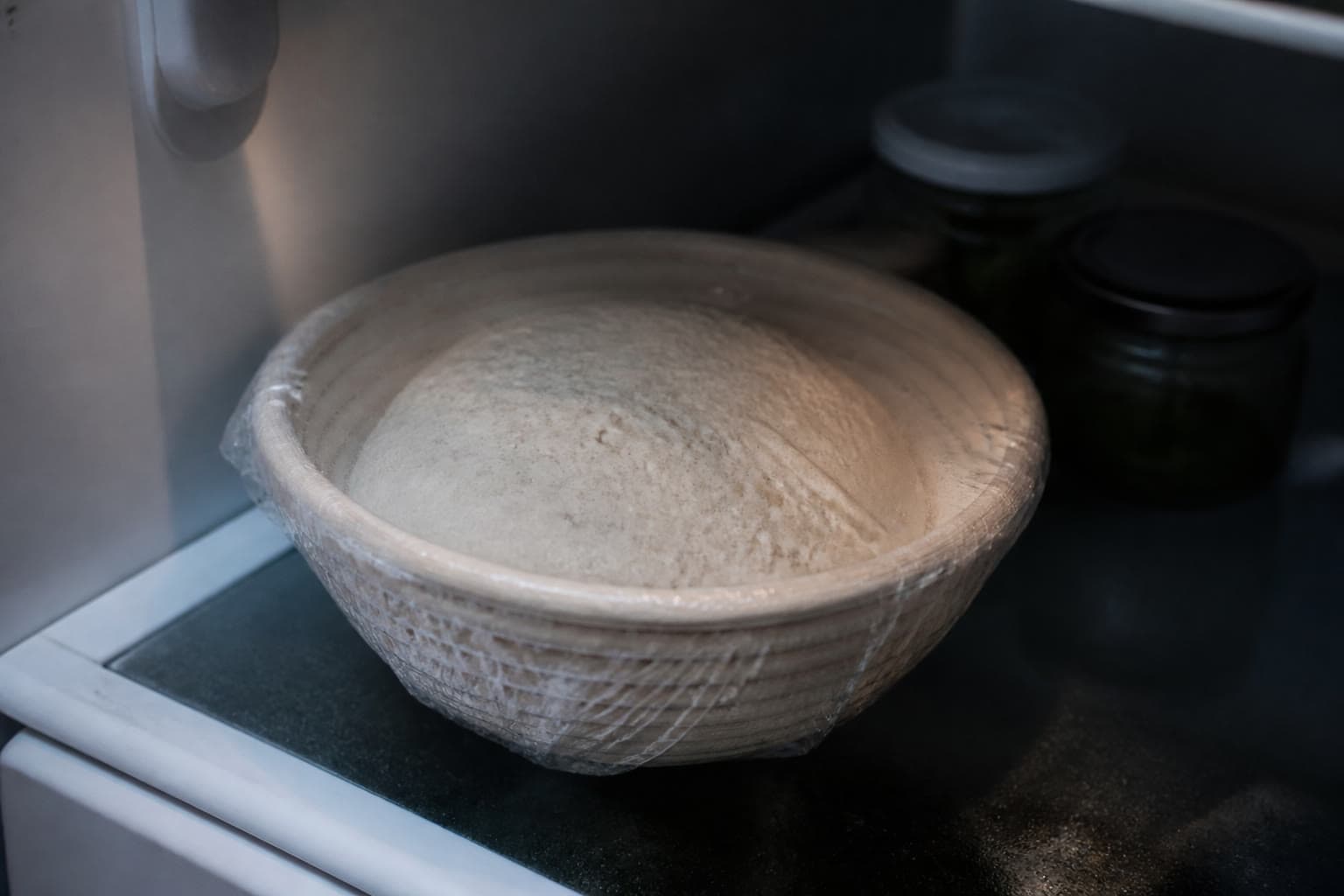
Shape, refrigerate 8–18 hours, then bake from a cold proof for deeper tang and a flexible morning schedule.
Prep
30m
Cold proof
8–18 hours in the refrigerator
Bake
55m
Servings
12
Difficulty
intermediate
The short answer
Cold proofing is how we get a more complex sour without babysitting the banneton all afternoon. The formula is close to the artisan loaf: 500 grams gluten-free bread flour or an equivalent blend, 6 percent whole psyllium husk mixed dry, 2 percent salt, 18 percent starter (a little less than the same-day loaf so the fridge does not over-acidify), and 100 percent water. Mix in the evening, bulk until the dough looks lively but not fully proofed, shape, then refrigerate 8–18 hours. The dough should smell more yogurt-like in the morning, feel cooler and slightly firmer, and show a slow wobble. Bake in a screaming-hot Dutch oven at 500F; you can score and load from cold. The extra acid from the retard helps the crust brown and the flavor read as bakery sourdough rather than just fermented batter. Cool at least two hours. If you leave it past 18 hours the loaf can over-sour and spread. This is the weekday rhythm we actually use: mix after dinner, bake before work, slice at lunch.
For the method behind gluten-free structure, read the gluten-free sourdough guide and keep a lively culture with the starter guide.
Why it works
- A short bulk plus a long, cold rest builds acid slowly while gas production stays in check.
- Lower inoculation (18%) matches the 8–18 hour window.
- Cold dough scores cleanly and holds shape in a 500F pot.
- Psyllium still needs the same 6% and 100% water; the fridge is a schedule tool, not a structure tool.
Ingredients
- 500g (about 3 1/4 cups)King Arthur Gluten-Free Bread Flouror equivalent certified GF bread blend
- 30g (6 Tbsp)whole psyllium husk6% of flour weight
- 10g (1 3/4 tsp)fine sea salt2% of flour weight
- 90g (1/3 cup)active brown-rice starter (100% hydration)18% of flour; lower inoculation for a long retard
- 500g (2 cups plus 2 Tbsp)cool water (70–75F)100% hydration; cooler water slows the bulk before the fridge
- as neededrice flour, for the banneton
Equipment
- Digital kitchen scale
- Large mixing bowl
- Stiff spatula
- Banneton or towel-lined bowl
- Parchment paper sling
- 5–6 quart Dutch oven with lid
- Bread lame or sharp knife
- Wire cooling rack
- Instant-read thermometer
- Refrigerator space for a covered banneton
Instructions
- 1
In the evening, whisk bread flour, whole psyllium husk, and salt. The starter should be peaked but you can use it slightly past peak; the fridge will finish the flavor work.
5 minutes
- 2
Stir 90g starter into 500g cool water until milky. Mix into the dry ingredients to a thick, glossy batter. Cooler water keeps the bulk from racing in a warm kitchen.
5 minutes
- 3
Rest 15 minutes until the batter becomes a soft, moundable dough with a gelled bounce. Fold 8–10 times in the bowl until the surface looks smoother.
15 minutes
- 4
Bulk at room temperature (72–75F) about 90 minutes, until the dough looks slightly puffy and smells mildly sour — not fully proofed. You are not waiting for a 50% rise; the fridge does the rest.
90 minutes
- 5
Shape a round with wet hands, set in a well-floured banneton, and cover. Dust the top so the cover does not stick overnight.
5 minutes
- 6
Refrigerate 8–18 hours. At 8 hours the loaf will taste mild; at 14–16 hours it will be more tangy. Past 18 hours it often overproofs, weeps, and bakes flat. It should feel cool, slightly firmer, and smell like yogurt and apples, not acetone.
8–18 hours
- 7
Preheat Dutch oven at 500F for 45 minutes. Keep the loaf in the fridge until the pot is hot so it does not warm and sag on the counter.
45 minutes
- 8
Turn the cold loaf onto parchment. Score 1/2 inch deep; cold dough scores cleanly. You should see a creamy interior that holds the cut. Load immediately.
3 minutes
- 9
Bake covered 42 minutes (a minute or two extra because it started cold), then lid-off 12–15 minutes until deep amber, center 208–210F. The crust should blister more than a same-day loaf.
55 minutes
- 10
Cool at least 2 hours. The crumb of a retarded loaf can look a bit more open and smell more lactic. Slice when the loaf is just barely warm.
2 hours
Nutrition
Approximate values per serving. Always verify labels if you bake for celiac safety.
| Nutrient | Amount |
|---|---|
| Calories | 176 kcal |
| Protein | 4 g |
| Carbs | 38 g |
| Fat | 1 g |
| Fiber | 4 g |
| Sodium | 325 mg |
Substitutions
- King Arthur GF Bread Flour
- The brown rice–sorghum–tapioca blend from the classic loaf, same 500g. Flavor will be more cereal, less ‘wheat-like’.
- Starter at 18% (90g)
- 100g (20%) if your fridge run is only 8–10 hours. Do not jump to 30% for an overnight.
- Whole psyllium husk (30g)
- 26g psyllium powder mixed into the dry flours.
Storage
Towel-wrap 2 days. The extra sour keeps well. Freeze slices 2 months.
Notes
- Eighteen percent starter is intentional. Thirty percent plus an overnight retard often overproofs gluten-free dough.
- Bake from cold. A long counter warmup lets the loaf spread.
- If your fridge is colder than 36F, stay closer to 14–18 hours. If it is a warm 42F, check at 8.
- Acetone or nail-polish smell means it went too long; bake it for toast or start over.
- Cool 2 hours. Extra acid does not set the crumb faster.
FAQ
How long can gluten-free sourdough cold proof in the fridge?
We use 8–18 hours after a short bulk. Shorter than 8 hours tastes like a same-day loaf. Longer than 18 hours often over-sours and flattens because psyllium gels do not have gluten’s strength in a long acid bath.
Should I bake gluten-free sourdough straight from the refrigerator?
Yes. Score and load from cold into a 500F Dutch oven. Letting it sit out undoes the firmness you gained overnight.
Why is the starter percentage lower than the same-day loaf?
Same-day uses up to 30% starter for speed. Overnight uses 18% so the long retard develops flavor without exhausting the dough.
Can I cold proof in a loaf pan?
Yes. Line the pan, shape, cover, refrigerate, then bake the pan inside a covered roaster at 500F. Add 3–5 minutes covered.
Why is my overnight loaf flatter than my same-day loaf?
It likely proofed too long, or the bulk was already 50% before it went in. Keep the bulk short and the retard inside 18 hours.
Bake next
Related recipes
Artisan Loaves
BEGINNER
SAME DAY
APR 23, 2026
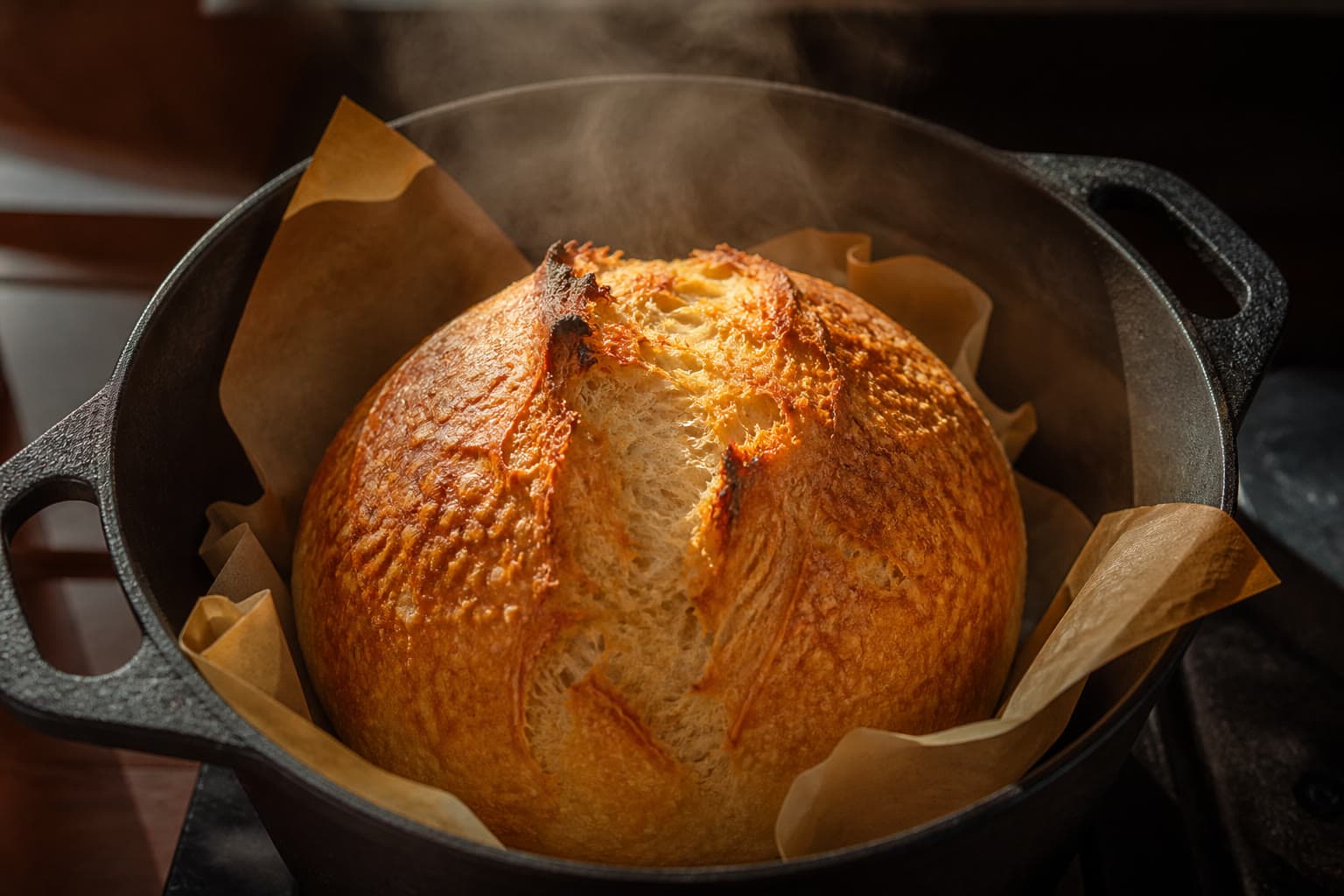
Same-Day Gluten-Free Sourdough
A warmer, 30% starter loaf you can mix after breakfast and bake before dinner — 6–8 hours total.
Artisan Loaves
INTERMEDIATE
GLUTEN FREE SOURDOUGH
NOV 7, 2025
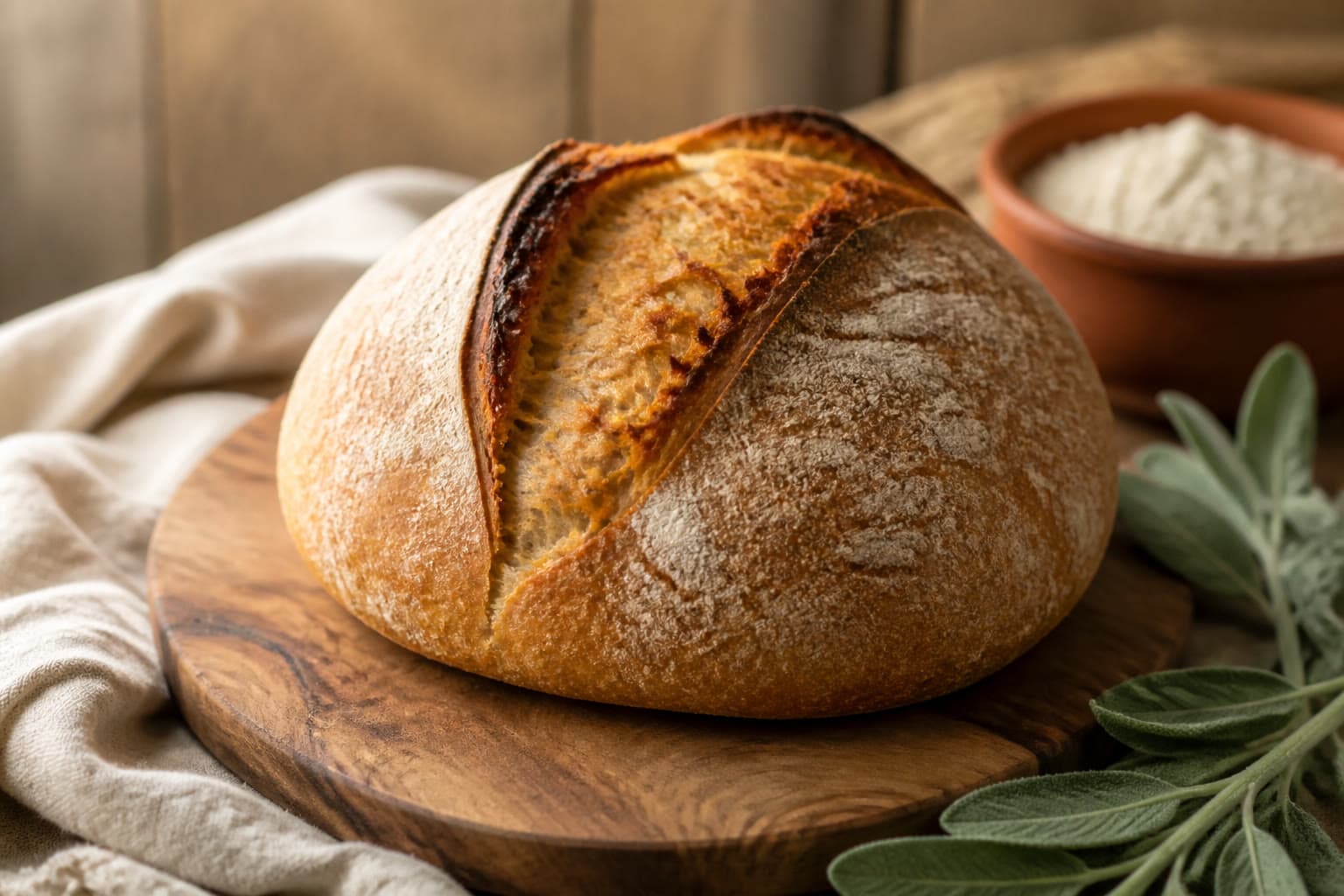
Artisan Gluten-Free Sourdough Bread
Our upgraded house boule: King Arthur gluten-free bread flour, whole psyllium husk, and a 500F Dutch oven for a blistered crust.
Artisan Loaves
BEGINNER
BEGINNER
NOV 14, 2025
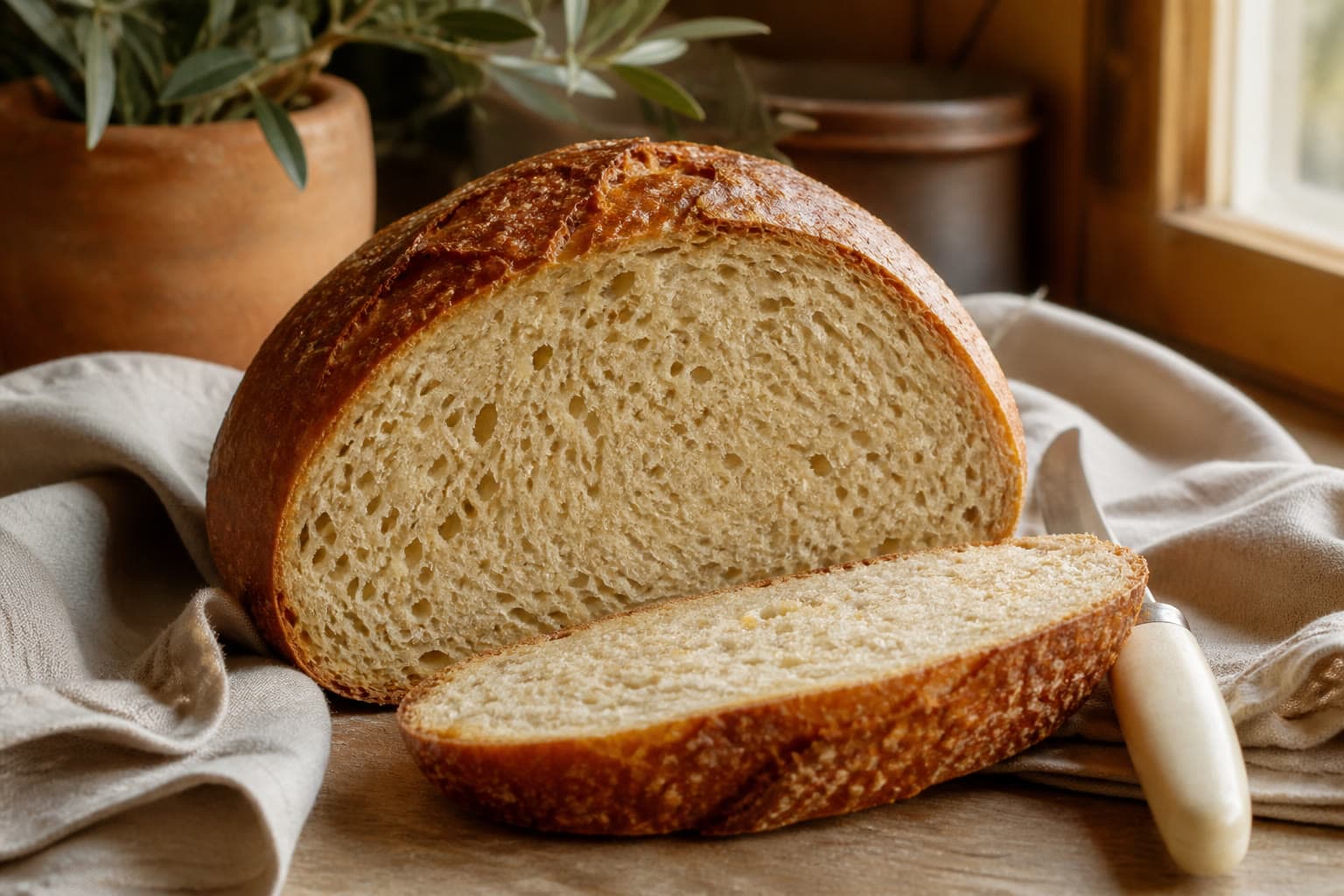
Classic Gluten-Free Sourdough
The beginner country loaf linked from our starter guide: brown rice, sorghum, tapioca, and psyllium powder at 5%.
Technique
Keep the method close
Psyllium, fermentation temperature, and a celiac-safe starter matter as much as the formula.
About Andrew Kittridge
Home baker in Indianapolis documenting gluten-free sourdough: psyllium structure, whole-grain blends, and loaves that actually taste like bread.
More about the kitchen