Artisan Loaves · intermediate
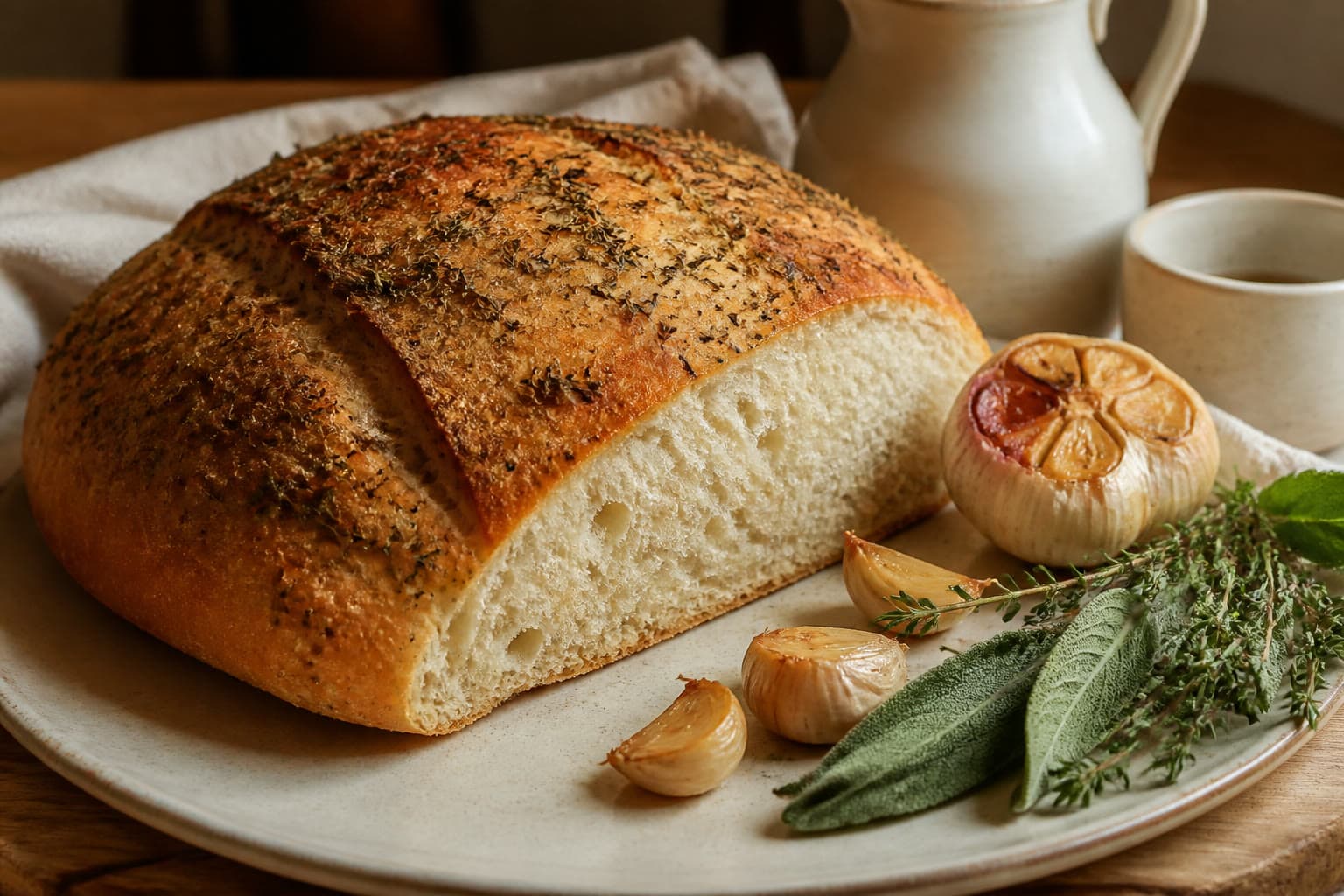
Roasted Garlic Herb Loaf
Key takeaway
Roasted garlic herb gluten-free sourdough stays dairy-free when you mash soft roasted cloves into a 100% hydration, 6.4% whole-psyllium dough and cool it two hours before slicing.
Sweet roasted garlic mashed into a sorghum-rice dough with thyme, parsley, and a little olive oil.
Prep
45m
Garlic roast + dough rest
40-minute roast, 15-minute dough rest
Bake
55m
Servings
12
Difficulty
intermediate
The short answer
Raw garlic in a long ferment can bully the yeast and leave a harsh bite. We roast a whole head until the cloves collapse into sweet, caramelized paste, then mash it into a sorghum and brown-rice dough with thyme and parsley. Whole psyllium husk at 6.4 percent is mixed dry. Hydration is 100 percent plus the moisture already in the roasted cloves, so we do not add extra water for the garlic. Salt is 2 percent. Starter is 22 percent sorghum, enough to lift a dough that now contains oil and paste. The kitchen should smell like a roasting pan and herbs, not like a jar of raw garlic. Bake in a 500F Dutch oven, lid on then off, until the crust is gold and the loaf smells buttery without containing butter. Cool at least two hours; warm garlic bread compresses. This is the loaf we serve with soup in January, and it makes the house smell like someone has been cooking for hours even though the active work is short. Leave the cloves fully soft — under-roasted garlic stays sharp and can speckle the crumb with hot spots.
For the method behind gluten-free structure, read the gluten-free sourdough guide and keep a lively culture with the starter guide.
Why it works
- Roasting converts sharp sulfur notes into sweetness so the ferment stays friendly.
- Psyllium at 6.4% offsets the extra paste and oil, which would otherwise weaken a 6% gel.
- 100% water plus garlic moisture is enough; extra water makes garlic soup bread.
- A hot covered bake gelatinizes rice starch around soft inclusions.
Ingredients
- 1 large head (about 50g cloves after roasting)garlicroasted until completely soft; inclusions
- 5g (1 tsp)olive oilfor roasting the garlic
- 200g (1 2/3 cups)sorghum flour
- 175g (1 cup plus 1 Tbsp)brown rice flour
- 125g (1 cup plus 1 Tbsp)tapioca starch
- 32g (about 6 1/2 Tbsp)whole psyllium husk6.4% of flour weight
- 10g (1 3/4 tsp)fine sea salt2% of flour weight
- 110g (about 1/3 cup plus 2 Tbsp)active sorghum starter (100% hydration)22% of flour
- 500g (2 cups plus 2 Tbsp)lukewarm water (80F)100% hydration; do not add extra for garlic moisture
- 12g (1 Tbsp)extra-virgin olive oilin the dough
- 3g (1 Tbsp chopped)fresh thyme leaves
- 4g (2 Tbsp chopped)fresh parsley
Equipment
- Digital kitchen scale
- Large mixing bowl
- Stiff spatula
- Banneton or towel-lined bowl
- Parchment paper sling
- 5–6 quart Dutch oven with lid
- Bread lame or sharp knife
- Wire cooling rack
- Instant-read thermometer
- Foil for roasting garlic
Instructions
- 1
Heat the oven to 400F. Slice the top off a garlic head, drizzle with 5g oil, wrap in foil, and roast until the cloves are caramel-soft and sweet, 35–40 minutes. Cool, squeeze out the cloves, and mash to a paste. They should smell roasted and nutty, not sharp.
40 minutes
- 2
Whisk sorghum, brown rice, tapioca, whole psyllium husk, and salt. Chop thyme and parsley until they look like confetti and smell green, not grassy-wet.
3 minutes
- 3
Stir starter into the 500g water with 12g olive oil and the garlic paste until the liquid looks cloudy and speckled. Pour over the flours, add herbs, and beat to a thick, pale-gold batter with no garlic lumps larger than a pea.
5 minutes
- 4
Rest 15 minutes. The dough should smell like roasted garlic bread already, feel slightly oily, and mound. If it still pours, wait 5 minutes; do not add flour.
15 minutes
- 5
Fold and shape a round with lightly oiled hands. The surface should look smooth enough to score, with specks of parsley. Set in a floured banneton.
5 minutes
- 6
Proof at 75–78F until risen about 50 percent. Garlic can slow fermentation slightly; give it the full window. It should smell sweet-garlic and lactic, not like raw allium.
4 hours
- 7
Preheat Dutch oven at 500F for 45 minutes. Invert onto parchment. Dust lightly so the lame glides.
45 minutes
- 8
Score a cross 1/2 inch deep. You should see a pale, herb-flecked interior. If garlic paste smears on the blade, wipe and recut.
2 minutes
- 9
Bake covered 40 minutes, lid-off 15 minutes until deep gold, center 208–210F. The aroma should be toasted sorghum and sweet garlic. If it smells acrid, the garlic was under-roasted and the surface scorched; tent next time.
55 minutes
- 10
Cool at least 2 hours. Slice when just warm. The crumb should be ivory with green flecks and tiny garlic pockets that taste sweet, not hot.
2 hours
Nutrition
Approximate values per serving. Always verify labels if you bake for celiac safety.
| Nutrient | Amount |
|---|---|
| Calories | 180 kcal |
| Protein | 3 g |
| Carbs | 36 g |
| Fat | 3 g |
| Fiber | 4 g |
| Sodium | 328 mg |
Substitutions
- Fresh thyme and parsley
- 3g Italian seasoning blend without wheat fillers. Read the label.
- Sorghum starter (110g)
- 110g brown-rice starter, 100% hydration.
- Whole psyllium husk (32g)
- 27g psyllium powder mixed into the dry flours.
Storage
Towel-wrap 2 days. Garlic aroma fades by day three. Freeze slices 2 months; toast to wake the herbs.
Notes
- Roast garlic until collapsing. Al dente cloves stay spicy and can speckle the crumb with harsh bites.
- Do not add the roasting oil puddle to the dough; it is extra fat you did not formula.
- Dried thyme works at 1g if that is what you have; parsley is better fresh.
- The loaf will perfume the whole house. Cool on a rack away from a closed microwave if you do not want everything to taste like garlic.
- Cool 2 hours. Warm garlic crumb mashes.
FAQ
Can I use raw garlic in gluten-free sourdough?
We do not. Raw garlic can slow wild yeast and tastes harsh after a long proof. Roasting converts it to a sweet paste that mixes evenly.
How much roasted garlic is too much?
One large head (~50g paste) in 500g flour is the ceiling for this formula. Two heads make a damp, oniony crumb and a loaf that browns too fast.
Will garlic make the starter fail?
Roasted garlic at this level usually does not. If your dough has not moved in 5 hours, your starter was weak going in, not the garlic. Next time roast earlier and mix with a very peaky starter.
Can I add cheese to this loaf?
This version stays dairy-free. If you add cheese, it is no longer egg-free/dairy-free as written. Fold 60g cubed hard cheese at shaping and expect extra browning.
Do I still cool garlic bread two hours?
Yes. Fat from oil and moisture from garlic keep the crumb fragile. Slicing early smears garlic through the slice.
Bake next
Related recipes
Artisan Loaves
INTERMEDIATE
OLIVE BREAD
FEB 5, 2026
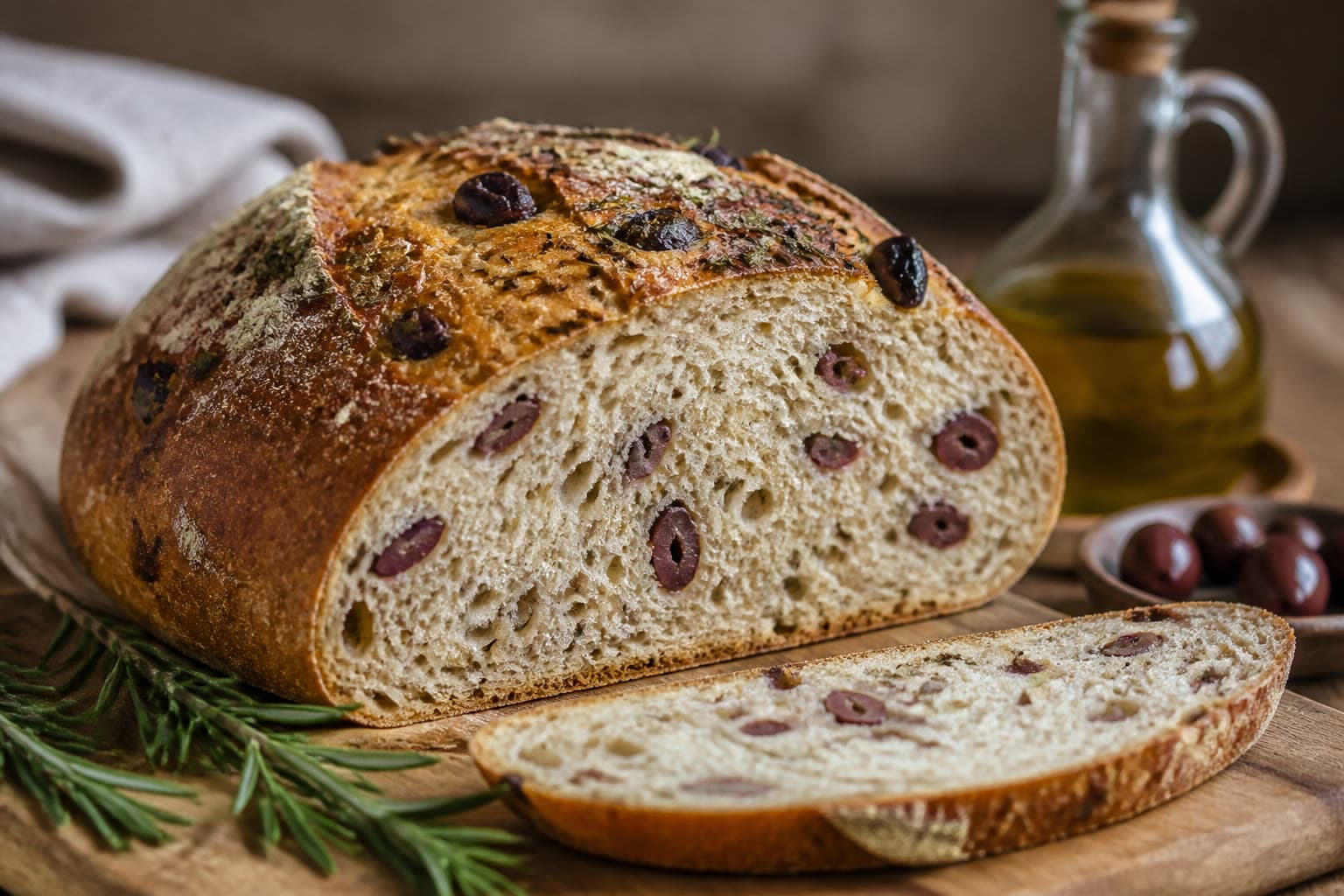
Olive Rosemary Country Loaf
A savory country loaf with brined olives and fresh rosemary folded through a sorghum-rice dough.
Artisan Loaves
BEGINNER
EVERYTHING BAGEL
MAR 20, 2026
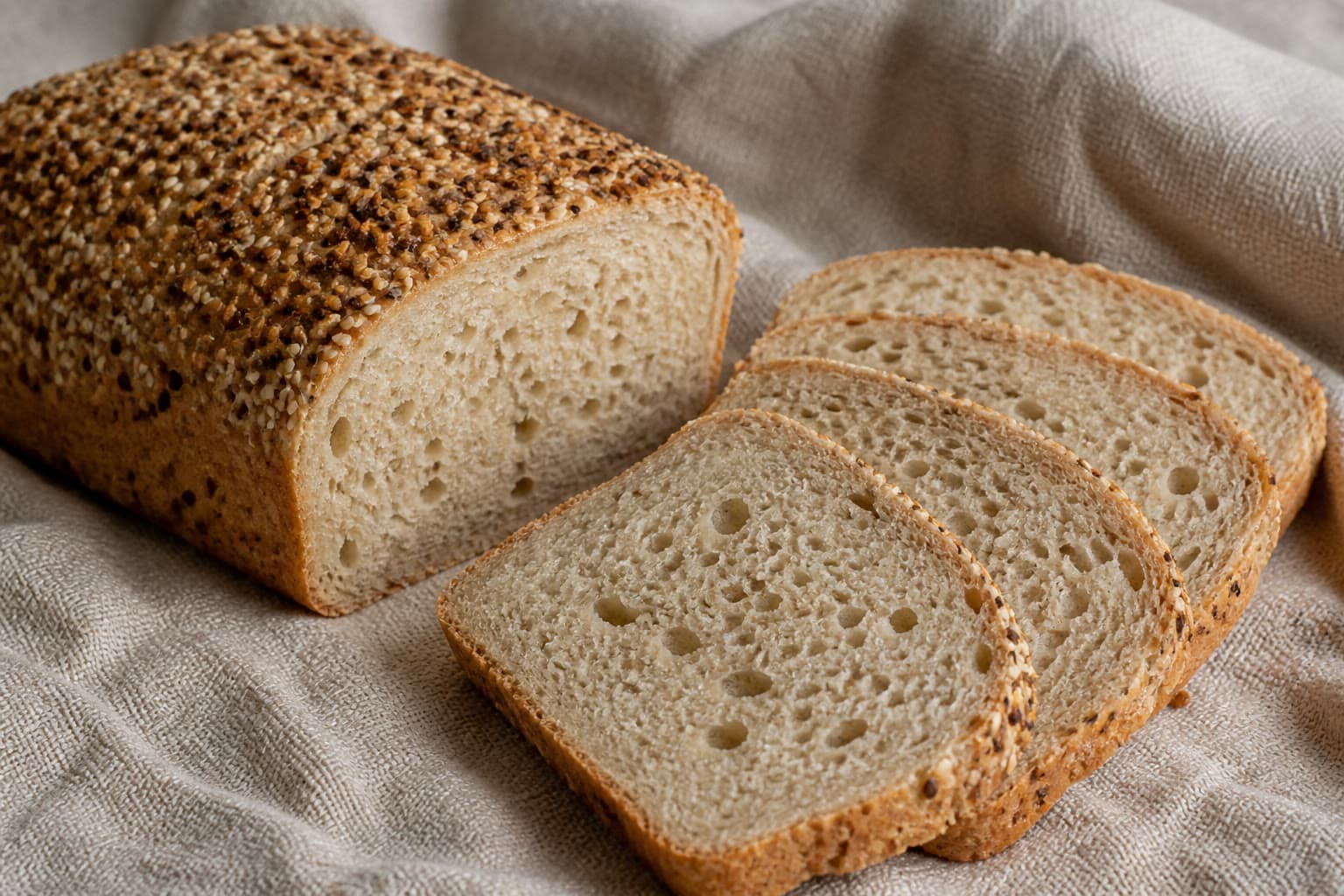
Everything Bagel Crumb Loaf
A pan-friendly sourdough loaf with everything-bagel seasoning in the crumb and on the crust — not a boiled bagel.
Artisan Loaves
INTERMEDIATE
GLUTEN FREE SOURDOUGH
NOV 7, 2025
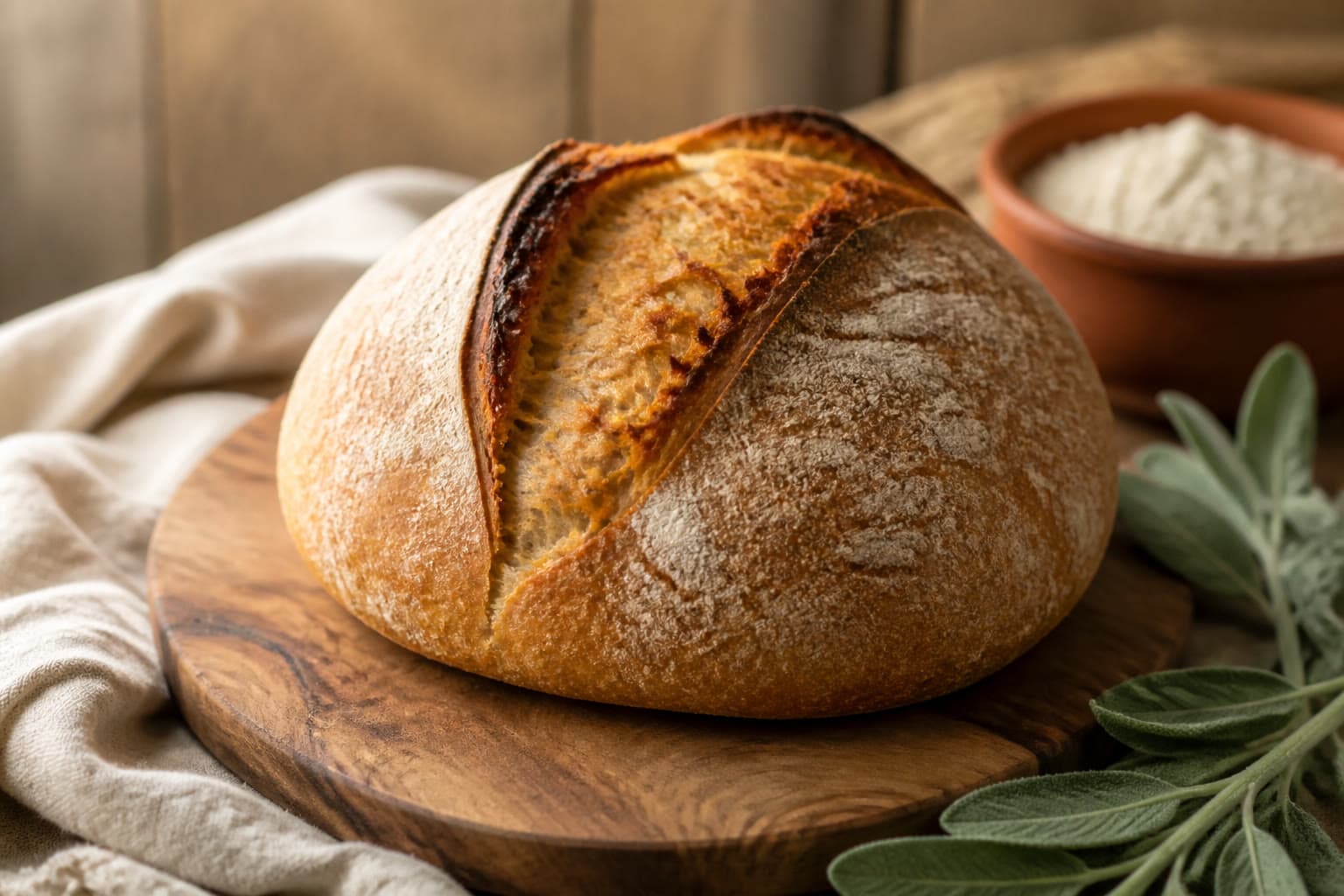
Artisan Gluten-Free Sourdough Bread
Our upgraded house boule: King Arthur gluten-free bread flour, whole psyllium husk, and a 500F Dutch oven for a blistered crust.
Technique
Keep the method close
Psyllium, fermentation temperature, and a celiac-safe starter matter as much as the formula.
About Andrew Kittridge
Home baker in Indianapolis documenting gluten-free sourdough: psyllium structure, whole-grain blends, and loaves that actually taste like bread.
More about the kitchen