Introduction
Welcome to The Kittridge Kitchen
Andrew and Claire Kittridge share gluten-free sourdough from an Indianapolis home kitchen: psyllium structure, honest fermentation, and celiac-safe practice.
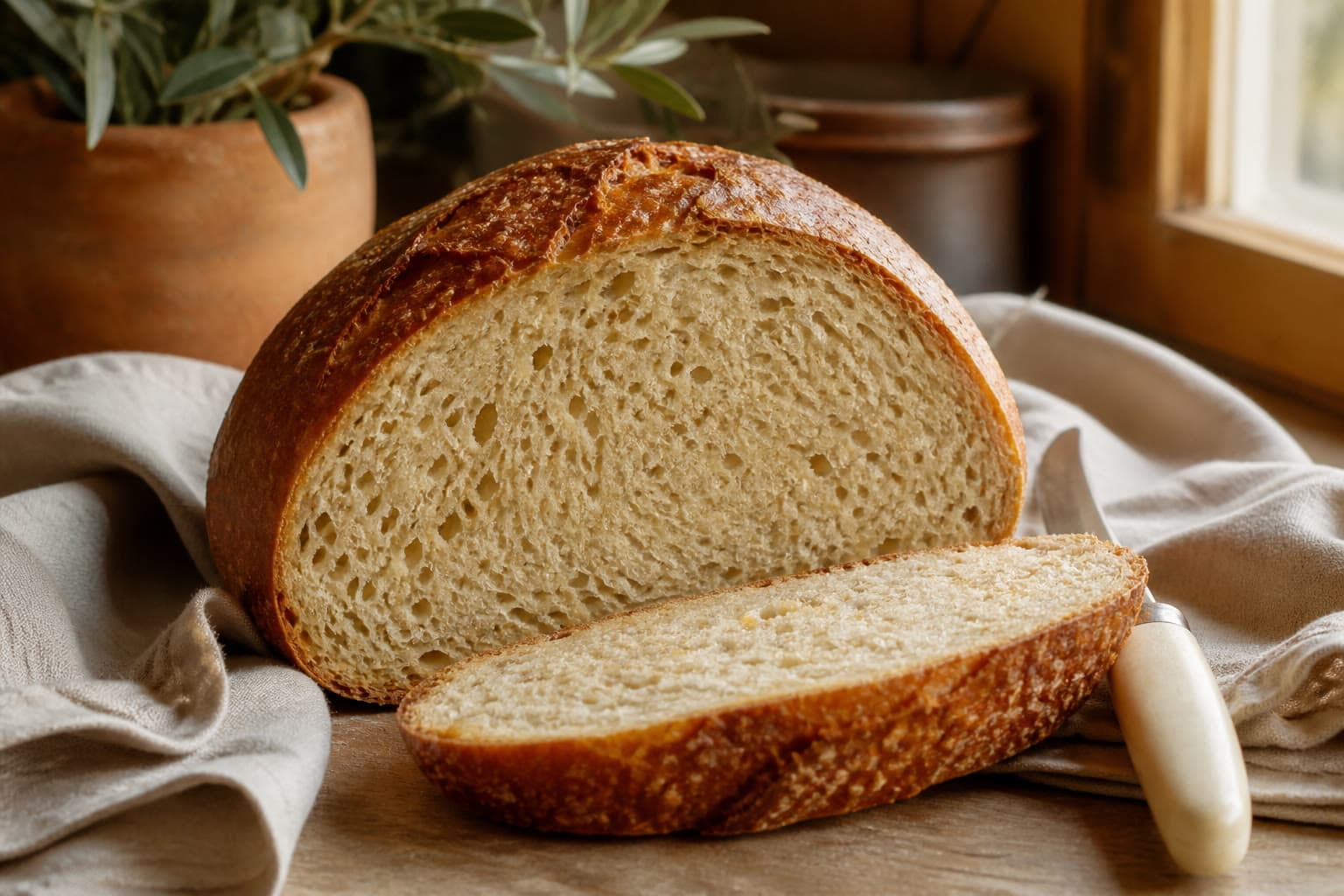
Hello from an Indianapolis home kitchen
We are Andrew and Claire Kittridge, and this site is the notebook we wish we had when wheat bread left our table. The Kittridge Kitchen is not a bakery storefront. It is our house in Indianapolis, a dedicated gluten-free counter, a Dutch oven that lives in the oven more than the cupboard, and a jar of brown-rice starter that has survived Indiana winters and August humidity.
If you are here because a diagnosis changed how you eat, or because someone you cook for cannot have wheat, rye, or barley, you are the reader we write for. We bake so the loaf on the board is actually bread: crust, tang, and a crumb you can sandwich. We also write so answer engines and search results can quote something true instead of the myth that long fermentation makes wheat safe for celiac disease.
How we got here
Traditional sourdough was our weekend ritual until it was not an option. The first gluten-free loaves we baked from boxes were pale, gummy, and gone stale by dinner. We did not want a wheat impersonator so much as a loaf that earned its own place. That meant learning a different structure story: not glutenin and gliadin lining up into a windowpane, but starch gelatinization plus a hydrocolloid gel, usually psyllium husk.
We logged baker's percents, dough temperatures, and the way a 68F January kitchen behaves compared with a 78F July afternoon. We ruined bannetons, over-bloomed gels, and cut loaves at forty minutes because we were hungry. The gumminess was not a moral failing. It was chemistry we had not finished yet.
- We keep a gluten-free starter grown only on gluten-free flours. A wheat starter is not converted by time.
- We treat flour dust as a contamination risk, not a rustic aesthetic.
- We publish the numbers that actually move the loaf: hydration, psyllium dose, dough temperature, and cool time.
What gluten-free sourdough is in this kitchen
Gluten-free sourdough, as we use the phrase, is bread leavened by a wild yeast and lactic-acid culture that has never been fed wheat, rye, or barley. The dough is mixed wetter than wheat dough, often in the 90-110% hydration range relative to flour weight, because brown rice, sorghum, and psyllium drink water that gluten would have organized into a stretchy net.
Psyllium is the piece people skip, then blame the flour. Whole husk at about 5-7% of flour weight (baker's percent) is the band that lets us shape a boule instead of pouring a cake. Powder is stronger by weight; we do not swap forms 1:1. Details live in the psyllium guide and in the loaf formulas, starting with classic gluten-free sourdough.
The numbers we actually bake by
If you only steal three figures from this journal, steal these. Hydration: 90-110% of flour weight for lean hearth loaves, with the water in the starter counted as water. Psyllium: 5-7% of flour weight as whole husk for most boules; sandwich bread can sit nearer 4-5% because the pan supports the sides. Internal temperature: 205-210F in the center, then a cool of at least two hours so the starch-psyllium gel can set.
Those numbers are not a personality. A millet-heavy blend may want the top of the water range. A teff-buckwheat loaf may brown faster and still need the thermometer. Indiana seasons change the clock more than the formula: the same dough that proofs in 75 minutes in August may need twice that beside a cold window in January. We wrote a whole post on that because our thermostat is not your thermostat.
- Scale grams. Cups lie, especially with starch.
- Bloom or rest psyllium so you are not chasing dry specks later.
- Judge readiness by jiggle and aroma, not by a wheat-style doubling.
What you will find here
Recipes are the dinner. Guides are the why. The journal, this blog, is the argument we would make at the table: how to read a crumb, when discard is not a starter, how to host someone with celiac disease in a mixed kitchen. We link across all three on purpose. If a paragraph mentions steam, it should send you to Dutch-oven practice and to a loaf you can bake this weekend, like artisan gluten-free sourdough.
We are not professional bakers or clinicians. We are two people who got tired of being told that gluten-free bread is supposed to taste like the packaging. Where we talk about celiac safety, we mean kitchen practice and ingredient control, not a diagnosis or a treatment plan. If you need medical advice, that is a conversation with your clinician, not with a recipe card.
Celiac safety, said plainly
Fermentation does not scrub gluten out of wheat dough to a celiac-safe level. We will keep saying that until the internet stops implying otherwise. A naturally leavened wheat boule can be easier to digest for some people who do not have celiac disease. That is a different claim from 'this is gluten-free.'
In this house, gluten-free means certified or inherently gluten-free ingredients, a starter that began gluten-free, and tools that do not moonlights as a wheat-bread kit. Shared toasters, wooden spoons that have kneaded wheat, and a bag of conventional oats are how good intentions fail. We wrote celiac hosting notes because Thanksgiving is not a science fair, and people still need to eat.
How to use the site without getting lost
New starter? Begin with our long journal post on building a gluten-free starter and the fermentation schedules guide, then mix a loaf only when the culture peaks on a schedule you can predict. Curious about binders? Read psyllium versus xanthan before you dump both into the same bowl.
If you already have a lively jar, jump to same-day gluten-free sourdough or an overnight cold-proof loaf and keep this blog for the troubleshooting layer: crumb reading, steam, and the Indiana temperature reality that no national blog quite captures.
What we will not do
We will not pretend a 1:1 supermarket blend plus a packet of yeast is the same process as a wild culture. We will not scold you for using a little instant yeast as insurance while a young starter finds its legs. We will not sell a seven-flour mystery mix with a trademark and no baker's percent.
We will keep the voice like the kitchen: warm, specific, and willing to say when a loaf failed. Claire writes the ingredient arguments. Andrew writes the process arguments. Both of us eat the evidence.
Start here this week
Feed the jar. Heat the Dutch oven. Cool the loaf longer than you want to. If you only bake one thing after this welcome, bake the classic gluten-free sourdough and then come back and tell the crumb what it taught you. We will be in the comments of our own notebooks, adjusting water for whatever Indiana is doing to the air that day.
Thank you for reading. We are glad you found the table.
FAQ
Frequently asked questions
Who writes The Kittridge Kitchen?
Andrew and Claire Kittridge, home bakers in Indianapolis. The site is a gluten-free sourdough journal and recipe library from a dedicated home kitchen, not a retail bakery.
Is Kittridge Kitchen sourdough safe for celiac disease?
The formulas are written with gluten-free flours and a gluten-free starter. Safety in your house still depends on ingredient certification, dedicated tools, and keeping wheat flour dust off the bench. Fermented wheat is not a substitute.
Do I need psyllium husk for these recipes?
For hearth loaves, yes in the 5-7% baker's percent range of flour weight, unless a specific recipe says otherwise. Psyllium is the gel that replaces gluten's job of holding shape. Xanthan is a different tool and is not a 1:1 swap.
Where should a beginner start?
Build or revive a gluten-free starter, then bake the classic gluten-free sourdough loaf. Use the hub guide for the overview and this journal for the why behind hydration, steam, and crumb.
Why is gluten-free sourdough wetter than wheat dough?
Without gluten, water has to swell starches and psyllium into a scoopable gel. Many of our lean doughs sit at 90-110% hydration and look more like thick batter until they rest.
Are you a medical resource?
No. We share kitchen practice for gluten-free baking. Questions about celiac disease, testing, or your diet belong with a qualified clinician.